
Editor's Note: This article was originally published by The Exponent, Purdue West Lafayette's student publication.
By Olivia Mapes (Editor-in-Chief) and Jack Rosenthal (Staff Reporter)
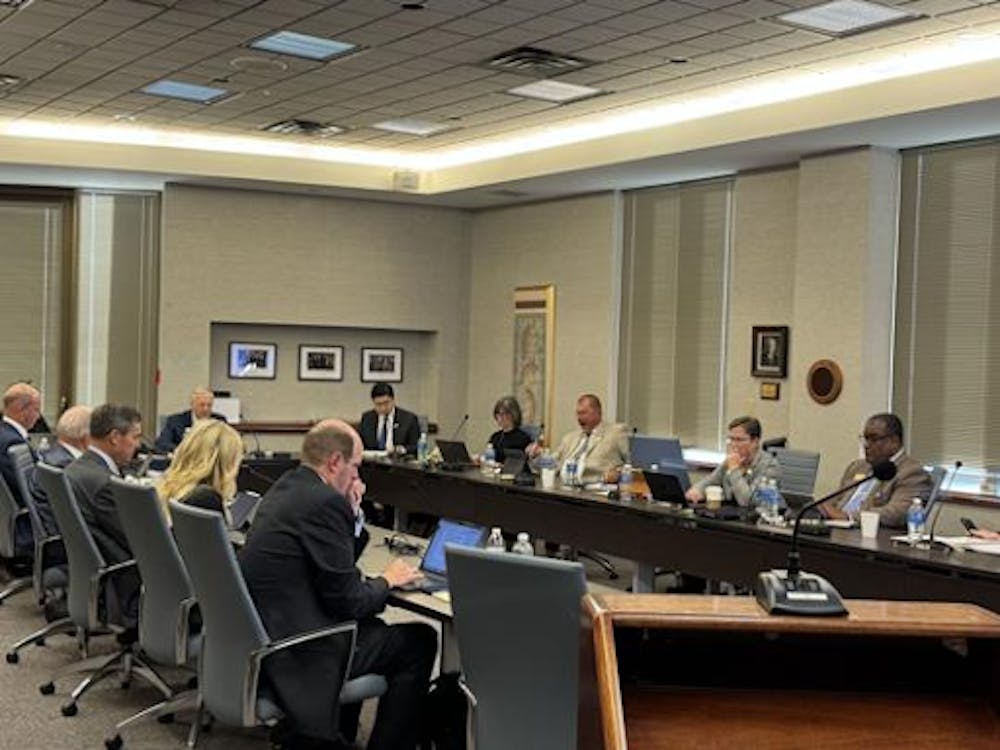
The Purdue Board of Trustees met in Indianapolis for the second time where they approved the acquisition of new land in Indianapolis, extending Purdue President Mung Chiang’s contract, and provided updates on the upcoming Taraia expedition to find Amelia Earhart’s missing plane.
The board of trustees announced in their Friday morning meeting that Purdue surpassed $1 billion in research funding for the fiscal year 2025, the first time in its history it has reached that total in one year.
“This progress is amazing,” said Provost Patrick Wolfe. “It’s a testament to our faculty, staff, and students.”
Research expenditure increased 12% over the previous fiscal year and increased almost 40% over the past three years.
This comes after the Trump administration canceled a $34.9 million federal grant to Purdue for the Indiana GEAR UP program.
“This was an unusual year,” said chair Gary Lehman, “it’s hard to think of a more turbulent time.”
Purdue in Indianapolis
Since Indiana University-Purdue University Indianapolis split last year, the Purdue campus in Indianapolis has worked to expand its programs, clubs, and resources.
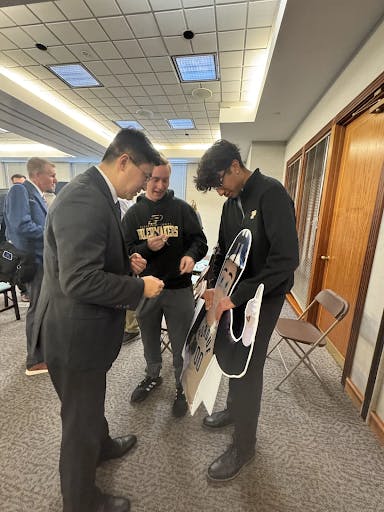
Several student leaders from Indianapolis attended the meeting to learn about what the board was doing for the campus and, more importantly, get Chiang to sign a life-sized cardboard cutout of Purdue Pete.
After the meeting, Chiang signed Pete’s helmet and shook their hands as they talked about the difficulties of starting a new campus.
“Overnight to build a whole campus is a lot. Normally it takes five years to build an urban campus,” Chiang said. “The nice thing is you get to tell us how you want to form campus. You are the co-founders of the campus.”
Students in Indianapolis have been transforming the college with 70 clubs now started in Indy.
“There is a lot of pressure on students to step up,” said Neil Risal, the music club president.
One way the campus is working to help students in Indy is creating the Student Trail Blazer Fund, which is geared at accelerating support and launching additional clubs, Purdue in Indianapolis Senior Vice Provost David Umulis said.
Many buildings are also in progress, including the academic success building, a 15-floor building which will launch in July 2027.
“We’re working to make the city a part of the campus and growing opportunities for students who are here,” Umulis said.
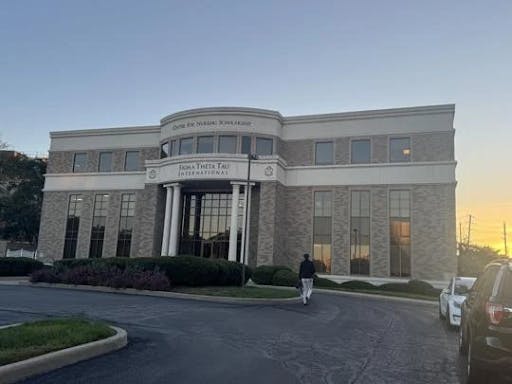
The campus is still expanding with the board of trustees approving buying two new sections of land for $70.1 million from the Purdue Research Foundation, including the Canal Square Apartments and 501 Indiana Ave., Indianapolis.
The new buildings will provide student housing and extra multi-purpose space, Umulis said.
Updates on the Taraia Expedition
One of the most exciting things buzzing around campus right now is an upcoming expedition that aims to locate Amelia Earhart’s missing aircraft and get close to solving one of the biggest mysteries of the 20th century. Dubbed the “Taraia Expedition,” it will begin on Oct. 30.
The mission is being sponsored by the Purdue Research Foundation, the same organization that provided Earhart with the missing plane. Steve Schultz, the senior vice president and general counsel for both Purdue and the PRF spoke before the board to give a detailed brief of the expedition.
“While it would be a disappointment to not find the plane on the expedition, if they don’t go, the world will never know,” Schultz said.
A small group of researchers will travel to the remote Nikumaroro Island in the South Pacific. In 2020, a visual anomaly possibly resembling Earhart’s Lockheed Electra 10E was discovered via satellite in a Nikumaroro lagoon. This object is commonly referred to as the Taraia object.
“Even if we don’t find it, we will continue,” Lehman said. “The project won’t be a failure, it will be just one less place we have to look.”
Fall 2026 housing, dining rates approved
The board approved a 3% increase in housing and dining costs for the next school year.
Purdue’s rates have increased 13% while the Big Ten has increased 60% since 2012, according to a graph in a presentation during the meeting.
Mung Chiang salary increase
During the meeting, the board voted to raise President Chiang’s base salary and extend his term, citing his important role at Purdue and how competitive he is as factors for the pay raise.
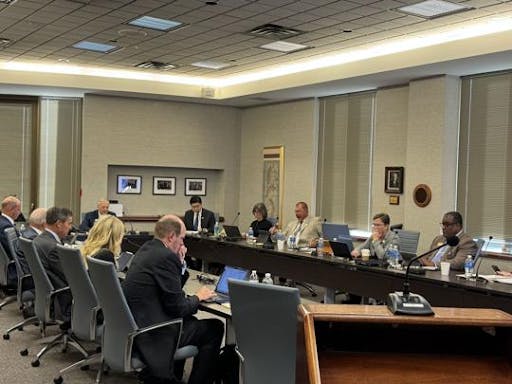
Lehman mentioned how Chiang’s reputation “exceeds the Big Ten” and called him and his team a “model of strength and strategic leadership.”
Chiang is currently the lowest-paid president in the Big Ten, and the increased compensation package will place him in the middle of the spectrum.
The base salary approved was $600,000 while the term extension was by two years, ensuring that Chiang will stick around until at least 2031.
Chiang additionally received a boost to his at-risk pay. At-risk pay was instituted by former Purdue President Mitch Daniels and is an additional salary that is contingent on a list of factors, usually performance-based goals.
This year, Chiang earned 75% of his at-risk pay, exactly $168,714. The board noted that this number was lower than usual due to the ongoing government shutdown.

Troi Wharton had to learn how to walk again. Ten years later, she walked the Kelley graduation stage.
By Salsabil F. Qaddoura | May 31Troi Wharton remembers the first time people noticed she could not walk straight. It was 2016, and Pokémon Go had taken over the summer. Wharton, then 20, was playing the game around Indianapolis with friends and family. At the canal. At the zoo. Anywhere her phone told her another Pokémon might appear. The game required players to physically move through the real world. For Wharton, that meant walking more than usual. For the people around her, it meant seeing what she had not yet accepted.

Q&A Interview: IU Luddy Indy Media Arts Lecturer Albert William retires after 35 years
By Zachary Aigbe | May 24Albert William, a Media Arts (3D) faculty member at IU Indianapolis began working with IU in 1991 in the School of Medicine, later earning his New Media --- later called Media Arts --- degree in Dec. 2002, and joined then-IUPUI’s School of Informatics --- later called the Luddy School of Informatics, Computing, and Engineering, Indianapolis --- faculty shortly afterward in 2003. His long career spans 35 years with IU Indy, and specifically 23 years within Luddy; his beginnings with the school spanning even further back from his early involvement in the New Media program around its earliest days in 2000 – back when classes were first being offered at the school, as he was a Master’s student at the time. This makes him not only one of the longest-tenured Luddy faculty members, but also one of the last ones from the school’s earliest days as well, including his time as a student there. At the end of the 2025-26 academic year, William retired.

Collaborative mass casualty simulation takes learning beyond the classroom for IU medical students
April 25The dark night explodes with the cheers of thousands of fans as they flood the streets of downtown Bloomington to celebrate Indiana University’s College Football National Championship victory. Suddenly, this festive scene turns chaotic — someone has fallen from the upstairs balcony of the pub, another person is overcome by smoke inhalation from a burning vehicle, and a loud noise causes the crowd to stampede.
