
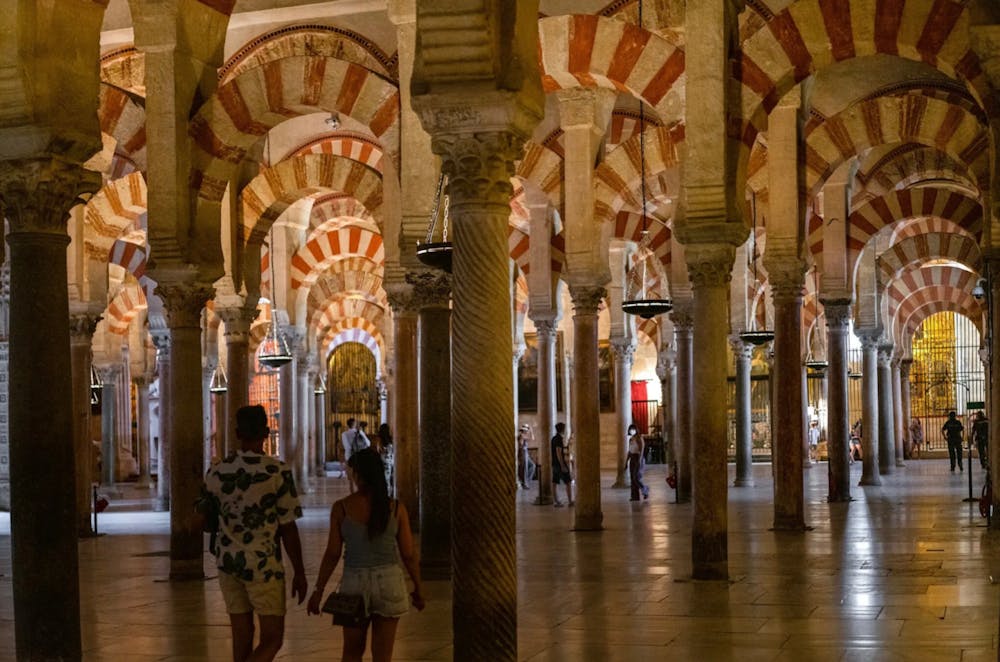
When considering the cultural forces that shape the modern world, few students immediately think of a society that thrived a thousand years ago on the Iberian Peninsula. Yet the history of Al-Andalus, or Arab Spain, remains one of the most influential periods in global intellectual development.
“Arab Spain was this remarkable cultural and intellectual flowering that is part of, rather than separate from, who we are as Americans,” said Edward Curtis, director of the Arabic and Islamic studies minor at IU Indianapolis.
For students at IU Indianapolis — particularly those enrolled in courses like Arab Spain and Latin America and those exploring the Arabic and Islamic studies minor — the legacy of Al-Andalus is not a distant relic. They form a foundation for understanding cultural exchange, identity formation and the global circulation of knowledge, themes that lie at the heart of academic programs in the School of Liberal Arts.
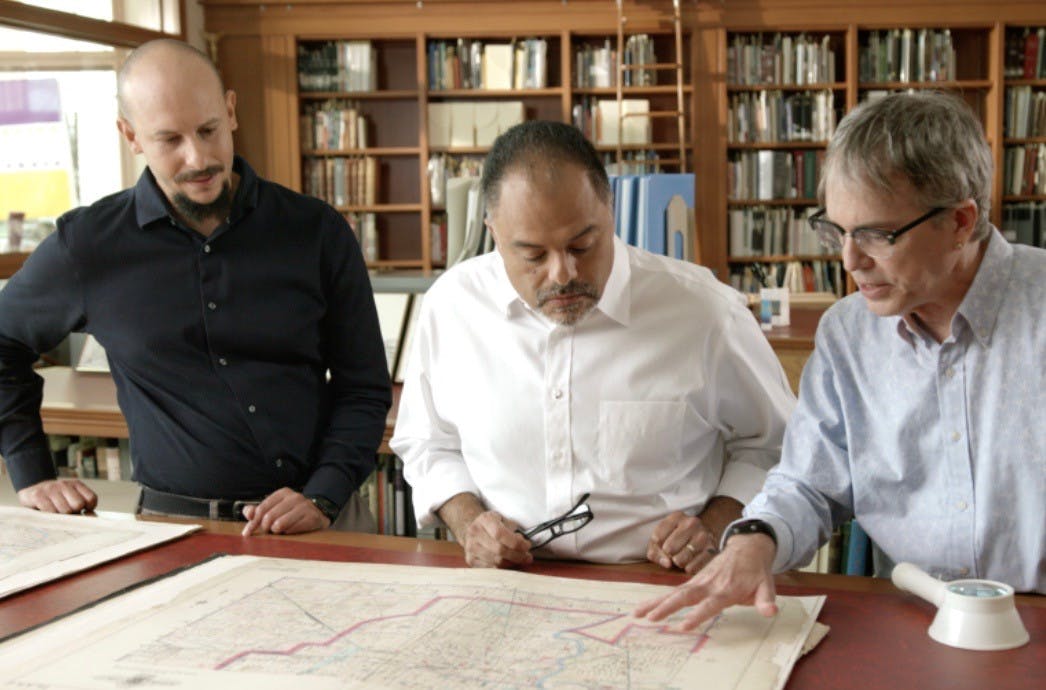
From the eighth through the 15th century, Al-Andalus became one of the most advanced intellectual centers of its time. Scholars there preserved Greek philosophical texts, expanded mathematical knowledge, developed astronomical instruments, transformed medical practice through works like al-Zahrawi’s surgical encyclopedia and introduced agricultural techniques that reshaped food production across continents.
Innovations such as algebra, refined irrigation systems, architectural styles like the horseshoe arch and literary forms including the “muwashshah” emerged from a vibrant mixture of Arab, Iberian, Jewish and North African influences. These developments later crossed into Europe, profoundly shaping the Renaissance and early modern scientific thought.
“When we talk about the legacy of Arab Spain, we’re talking about a multi-religious legacy — Arabic-speaking Jews, Christians and Muslims creating one of the most remarkable civilizations in the history of the world,” said Curtis.
Much of this depth comes alive in the way Curtis teaches the course at IU Indianapolis. As the founder and director of the Arabic and Islamic studies minor, he brings to the classroom a vision shaped by decades of scholarship on Muslim, Arab and Black American histories. His expertise allows him to situate Al-Andalus within larger global patterns of migration, translation and cultural exchange.
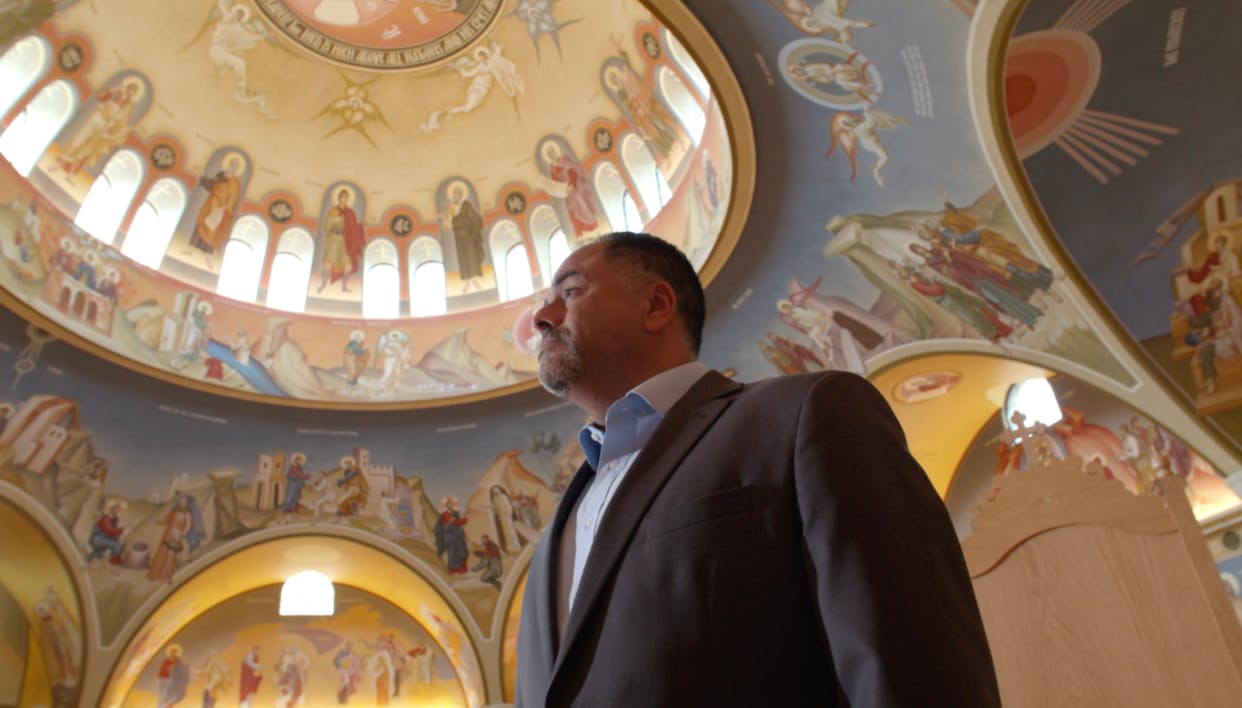
For Curtis, this course helps students trace the pathways of knowledge — how ideas developed in medieval Iberia traveled through Africa, the Middle East and eventually the Americas. Curtis hopes that his passion for connecting regions, histories and communities makes the study of Arab Spain not only intellectually rigorous but also deeply relevant for students today.
“Teaching Arab Spain is a way of showing students that global histories are woven into their everyday lives here in Indianapolis,” said Curtis. “These connections have always been part of our world, whether we recognize them or not.”
One of the most overlooked aspects of this history is the transmission of Andalusi culture into the Spanish colonial world, which then shaped the languages, identities and material culture of Latin America.
Through colonization, Arabic-derived vocabulary entered the Spanish spoken across the Americas; architectural patterns influenced the design of buildings and courtyards; and agricultural systems, crops and technologies first introduced into Iberia by Muslims became staples of Latin American landscapes.
“Wherever there is Latino or Hispanic heritage in the Americas, you see the imprint of Arab Spain — from tile patterns to architectural design,” said Curtis.
One of course’s primary goals is to equip students to see Latin America not as an isolated cultural sphere, but as one deeply informed by the legacies of the Islamic world.
This perspective is central to the Arabic and Islamic studies minor at IU Indianapolis, which emphasizes how global histories intersect across time and place. Courses in this program ask students to examine the movement of ideas, peoples and cultural forms — from Islamic civilization to the Middle East, North Africa and the broader Mediterranean.
By exploring Al-Andalus in conversation with Latin American histories, students develop a more sophisticated understanding of identity, diaspora and cultural hybridity.
Curtis’s dedication to contextualizing these histories for IU Indianapolis students is especially evident in the way he highlights their ongoing relevance. He has built the Arabic and Islamic studies program grounded in the idea that global history becomes most meaningful when students can see how it shapes the world around them.

“There’s a perception that Arabs and Muslims are new to the West,” said Curtis. “The story of Arab Spain shows they have always been part of it.”
His course design encourages students to view Arab Spain not as a distant or isolated civilization but as a living example of how cultures interact, blend and transform across time. This approach aligns with his broader commitment to public scholarship — seen in his work on Arab Indianapolis, Muslim American history and community-based historical projects.
These courses encourage students to question simple narratives of clash or separation and instead focus on how intellectual exchange and cultural blending have shaped the world they live in.
The university’s broader liberal arts curriculum further aims to strengthen this understanding. Through programs in religious studies, history, anthropology and Latino studies, IU Indianapolis encourages students to analyze transnational connections and the layered nature of cultural identities. Studying Arab Spain provides a concrete historical case that illustrates these interdisciplinary themes.
The very questions students confront in class — “How do civilizations learn from one another?” “How do languages evolve through contact,” “How do migrations transform societies?” — reflect the same processes that defined Andalusi history. These are also the questions that shape contemporary conversations about cultural diversity on campus.
“Education should liberate us from our own narrow perspectives,” said Curtis. “If you only study people who reflect you, you deprive yourself of the depths of humanity you can construct inside yourself.”
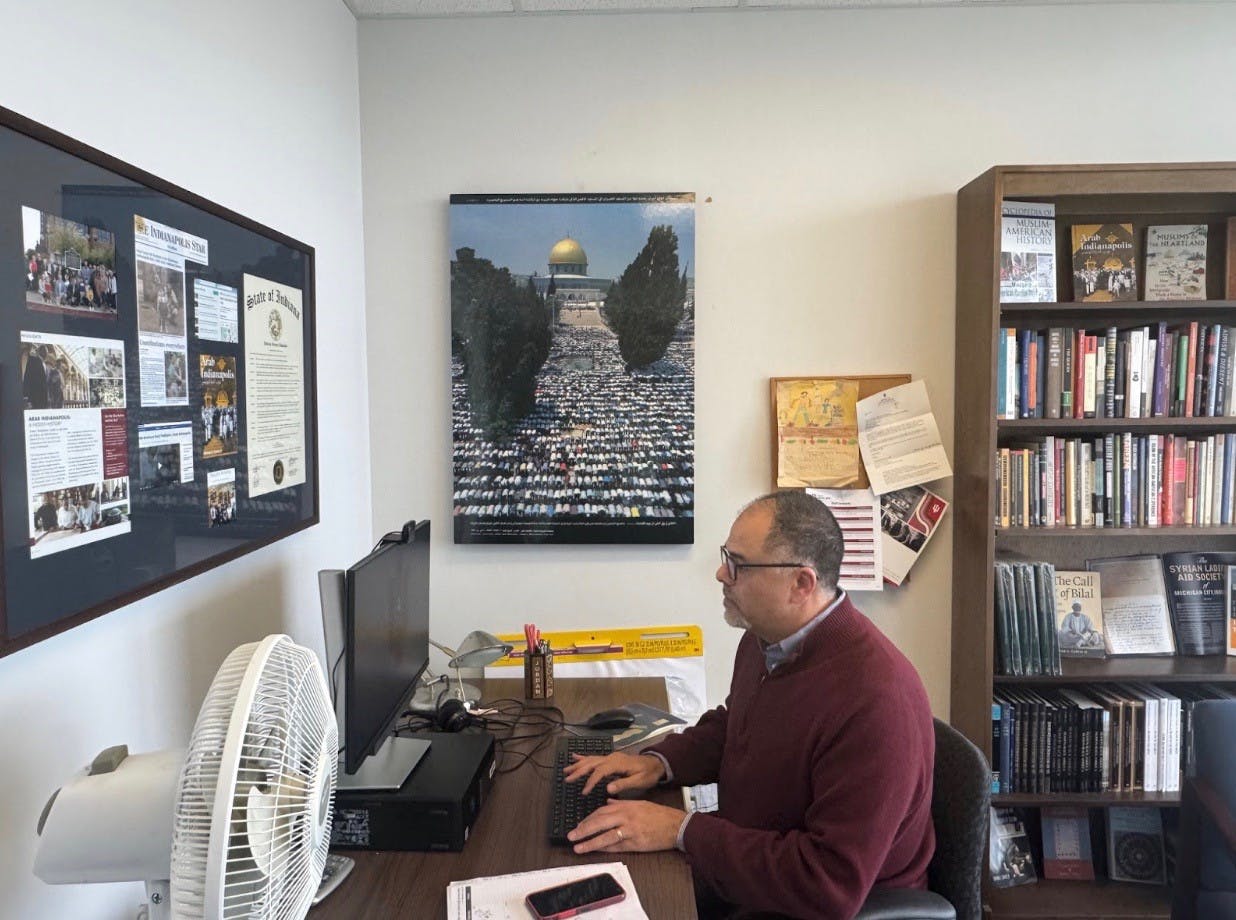
For Curtis, engaging seriously with the history of Al-Andalus gives IU Indianapolis students a lens to interpret global interconnectedness and their own educational environment. The campus’s emphasis on cross-cultural understanding mirrors the intellectual spirit of Al-Andalus, where translation, debate and intercultural exchange drove innovation.
“Learning about those you initially think of as different from you is a way of becoming a better version of yourself — of deepening your own humanity,” said Curtis.
By studying this history within the context of IU Indianapolis’s academic offerings, Curtis also hopes students gain the necessary tools to analyze the ongoing creation of cultural identities and the shared histories that link different parts of the world.
The legacies of Arab Spain continue to matter not merely because of their past brilliance, but because they illuminate how cultures interact, transform and build upon one another. For students at IU Indianapolis, this course was developed to enrich their understanding of global learning, deepen their engagement with programs like the Arabic and Islamic studies minor and demonstrate how ideas forged centuries ago still shape the intellectual landscape of the university today.
“Bringing back the story of Arab Spain is a way of reclaiming our humanity amidst dehumanizing discourses that turn all of us into objects rather than subjects of our own story,” said Curtis.
Salsabil F. Qaddoura is the campus editor, financial officer and co-social media editor of The Campus Citizen. She is an undergraduate student on a pre-law track with a minor in business. She is passionate about public service and volunteerism to better our communities and the world.

Making space to create: Why Herron’s National Portfolio Day belongs to the whole campus
By Sarah Pinckard | Sept. 10Herron School of Art and Design will host National Portfolio Day on Saturday, giving prospective students a chance to present their work to art and design schools from across the country accredited by the National Association of Schools of Art and Design. The event runs like a college fair, with students meeting representatives from the schools they choose and looking for the place they fit as an emerging artist.
The study abroad fair: opportunity beyond U.S. borders
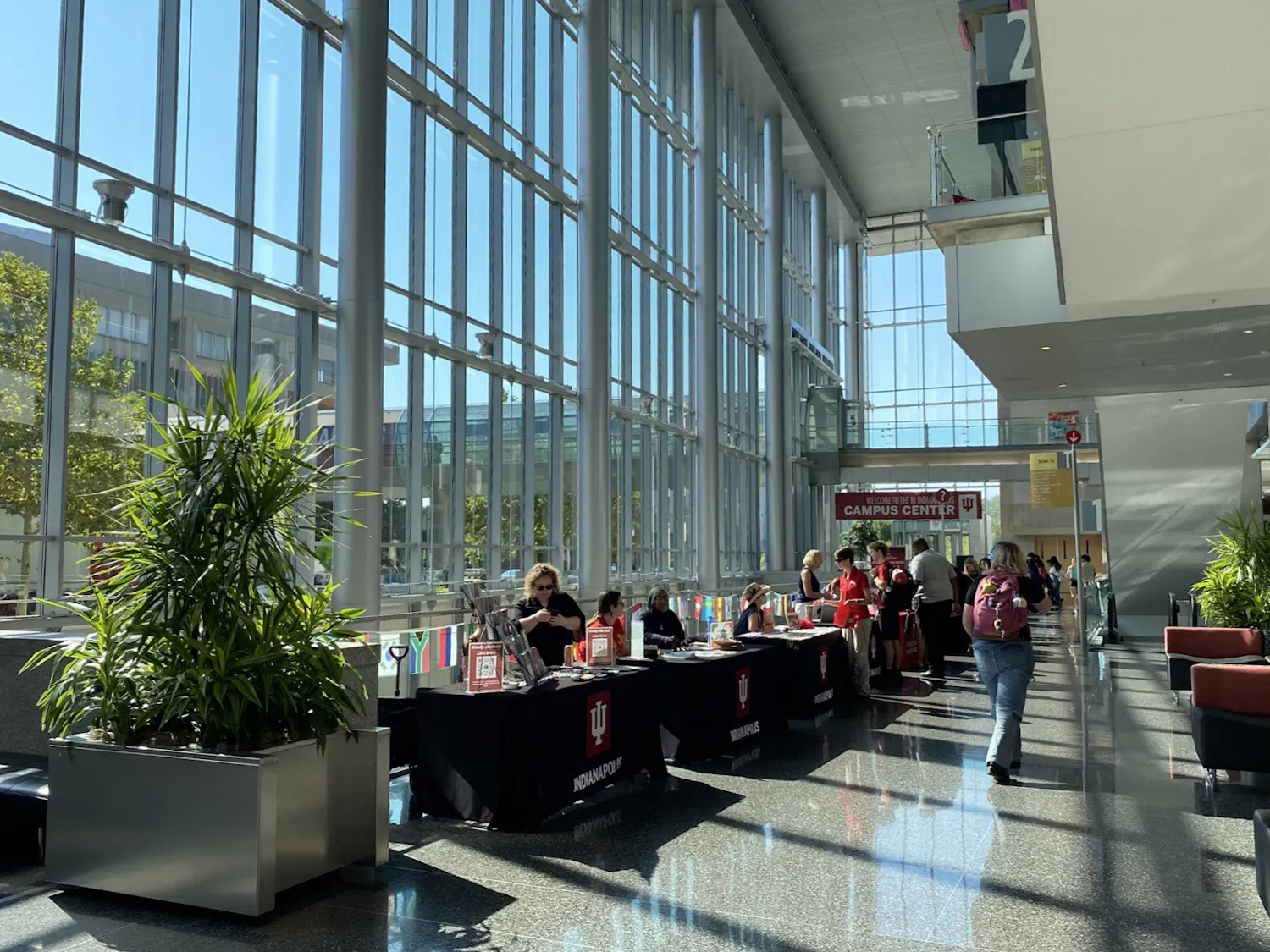
By Devin Bates | Sept. 7The Division of Student Affairs is holding a series of welcome and opportunity events for students as part of Weeks of Welcome, a two-week run of expos and programs at the start of the semester aimed at getting students involved on campus and abroad.

Troi Wharton had to learn how to walk again. Ten years later, she walked the Kelley graduation stage.
By Salsabil F. Qaddoura | May 31Troi Wharton remembers the first time people noticed she could not walk straight. It was 2016, and Pokémon Go had taken over the summer. Wharton, then 20, was playing the game around Indianapolis with friends and family. At the canal. At the zoo. Anywhere her phone told her another Pokémon might appear. The game required players to physically move through the real world. For Wharton, that meant walking more than usual. For the people around her, it meant seeing what she had not yet accepted.
