
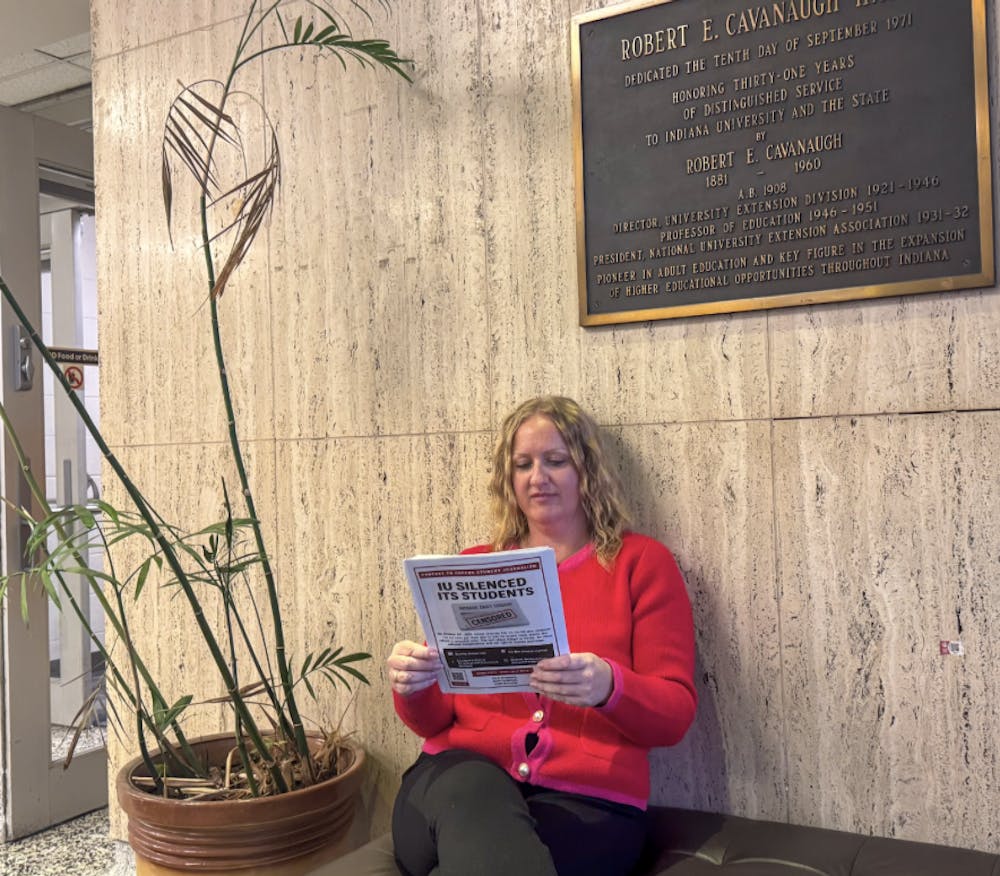
Maggie Hutton, a J.D. candidate at the Indiana University Robert H. McKinney School of Law, is the organizer behind Tuesday’s student-led protest in response to Indiana University’s decision to defund and dissolve the Indiana Daily Student’s print operations and dismiss its longtime student media director. The move, announced earlier this month, effectively ends the IDS’s 155-year tradition of student-run print journalism and has sparked widespread criticism from students, alumni and press freedom advocates across the state.
Balancing law school, family life and advocacy, Hutton coordinated the demonstration to defend free press and student expression across IU campuses. In this interview with The Campus Citizen, she shares what motivated her to take action, why student journalism matters to democracy and how collective advocacy can make a difference.
Q: First, can you tell us a little bit about yourself? What drew you to study law at IU McKinney, and what areas of law interest you most?
A: I went back to law school later in life. I’m the kind of person who, when someone mentions a problem, I just want to do something about it. I got tired of complaining about issues in society without having the tools to make a difference. So I decided to go to law school. I have three kids and own a business, so I couldn’t leave the state. IU McKinney was the natural choice—and it’s a great school.
I initially enrolled with the intention of becoming a public defender. I know in this state public defenders face many challenges, but I want to help reduce biases in the judicial system. For instance, Black men are statistically sentenced to an average of seven more years than others. If I can help provide fair representation to lessen that gap, that’s worth it.
My assessments at McKinney often highlight public defense, criminal law, and also areas like government relations, advocacy and public policy. I’m not sure where I’ll end up, but I trust that the universe will take me where I’m supposed to be.
Q: And what does journalism, especially student journalism, mean to you?
A: Honestly, if I wasn’t in law, I’d probably be a journalist. I love the field, and I think it’s crucial—it’s the foundation of our democracy. Free press is how we hold power accountable.
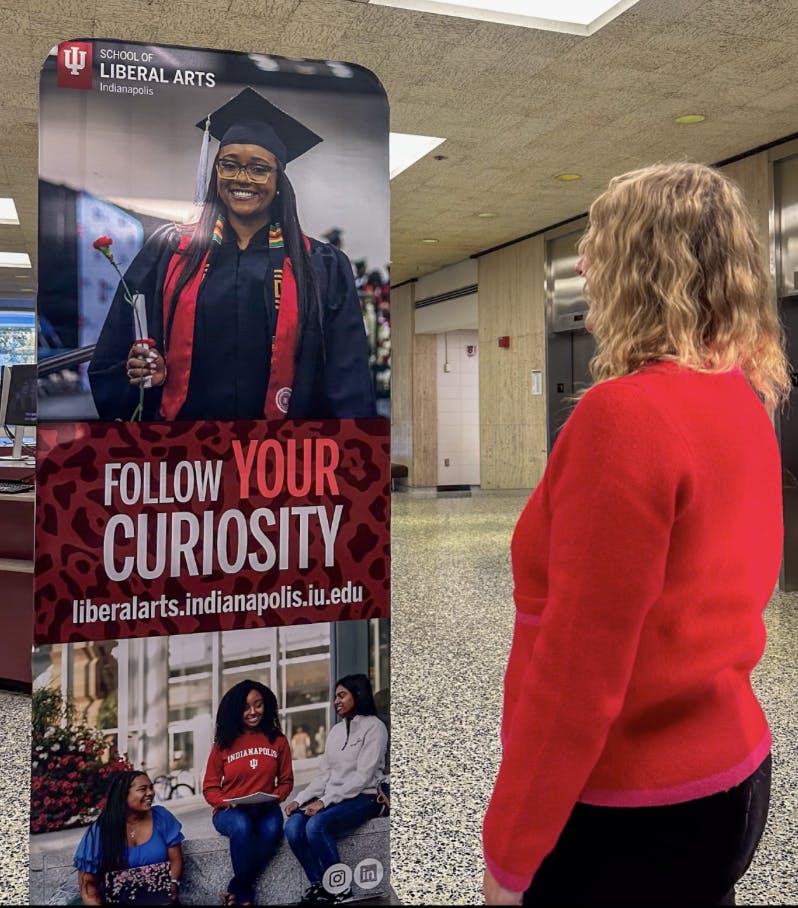
When I walked into the School of Liberal Arts, I saw the sign that says “Spark Your Curiosity.” That really struck me, because how can we say that while censoring a student newspaper? Those two things don’t align. Journalism gives people—the majority—their voice. That’s why it matters to me: I want people to be heard. I have kids, and I want them to grow up in a free and safe democracy. Free speech is a huge part of that.
Q: How did you first hear about IU’s decision to cut the IDS, and what was your initial reaction?
A: I heard about it through social media and news outlets, but honestly, I wasn’t surprised. I’ve been pretty involved in local and state politics, so I’ve been following what’s been happening with IU and Governor Braun.
Still, it made me sad and angry. Every step we take toward censoring the media is one step closer to authoritarianism. There’s fear in that, but also determination.
Q: From your legal perspective, what’s most concerning about IU’s actions—ending the print edition and firing the student media director?
A: From a public policy standpoint, we’re censoring the public. The IDS has been around for over 150 years, highlighting stories that wouldn’t otherwise be told—and it’s entirely student-led. So why silence that?
It’s not just about journalism—it’s about silencing young people, the next generation, the ones shaping what our state and country will become. That’s what worries me most.
Q: You have kids, law school and a business. Yet you still decided to coordinate this protest. What made you take on something so time-consuming and intense?
A: Being in school since 2020 while raising three kids has been slow and challenging, but honestly, students like you inspire me. The younger generation gives me hope.
I tell my friends all the time—don’t worry, the next generation has it. If I can be a tool to help amplify those voices, then I’ll do it. I don’t have special connections—I just started researching, emailing legislators, and reaching out. Anybody can do this.
Q: A lot of people feel frustrated or burnt out with the system. What’s your advice to them?
A: It might sound cliché, but one person really can change the trajectory of things. Even this conversation could change something for one of us.
I love the saying my younger classmates use—“Do it for the plot.” It’s funny, but true. One small action can change everything. We’re all overwhelmed right now, and many people are scared. That’s exactly why those of us who can speak up, should. Those with privilege need to rise in solidarity.
Q: Universities often justify decisions like these as “budget cuts” or “digital transitions.” How do you respond to that?
A: I saw that reasoning—saying it’s about environmental impact or digital media—but that’s not the point. If students find value in having their voices in print, then that should matter most.
The IDS is student-led. The people making these top-down decisions don’t represent that community. What message are we sending by censoring students? It says a lot about where society is heading.
Q: Can you walk me through what the protest will look like?
A: I have class until 4:10, and after that, we’ll meet in the courtyard in front of Cavanaugh Hall to make signs. I brought poster boards and markers for anyone who needs them.
The protest will officially start at 5:00 p.m., but we’ll probably have our first speaker—my husband—start around 5:30. He’s a therapist and IU alum, and he’ll speak as a concerned citizen and graduate. We’ll march around campus—nothing on the streets, just a peaceful walk to show solidarity and demand visibility.
Q: What obligations do public universities have to uphold editorial independence for student journalists?
A: Public universities represent the public—all of us. That means they must protect the diversity of opinions, experiences and perspectives. As long as a person’s speech isn’t harming others, we should be able to hear it.
Public universities are laboratories for democracy. Their obligation is to be the space where democracy happens—where students learn to question, debate and express themselves freely.
Q: IU has also had controversy surrounding its “expressive activity” policies. How do you think that ties into this situation?
A: When I was an undergrad here, we had the Democracy Plaza whiteboards in the Campus Center. It was a great space for open dialogue—even when it upset people. Eventually, it disappeared, and we didn’t realize at the time that it was the start of a trend.
Now, it feels like the “quiet parts” are being said out loud. One small act of censorship becomes another, then another. It’s gradual, and people don’t always notice until it’s gone.
Q: From your perspective as a law student, what does effective—and lawful—student advocacy look like right now?
A: Peaceful protest is one of the few tools we have left to make ourselves heard. It’s not violence—it’s expression.
You can email legislators all day and never get a response. I did that while organizing this protest. So sometimes, gathering collectively is the only way to make those in power listen. If we do it lawfully and peacefully, it’s one of the most powerful forms of advocacy.
Q: Do you anticipate any backlash from the university or others for organizing this?
A: I’ve been careful—I didn't hang flyers in official IU buildings, only shared them with professors and student groups that were open to it. I don’t expect backlash, but if it happens, I’m not afraid.
Q: Finally, what do you want participants and observers to take away from this protest?
A: That anyone can do this. You don’t need permission to stand up for what’s right.
Some of my law school peers are coming because they trust me, and it’ll be their first protest. That means a lot. I want people to see that if I can do it—with three kids, school and work—so can they.
Use your privilege for good. Advocate for others. And remember, we’re standing on the ceilings built by generations of student activists before us. We owe it to them—and to those who come after—to keep going.
Salsabil F. Qaddoura is the campus editor, financial officer and co-social media editor of The Campus Citizen. She is an undergraduate student on a pre-law track with a minor in business. She is passionate about public service and volunteerism to better our communities and the world.

Making space to create: Why Herron’s National Portfolio Day belongs to the whole campus
By Sarah Pinckard | Sept. 10Herron School of Art and Design will host National Portfolio Day on Saturday, giving prospective students a chance to present their work to art and design schools from across the country accredited by the National Association of Schools of Art and Design. The event runs like a college fair, with students meeting representatives from the schools they choose and looking for the place they fit as an emerging artist.
The study abroad fair: opportunity beyond U.S. borders
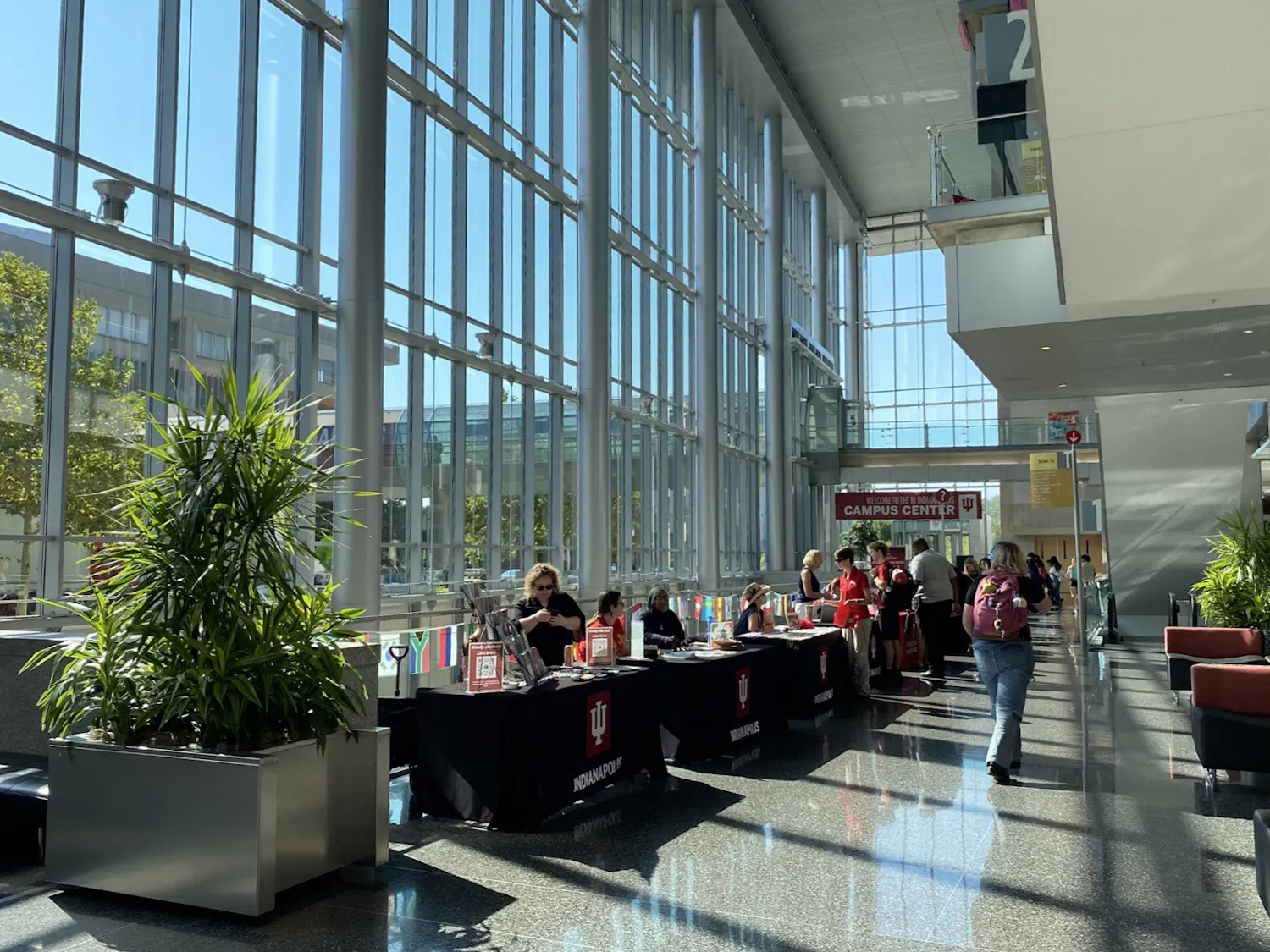
By Devin Bates | Sept. 7The Division of Student Affairs is holding a series of welcome and opportunity events for students as part of Weeks of Welcome, a two-week run of expos and programs at the start of the semester aimed at getting students involved on campus and abroad.

Troi Wharton had to learn how to walk again. Ten years later, she walked the Kelley graduation stage.
By Salsabil F. Qaddoura | May 31Troi Wharton remembers the first time people noticed she could not walk straight. It was 2016, and Pokémon Go had taken over the summer. Wharton, then 20, was playing the game around Indianapolis with friends and family. At the canal. At the zoo. Anywhere her phone told her another Pokémon might appear. The game required players to physically move through the real world. For Wharton, that meant walking more than usual. For the people around her, it meant seeing what she had not yet accepted.
