
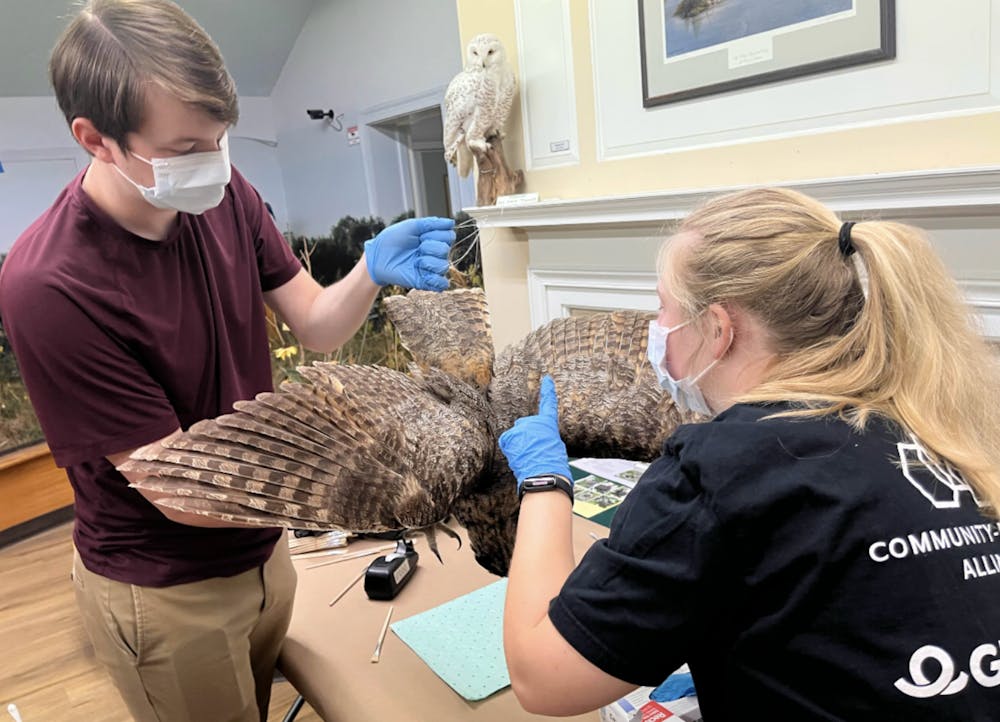
To glove or not to glove—that is the question, at least in museum collections care, that is. This is one of the many questions students are trying to answer in an innovative and collaborative class that crosses not only IU and Purdue lines, but also oceans and disciplines.
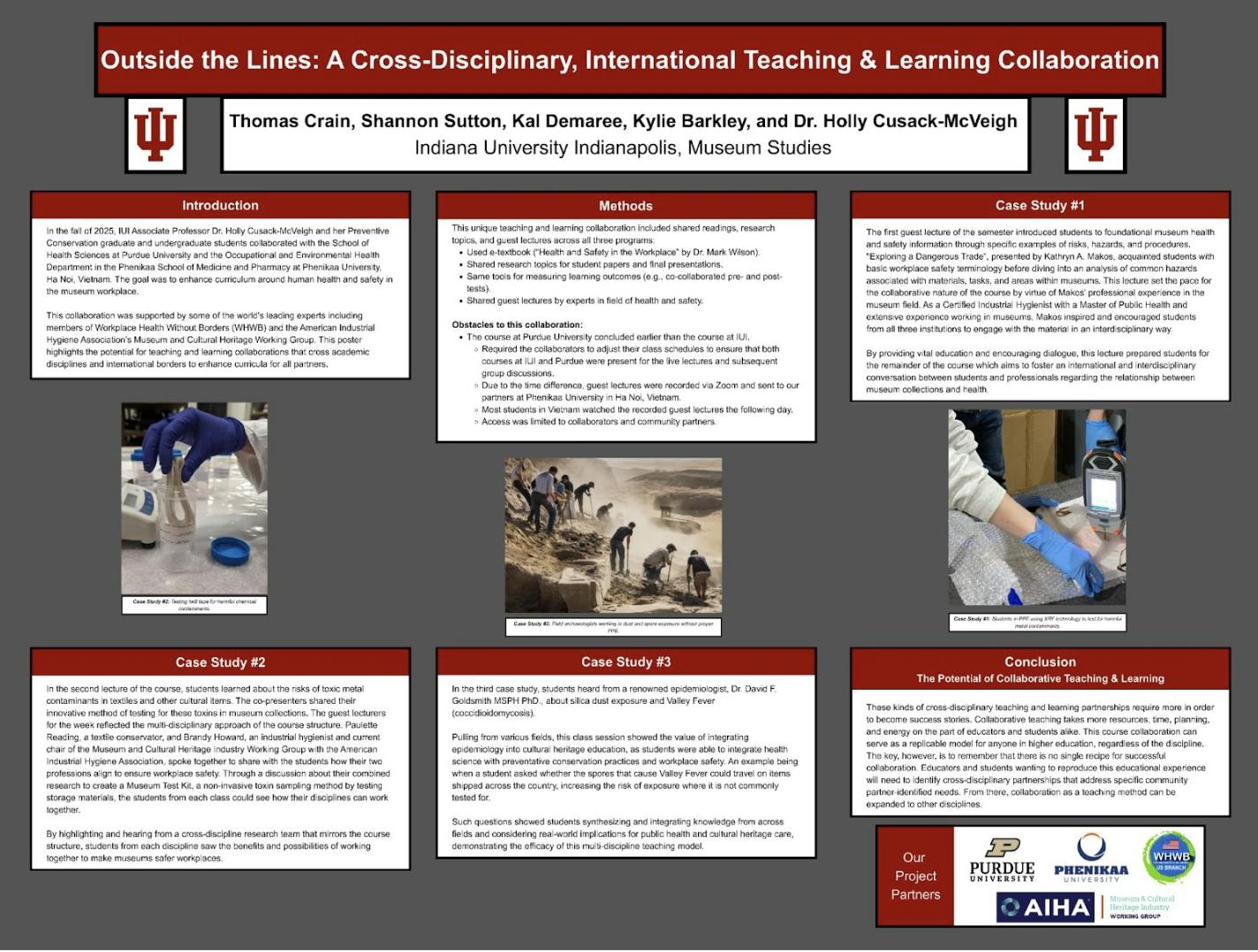
Holly Cusack-McVeigh, associate professor of anthropology and museum studies at IU Indianapolis, Mark Wilson, clinical assistant professor for the occupational and environmental health sciences and the biomedical sciences at Purdue and Hien Thi Thu Ngo, occupational and environmental health faculty of public health at Phenikaa University, worked together to create Preventive Conservation, a course that offers students the opportunity to explore preventive museum conservation from different disciplinary backgrounds.
According to Cusack-McVeigh, the course was first conceptualized by herself and Wilson, starting as a one-week summer course turning into an entire semester-long class for their students.
“The Preventive Conservation course evolved over time—shifting from a single one-week unit on museum health and safety to weekly units on various topics related to human health and safety in this unique workplace. Students learn to effectively communicate the role of preventive conservation in a variety of institutions, including museums, historic buildings and art galleries,” Cusack-McVeigh said. “They are encouraged to think critically about the philosophies and approaches to preventive conservation and be able to evaluate various resources within these theoretical frameworks. But, they also learn to tackle real world problems in a collaborative, team-based approach where students learn from one another across disciplines.”
The class takes a “team-based” approach where students are able to learn from each other and combine their expertise to create a more cohesive understanding of a topic.
“This cross-disciplinary collaboration allows us to address these health and safety issues from multiple perspectives, drawing on the expertise of various scientists and scholars from diverse fields including museology, conservation, industrial hygiene and epidemiology to name a few,” Cusack-McVeigh said. “This team-based approach to addressing real world problems enhances our teaching and training of emerging professionals, strengthens student learning (they learn from one another) and, through this collaborative process, makes communities and workplaces safer for everyone.”
Another interdisciplinary aspect of the course is that students from Phenikaa University in Vietnam are also a part of the class. Despite the time difference, students will sometimes join the class virtually although all materials are recorded for them to watch later.
While the heart of this class is about caring for museum collections, it also provides a heavy emphasis on personal protection when it comes to taking care of these objects/collections.
“Preventive conservation is the broadest technique by which preservation of museum objects and collections is achieved. Emphasis is placed on measures that prevent or reduce the potential for damage and loss. Central to preventive conservation methodology, topics include handling procedures, proper storage, environmental management, agents of deterioration, risk analysis, emergency preparedness and planning. But, this course also emphasizes current health and safety issues relevant to the museum collections field,” Cusack-McVeigh said.
According to Kylie Barkley, a research assistant for this course, the first part of the class is discussion and speaker based, where each week they have a different member of the field speak to the students about their expertise.
“Most weeks we will have a guest speaker, so we connect with them through Zoom. It is usually a professional in the field,” Barkley said. “We usually record the sessions so that they [the students from Phenikaa University] can watch later, but we’ve had some students come pop on as well as the instructor. We invite them to ask questions that they might have and then our students ask questions.”
The second half of the class is more hands-on.
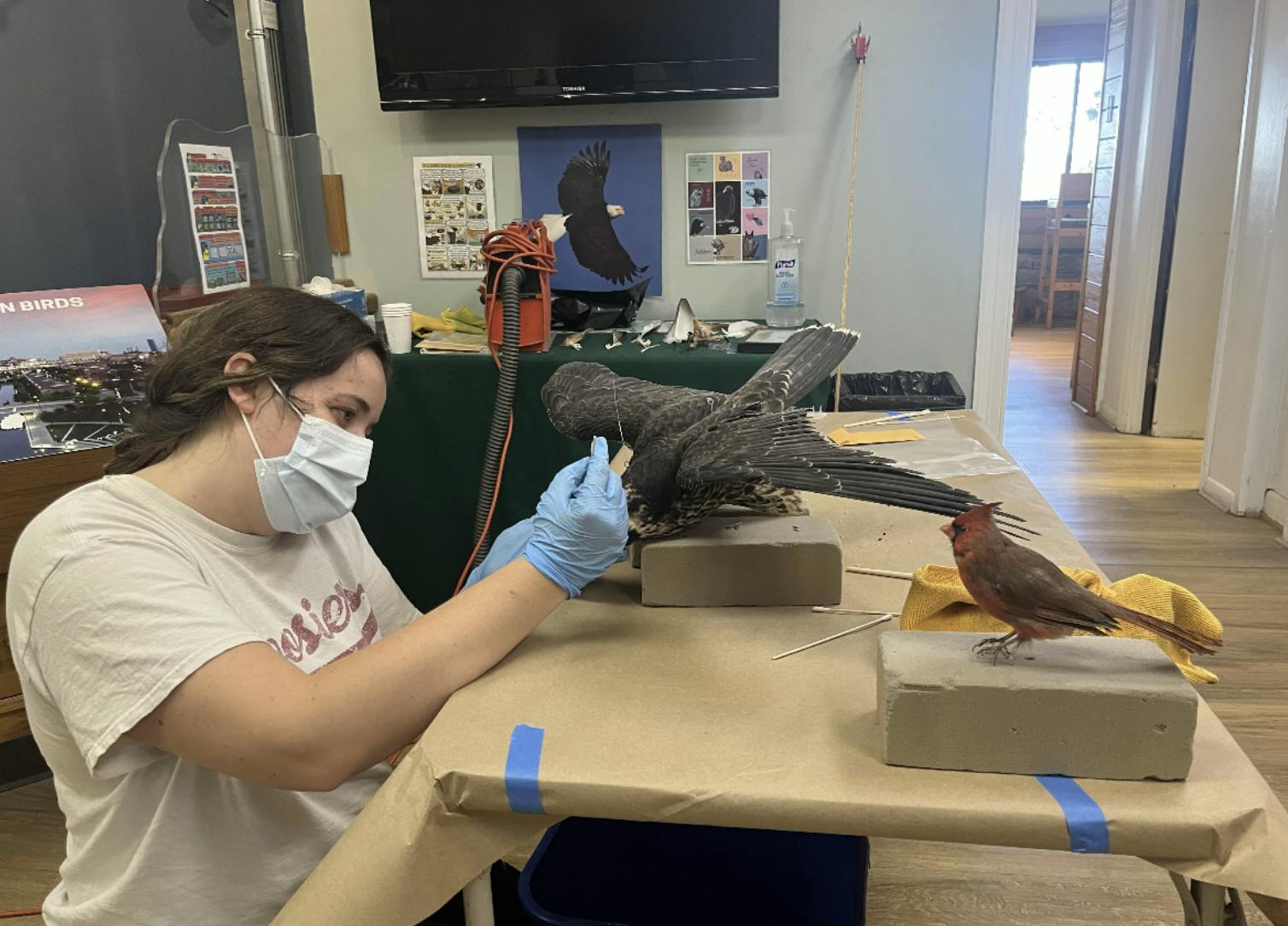
“We’ll either do a lab or a lecture. I know last week we did a lecture on natural history collections, and we did a mini lab with some bird taxidermy that we have in our teaching collection,” Barkley said.
Another key opportunity for students to get hands-on experience is through service learning days. Students will go to different facilities in the community to get hands-on experience with preventive conservation techniques.
“For the hands-on stuff, we do a lot of service learning. We’re going to Eagle Creek Ornithology Center to go clean their collections, but the visitors will be coming through at the same time. We’ll be educating them about this process of cleaning taxidermy,” Barkley said. “We can educate them about heavy metal contaminants as well as regular cleaning and just trying to preserve their collections. So it’s public outreach and community collaboration with our partners here in Indy.”
For Barkley, this course offers a unique opportunity to look at the risks and hazards that come with museum collection management, something often overlooked when in the field.
“We don’t often, in the field, think about our personal safety. There are a lot of hazards in museum collections, heavy metal exposures and others like dust management,” Barkley said. “Things like that can affect our health. So, for us, hearing the industrial hygiene side of it is good to have an awareness that, when we’re working in these collections, we’re thinking about our own safety.
According to Cusack-McVeigh, the greatest takeaway for their students is the opportunity to foster reciprocal learning opportunities.
“By teaching collaboratively and across disciplines, these co-designed, collaborative learning activities extend beyond academic circles to our community partners. This is a process of co- creation that can reshape the field of SoTL [scholarship of Teaching and Learning],” Cusack-McVeigh said. “It is my hope that in this course students will move beyond knowledge acquisition and not only become better learners, but will become self-reflective, skilled, and engaged leaders in our world.”
Abigail Godsen (she/her) is a senior majoring in Applied Information Sciences with a minor in Classics. She is Editor-in-Chief for The Campus Citizen. When she isn’t writing, Abby likes to cook, do crossword puzzles and drink a lot of tea. She can be summoned using anything shiny or books.

Making space to create: Why Herron’s National Portfolio Day belongs to the whole campus
By Sarah Pinckard | Sept. 10Herron School of Art and Design will host National Portfolio Day on Saturday, giving prospective students a chance to present their work to art and design schools from across the country accredited by the National Association of Schools of Art and Design. The event runs like a college fair, with students meeting representatives from the schools they choose and looking for the place they fit as an emerging artist.
The study abroad fair: opportunity beyond U.S. borders
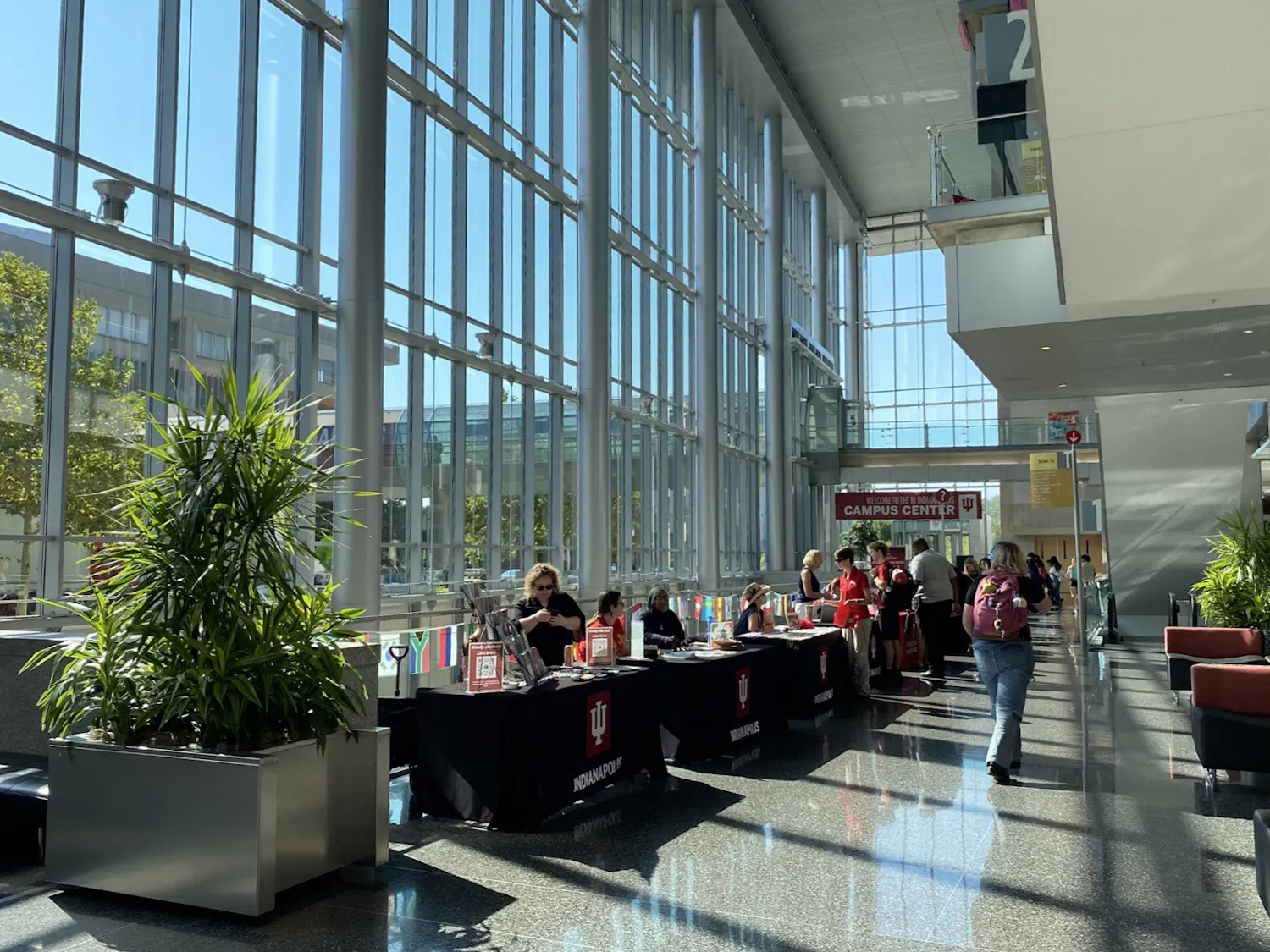
By Devin Bates | Sept. 7The Division of Student Affairs is holding a series of welcome and opportunity events for students as part of Weeks of Welcome, a two-week run of expos and programs at the start of the semester aimed at getting students involved on campus and abroad.

Troi Wharton had to learn how to walk again. Ten years later, she walked the Kelley graduation stage.
By Salsabil F. Qaddoura | May 31Troi Wharton remembers the first time people noticed she could not walk straight. It was 2016, and Pokémon Go had taken over the summer. Wharton, then 20, was playing the game around Indianapolis with friends and family. At the canal. At the zoo. Anywhere her phone told her another Pokémon might appear. The game required players to physically move through the real world. For Wharton, that meant walking more than usual. For the people around her, it meant seeing what she had not yet accepted.
