
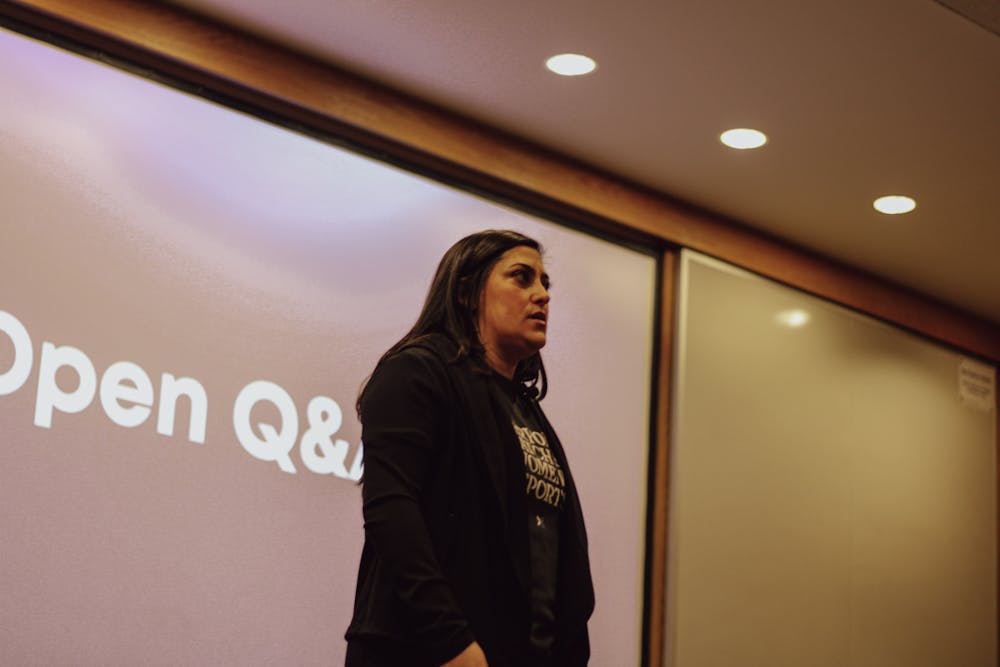
Dr. Jaimie Rubin’s résumé reads like the kind of career trajectory students often imagine but rarely see up close.
As director of sport psychology and team wellness for the Indiana Pacers and Indiana Fever, Rubin works at the intersection of mental health, elite performance and organizational leadership. Named to her role in Sept. 2024, she previously spent five years with Premier Sport Psychology in Minneapolis, serving as assistant director of sport psychology services for the Minnesota Twins and head sport psychologist for the Minnesota Lynx.
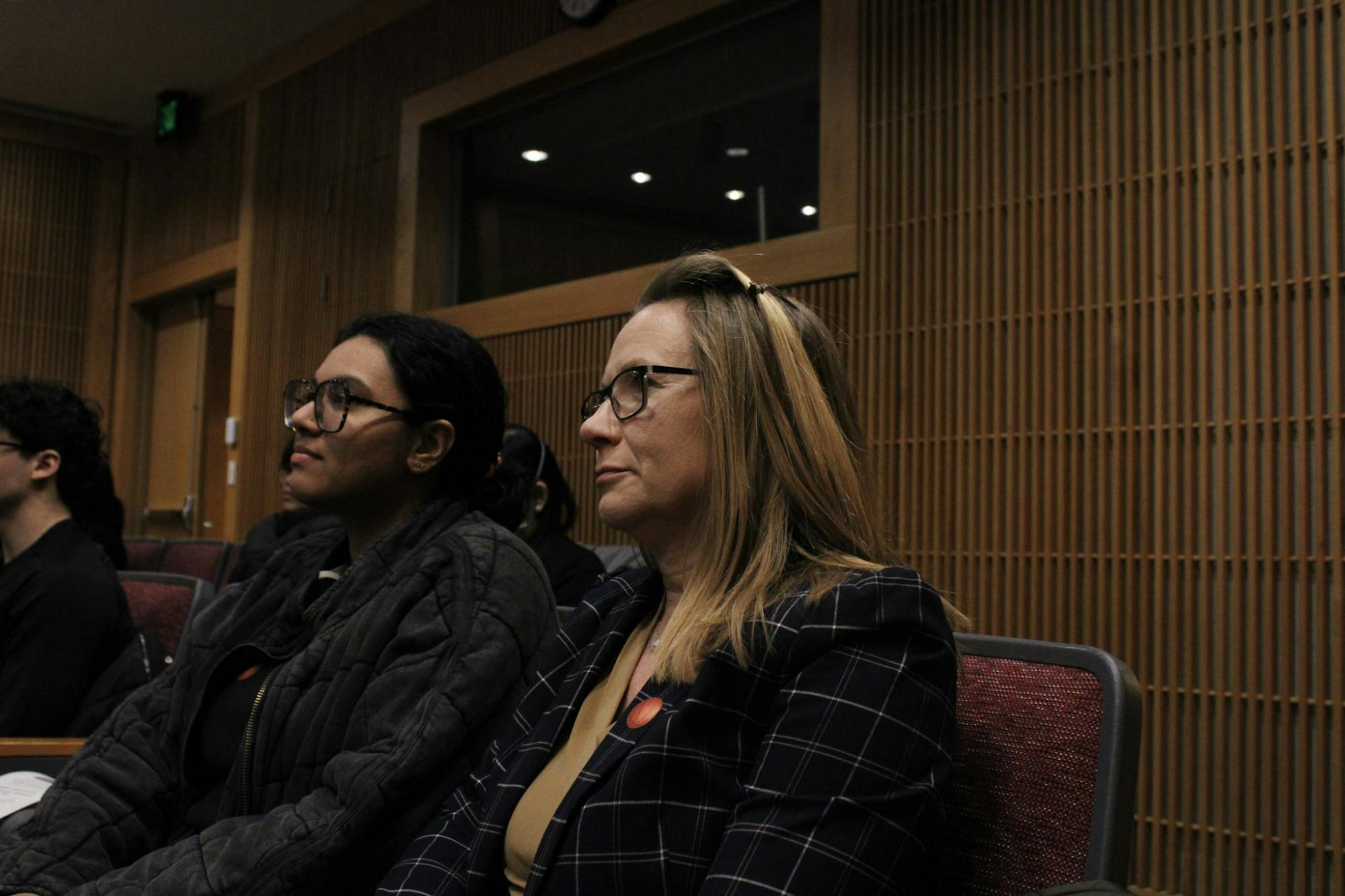
But on a chilly Wednesday afternoon in Lilly Auditorium, Rubin wasn’t courtside at Gainbridge Fieldhouse. Instead, she was speaking to IU students and faculty about her work in sports psychology — and about the evolving role psychology plays in athletics, leadership and identity.
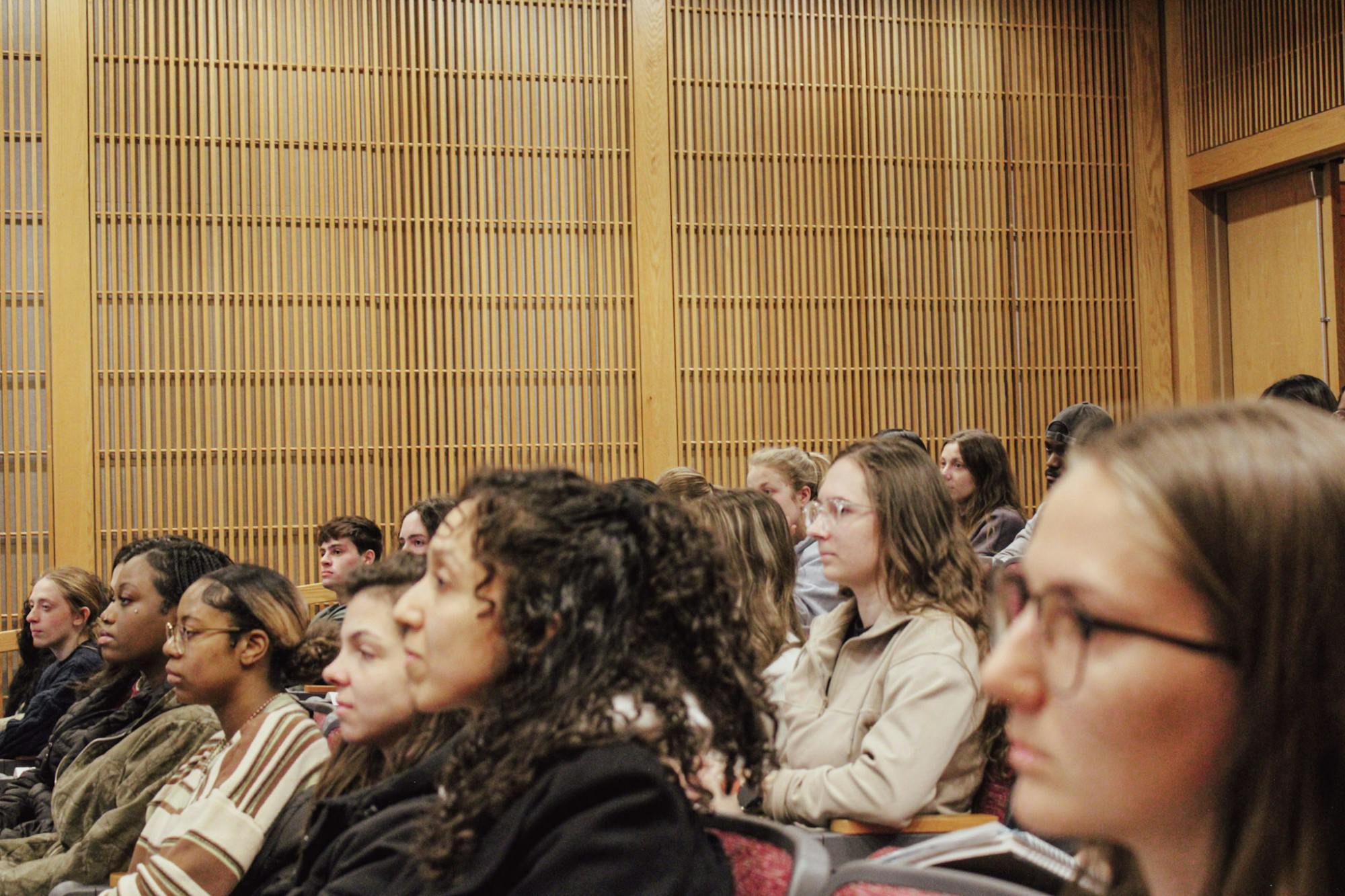
The event marked more than a guest lecture. It symbolized a rebuilding moment for the Department of Psychology and especially for its two intertwined student organizations, Psi Chi and Psychology Club.
Both clubs had experienced a period of dormancy in recent years. Under new faculty advisorship and new student leadership, they are being rebuilt almost from scratch.
“We are probably the main people who are getting the club back on its feet,” said Blair Miller, IU Indianapolis Psi Chi Honors Society president.
For Chloe Richter, president of Psychology Club, rebuilding has required creativity and collaboration.
“We’re both trying to figure out how to kind of build these things from, like, the ground up because we didn’t have much to start with at all,” Richter said.
Although Psi Chi and Psychology Club are technically separate organizations, their revival has depended on partnership. Faculty advisors encouraged them to see the clubs as historically interconnected.
“Psi Chi and Psych Club have always been intertwined,” Ritcher said.
When the students discovered their bank accounts were linked, the reality of that interdependence became clear.
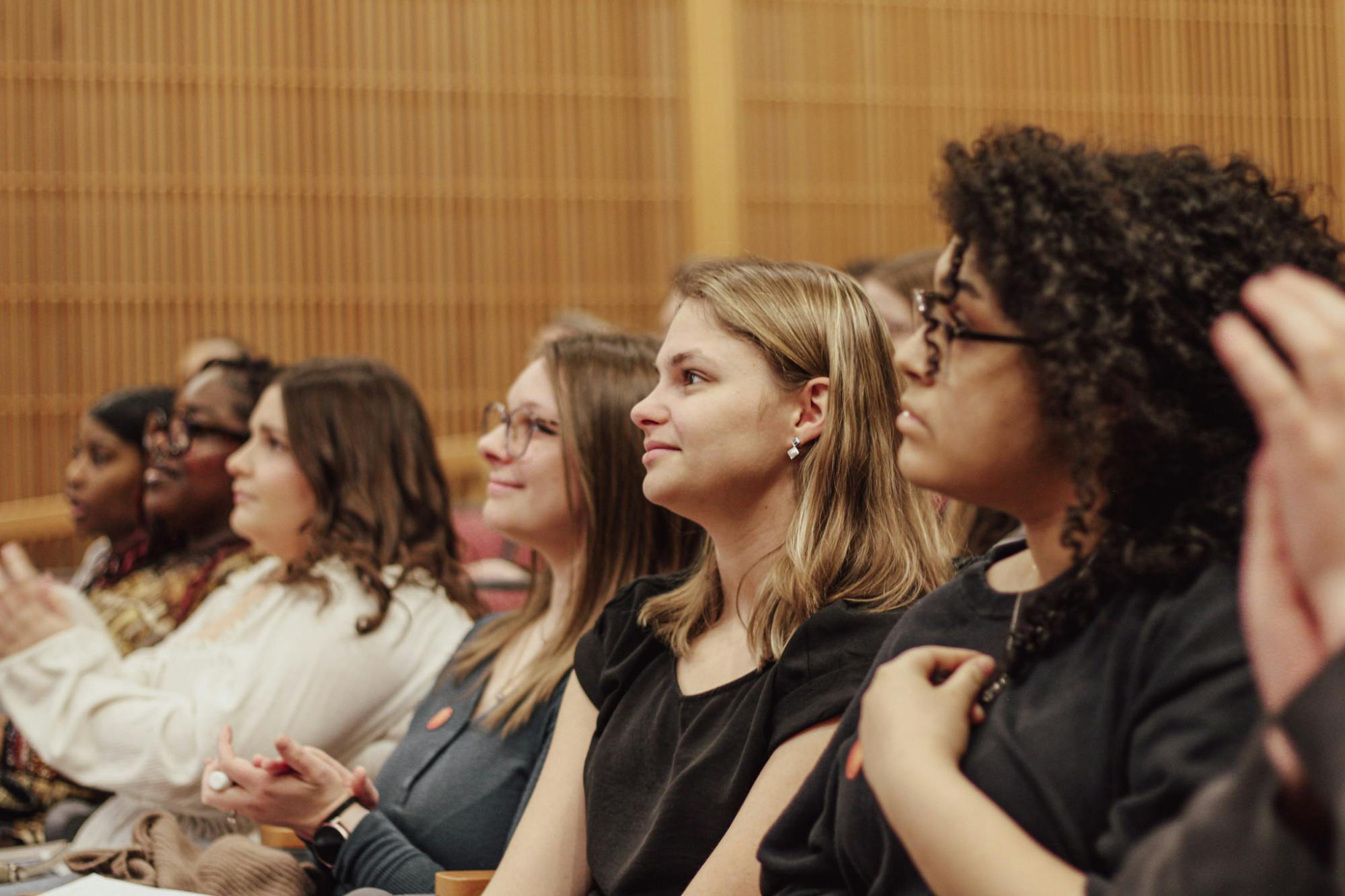
“We were like, wow, OK, so we’re besties now,” said Miller.
What began as logistical coordination evolved into a leadership partnership. Neither president initially expected to take on such visible roles, but both describe the experience as transformative.
“You learn a lot about yourself and about other people by being in these leadership roles,” Richter said. “You should never underestimate what you can do.”
Bringing Rubin to campus became their signature academic event — a visible signal that psychology at IU extends beyond lecture halls and into professional arenas.
Dr. Shenan Kroupa, full time lecturer in the Department of Psychology and adjunct faculty in the School of Liberal Arts, played a key role in making that connection possible. In addition to teaching women, gender and sexuality studies, she also leads career planning initiatives for undergraduate psychology majors.
“I’m not only an adjunct professor within [the] School of Liberal Arts because of my psychology of women class, but then also this directorship role for career planning for the undergraduate psychology majors,” Kroupa said.
Her academic background bridges psychology and gender studies. As an undergraduate, she said, she took both women’s studies and psychology in her first semester.
“The two really fused together in my mind,” Kroupa said.
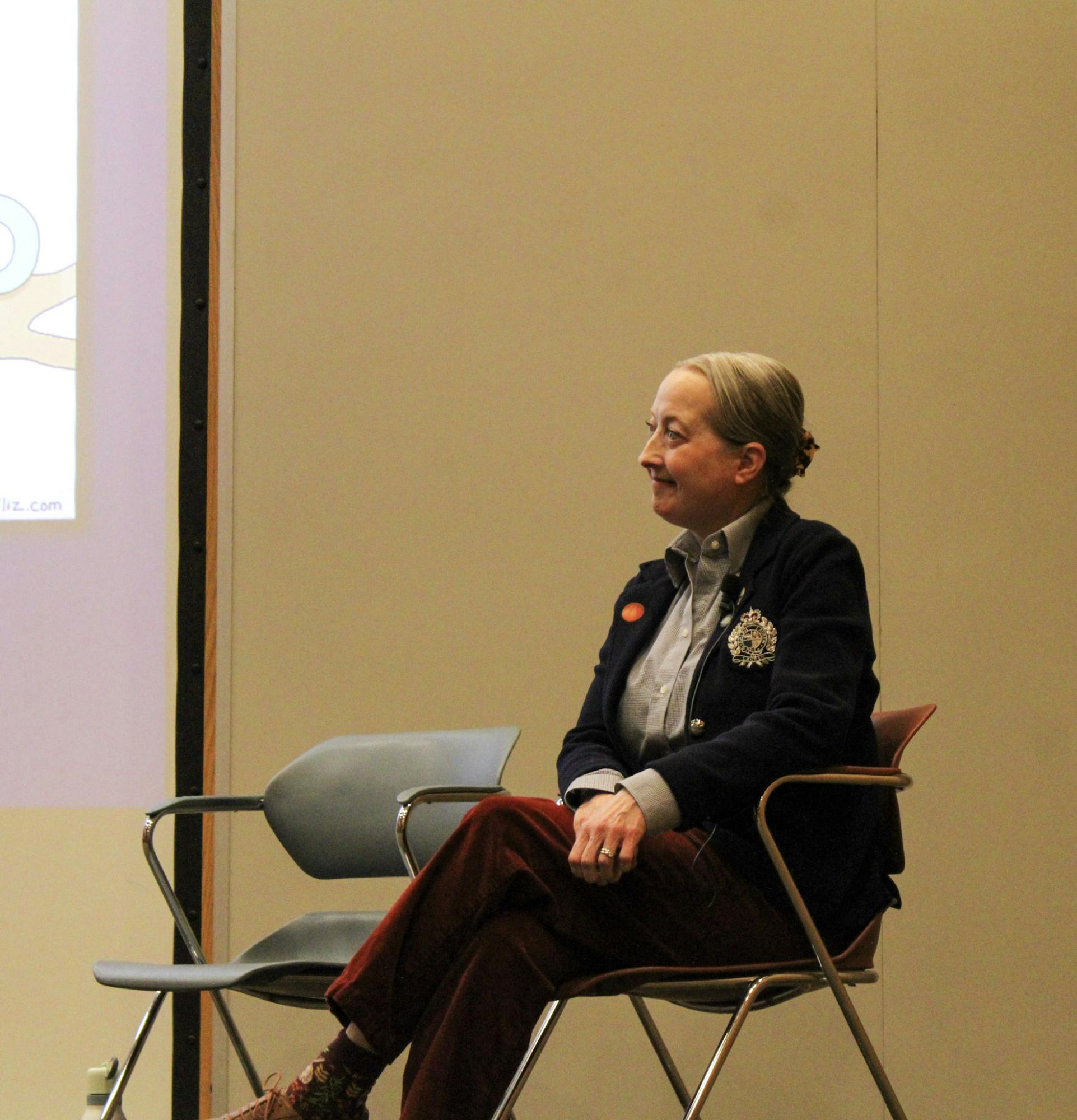
That interdisciplinary lens shaped the intentionality behind inviting Rubin. The department sought to highlight psychology not only as therapy or laboratory research, but as a field embedded in athletics, leadership and systems of power — especially gendered ones.
Rubin’s own work reinforced that framing. When asked how gender shapes her work with professional teams, she did not hesitate.
“The biggest thing that comes up to my mind when it comes to gender is power dynamics,” Rubin said .
Working across both the NBA and WNBA, she sees stark structural differences. On the women’s side, she noted, inequities are both cultural and economic.
“Most of the W[NBA] players I’ve worked with over the last five years have second jobs. Even though they’re professional athletes,” Rubin said.
On the men’s side, gender expectations surface differently — particularly around masculinity, vulnerability and expression.
“Their gender and how they inhabit that and how they express that is also quite a challenge,” Rubin said.
For Kroupa, who teaches psychology of women and examines gender systems academically, Rubin’s reflections offered students a live case study in how theory becomes practice. Gender identity, power structures and institutional inequities are not abstract ideas; they shape locker rooms, leadership hierarchies and professional trajectories.
Beyond gender, Rubin emphasized that sports psychology exists on a continuum between mental health and mental performance — two categories that are often falsely separated.
“We have to integrate a proactive approach,” Rubin said, describing how athletes warm up physically but rarely mentally. Athletes train their bodies, perform and review film — but structured mental preparation and reflection are often missing.
Her goal within organizations, she explained, is to make mental performance as normalized as physical conditioning.
At the same time, she draws clear ethical boundaries.
“The only time where I’m in a position where I even position myself in a way that would dictate a player’s play would be if there was a mental health emergency,” Rubin said .
That distinction — between supporting performance and controlling it — reinforces psychology’s professional integrity within high-stakes environments.
Another recurring theme in Rubin’s talk was identity. Professional athletes often begin training at young ages, investing nearly every aspect of their lives into sport. That singular focus can create intense psychological pressure.
“The only guarantee is retirement,” Rubin said.
And retirement often comes decades earlier than traditional career endings.
“When you’re meeting that immense life transition of everything you’ve ever done pointed at this thing at 27, you have an actual entire life to live after that,” Rubin said.
For many athletes, she added, the challenge is not just leaving a job — it is confronting the loss of a singular identity.
“The concept of them existing, even outside of that, is hard for them to grapple with,” she said.
Those reflections resonated with students preparing for their own career transitions — albeit in different contexts. The revival of Psi Chi and Psychology Club — resulting from student leadership and the co-faculty support of Kroupa and Neuroscience Program Director Amy Pearce — is itself an exercise in identity formation and professional exploration.
Both student presidents encourage peers to get involved early, even if leadership feels intimidating.
“Don’t be afraid to join a club if you never have before,” Miller said.
What began as hesitation evolved into confidence — and into the organization of a campus event that connected undergraduates with a professional working at the highest levels of sport.
The collaboration between student leaders and faculty advisors reflects the very principles Rubin described: proactive engagement, integrated systems and recognition of identity beyond a single role.
For Kroupa, whose academic path fused gender studies and psychology, and for Rubin, whose work bridges mental health and performance, the event demonstrated what interdisciplinary psychology looks like in practice.
For Psi Chi and Psychology Club, it marked something equally important: momentum.
The clubs are not simply resuming meetings. They are redefining what psychology can look like at IU — expanding from theory to application, from dormancy to leadership and from isolated student groups to a collaborative academic community.
In bringing Rubin to campus, student leaders did more than host a speaker. They modeled the very lesson the event emphasized: psychology is not static. It grows through initiative, partnership and the willingness to step into roles one never imagined holding.
Salsabil F. Qaddoura is the campus editor, financial officer and co-social media editor of The Campus Citizen. She is an undergraduate student on a pre-law track with a minor in business. She is passionate about public service and volunteerism to better our communities and the world.

Making space to create: Why Herron’s National Portfolio Day belongs to the whole campus
By Sarah Pinckard | Sept. 10Herron School of Art and Design will host National Portfolio Day on Saturday, giving prospective students a chance to present their work to art and design schools from across the country accredited by the National Association of Schools of Art and Design. The event runs like a college fair, with students meeting representatives from the schools they choose and looking for the place they fit as an emerging artist.
The study abroad fair: opportunity beyond U.S. borders
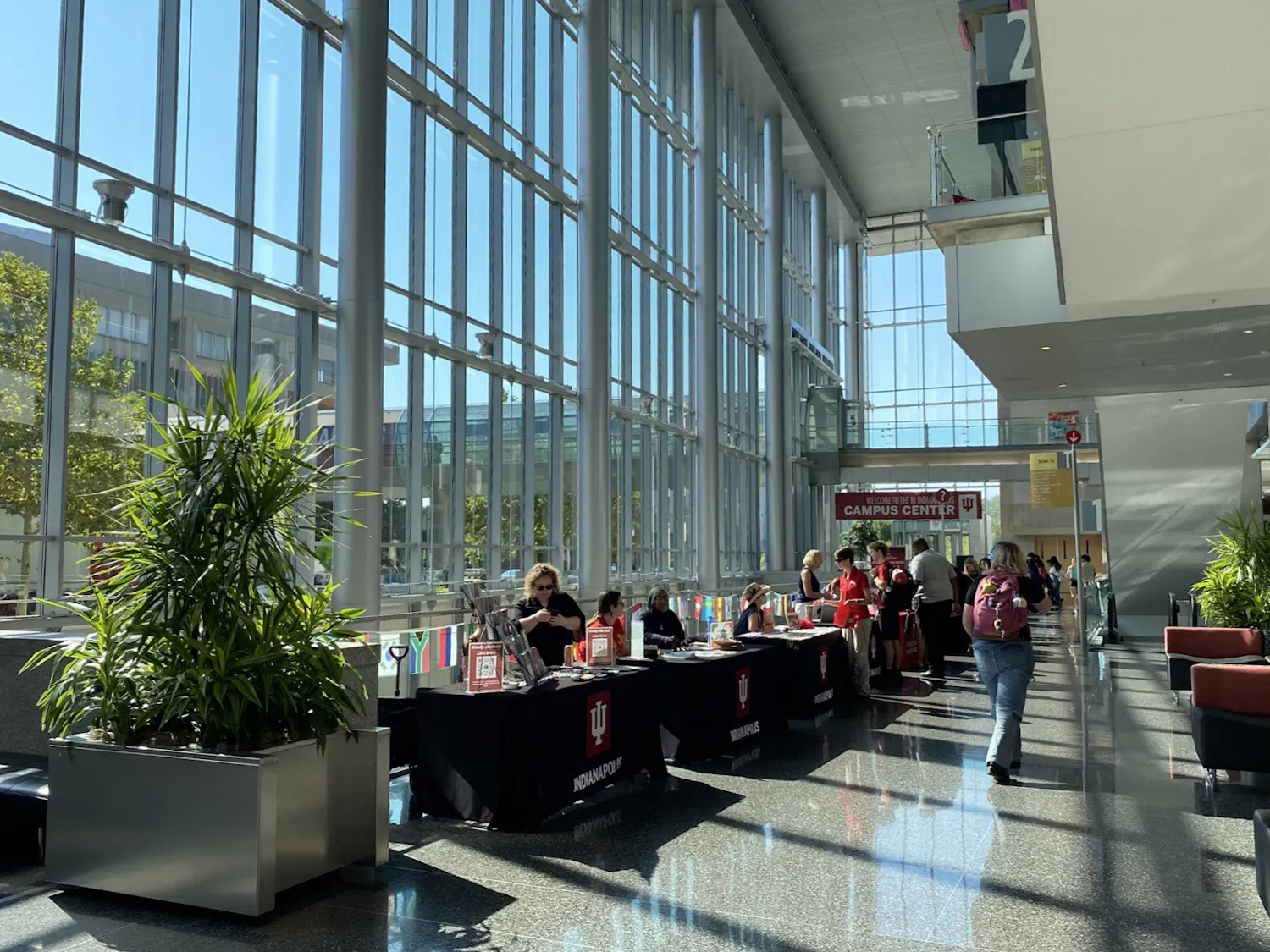
By Devin Bates | Sept. 7The Division of Student Affairs is holding a series of welcome and opportunity events for students as part of Weeks of Welcome, a two-week run of expos and programs at the start of the semester aimed at getting students involved on campus and abroad.

Troi Wharton had to learn how to walk again. Ten years later, she walked the Kelley graduation stage.
By Salsabil F. Qaddoura | May 31Troi Wharton remembers the first time people noticed she could not walk straight. It was 2016, and Pokémon Go had taken over the summer. Wharton, then 20, was playing the game around Indianapolis with friends and family. At the canal. At the zoo. Anywhere her phone told her another Pokémon might appear. The game required players to physically move through the real world. For Wharton, that meant walking more than usual. For the people around her, it meant seeing what she had not yet accepted.
