
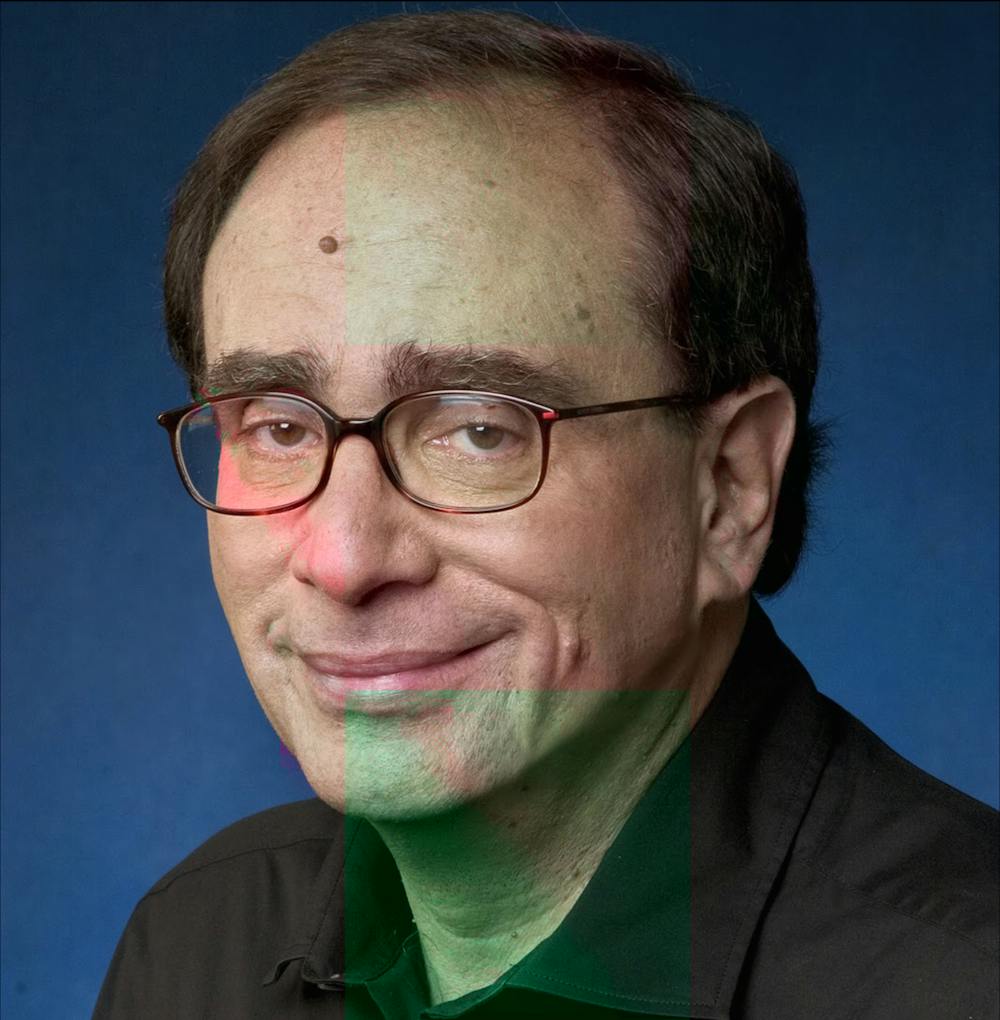
R. L. Stine has been giving young readers the chills for decades through his iconic “Goosebumps” and “Fear Street” series. Now, Stine will be sharing his best scares with the Indianapolis community on March 19 at the 2026 Marian McFadden Memorial Lecture with Mychal Threets of “Reading Rainbow” at the Madam Walker Legacy Theater.
Like many writers, Stine’s path into horror was shaped by early influences that sparked his imagination. Ray Bradbury was the one author to get him outside of the comic book world – a connection that later led to Stine being invited to visit the Ray Bradbury Center on IU Indianapolis’ campus during his upcoming Indianapolis visit.
“My mom dropped me off at the little library on Main Street [in Columbus, Ohio],” said Stine in an interview with The Campus Citizen. “This librarian was waiting for me. And she said, ‘Bobby, I know you like comic books. I have something else to show you.’ She took me to the shelf of Ray Bradbury's stories, and they were so amazing. That got me reading all kinds of science fiction and fantasy books.”
As his reading expanded, so did the list of storytellers who inspired his work.
“You know, when you write, there are a lot of people who are influential on you,” he said. “I think I've stolen every Agatha Christie plot. And Rod Serling, The Twilight Zone, that was also a very big influence, very important to me.”
Stine is especially aware of how his core readers engage with books at different ages, where his stories primarily target seven to 11-year-olds.
“[Seven- to 11-year-olds] want to know you, they want to read, they want to buy stuff – they're a wonderful audience,” said Stine. “Then when they turn 12, they have to be cool. And they're lost forever. They have to be cool the rest of their lives, and they don't care about authors at all.”
But behind the scares is a writer who carefully crafts his stories, and sometimes even removes modern technology to make them work.
“I spent a lot of time getting the phones out of there,” said Stine. “Usually near the beginning of the book, so I can have a real story. Someone collects them all, they all run out of power – something so that kids can't use their phones.”
Stine’s ability to tap into childhood fears may come from his own experiences growing up where he notes one memorable fear that shaped the second “Goosebumps” book, “Stay Out of the Basement.”
“My dad would say, ‘Go down and bring up a roast or something,’” said Stine. “And I'd have to go down, and it'd be this freezer that was shaped like a casket. It's like coffin-shaped, and I'd have to open the lid, and I always knew there'd be a body lying there. Some frozen body.”
Even with those real fears as inspiration, Stine says there’s a key rule he follows when writing horror for young readers.
“My rule for ‘Goosebumps’ is that the kids have to know that it's a fantasy,” he said. “The reader has to know this could never happen. It's just a made-up story. And if I establish that, then I can get pretty scary. I can go pretty far with the scares.”
While he’s written for a young adult audience as well, Stine states that he just loves to write – especially for the twist.
“There's a line in the ‘Goosebumps’ movie that I wish I had written,” said Stine. “Jack Black, at the end of the movie, is a teacher, and he tells the kids, ‘Every story has a beginning, a middle and a twist.’ That's just perfect. That's just what I try to do.”
Interestingly, Stine never originally set out to become a horror writer at all. He started his writing career by creating joke books and humor magazines. It wasn’t until an editorial director at Scholastic needed someone to write a teen horror novel This is where R.L. Stine, who never said no, picked up the task.
“So I went running to the bookstore to see what Lois Duncan and Christopher Pike were writing,” said Stine. “I wrote ‘Blind Date.’ It came out – it was a number one bestseller. Then I wrote ‘Twisted,’ another No. 1 bestseller. And I thought, ‘Forget the funny stuff. I've been scary ever since.’”
From childhood fears to unexpected career turns, Stine proves that sometimes the best stories – and the scariest ones – come from the most unlikely beginnings.
Melanie Contreras is a sophomore majoring in journalism with a minor in English and history while also working on a paralegal studies certificate. She is the culture and politics editor for The Campus Citizen. She enjoys drinking coffee and being a social advocate for the community.

Juneteenth marks the long road to freedom
By Salsabil F. Qaddoura and Zariya O’Yanna Burnes | June 19Juneteenth, shortened from "June Nineteenth," is a federal holiday that commemorates the emancipation of enslaved African Americans. Celebrated on June 19, it honors the anniversary of the day in 1865 when Union troops arrived in Galveston, Texas, to announce that the last enslaved people in the state were free. Widely observed as an African American holiday, Juneteenth marks the end of slavery in the United States.

Pride Month spotlights LGBTQIA+ artists shaping music
By Zariya O’Yanna Burnes | June 3June is Pride Month, a time to celebrate LGBTQIA+ culture, honor the history of the movement and support LGBTQIA+ people and organizations. The monthlong observance honors the 1969 Stonewall Uprising in Manhattan, widely considered a turning point in the LGBTQIA+ rights movement in the United States. The first Pride march in New York City was held June 28, 1970, on the first anniversary of Stonewall.

Hannah Montana 20th Anniversary Special: The highs and lows
By Olivia Arnold | April 8On March 24, 2006, the world met Hannah Montana: a teenage girl living a secret double life. At just 13 years old, Miley Cyrus became the face of one of the most-watched Disney Channel shows of all time.
