
Talha Tufail's coffee shop on Massachusetts Avenue is the first deaf-owned coffee shop in Indianapolis, he said.
Its name is its purpose. Niyyah means "intention" in Arabic, and Tufail said the intention here is to serve his community.
"We wanted to create an inclusive space where Deaf and hearing people connect over great coffee," Tufail said.
The shop, at 747 N. College Ave., sits on the Mass Ave corridor near the Bottleworks District. It is part of a family business Tufail's brother and sister-in-law started as a coffee cart before opening a brick-and-mortar cafe in Fishers in 2023. The brand has since expanded across the Indianapolis area, with an additional location in Ontario, Canada.
Tufail said he chose the location because he views the surrounding area as diverse and welcoming. He wanted to create opportunities for deaf people while welcoming everyone.
Being deaf has shaped the way Tufail approaches the business. He said it has taught him resilience and inspired him to make accessibility a priority.
Elements of Deaf culture run through the cafe: visual communication, inclusion and the chance for customers to learn basic sign language. Workers communicate with customers through sign language, gestures, writing and technology.
"I hope hearing customers learn that Deaf people are capable, independent and communication is possible with patience," Tufail said.
One of the most memorable parts of operating the cafe has been watching hearing customers learn sign language and connect with deaf baristas, Tufail said.
He also said he hopes the business challenges the assumption that deafness is a limitation. "It isn't," Tufail said.
Niyyah has drawn support from both the deaf and hearing communities, Tufail said. The shop partners with local organizations and hosts community events, and he said he wants it to be a place where people can connect, learn and feel welcome.
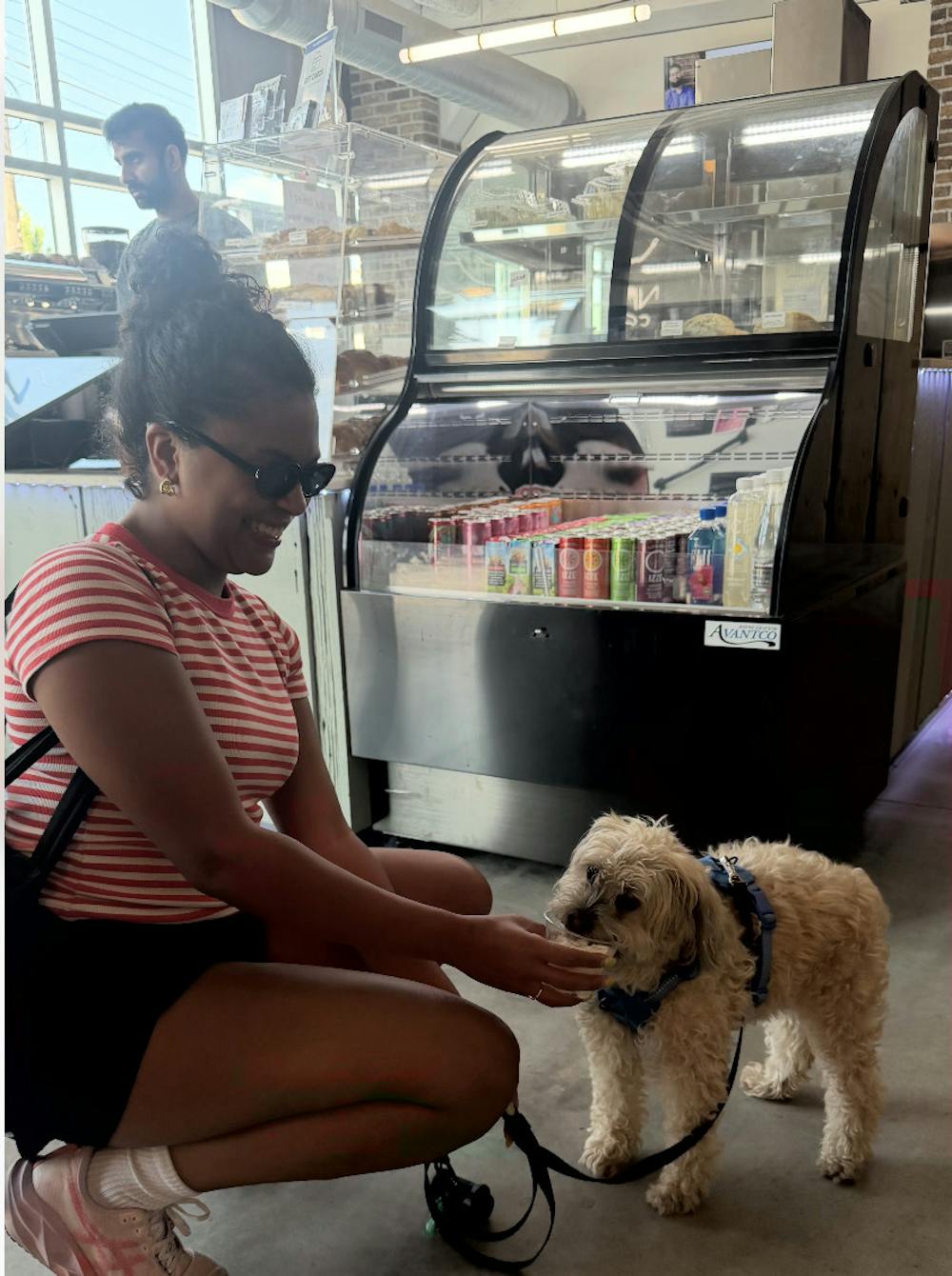
Customers have noticed the environment. Bianca Matchain first heard about Niyyah while walking her dog past the shop. She said there are not many coffee shops on the street, so she wanted to try something new.
"I definitely wanted something new and bright, so it definitely fit that vibe," Matchain said.
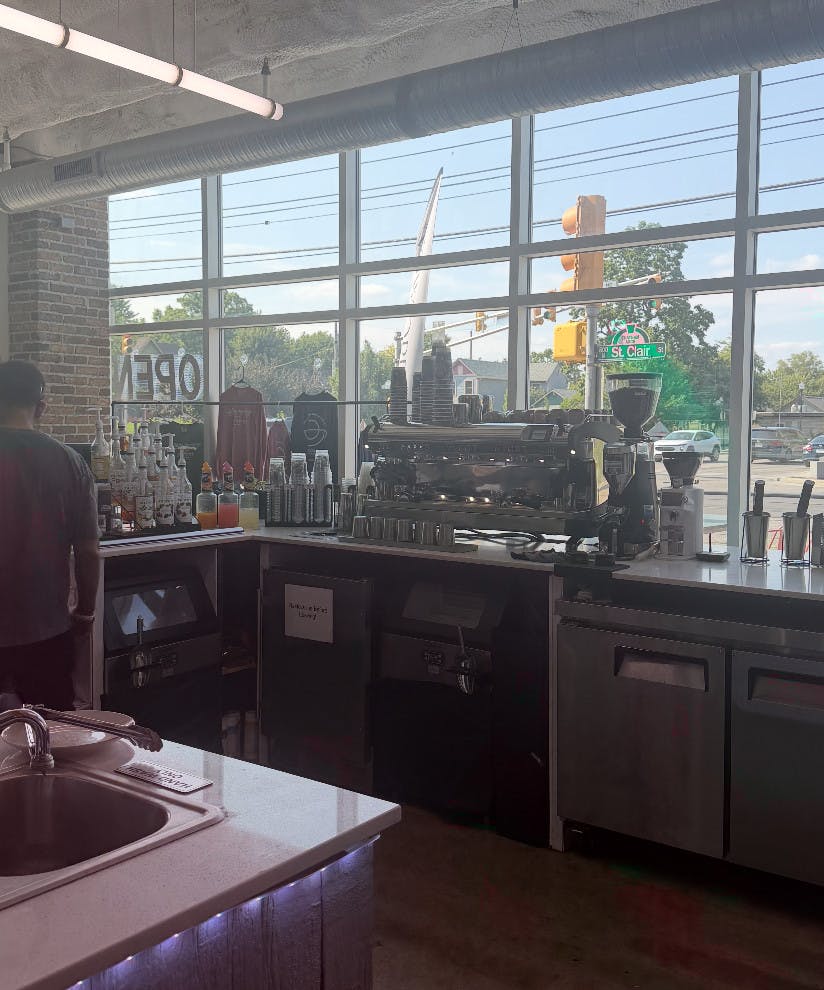
Matchain said she has visited about every other week since the shop opened. She likes the large windows and has spent time there with friends.
Matchain studied some American Sign Language in college and said the workers are understanding when she uses the ASL she knows. She has also noticed others in the cafe attempting to learn.
"I see a lot of people trying to learn the alphabet on the wall or trying to learn new phrases to talk to the baristas," Matchain said. "I definitely think it's opening up some communication with people that are in our community."
Communication styles vary throughout the coffee shop, Matchain said. Some people sit and sign, others work alone on laptops and others hold conversations.
"I don't feel like it's only for Deaf people, or it's not a space that's only for hearing people," Matchain said. "It's definitely a mix."
Yatziri Moreno, a third-year student at the Indiana University School of Medicine, visited Niyyah for the first time after hearing about it on TikTok. She said she wanted to try somewhere different to study and enjoyed the size of the space, the variety of drinks and the quiet.
"It's a really big space," Moreno said. "They have a good menu of, like, different drinks to try, and it's pretty quiet. I've been really enjoying it so far."
Moreno said having a deaf-owned business in the area matters for equity and inclusion, and that the coffee shop raises awareness of the deaf community.
Deaf employment nationally is at its highest recorded level and still well behind hearing employment. About 57.7% of deaf adults were employed as of 2024, up 8.3 percentage points since 2015, according to the National Deaf Center on Postsecondary Outcomes, which released the figures in March using American Community Survey data. The gap between deaf and hearing employment remains more than 15 percentage points. Deaf people of color, deafdisabled people and deafblind people are employed at lower rates than deaf people without additional disabilities.
"I think it's super important for equity and diversity, and making sure everyone's feeling included," Moreno said.
Tufail said he wants to create more jobs for deaf people and continue growing Niyyah's community impact.
"I hope people remember that they felt welcomed, enjoyed great coffee and experienced genuine inclusion," Tufail said.
Zeid Alsalloum is a freshman at IU Indianapolis majoring in nursing and pursuing a certificate in journalism. He serves as the culture editor for The Campus Citizen, where he hopes to highlight voices and stories that often go unheard. Outside of journalism, Zeid loves to make food, try new things and be with the people he loves.

Juneteenth marks the long road to freedom
By Salsabil F. Qaddoura and Zariya O’Yanna Burnes | June 19Juneteenth, shortened from "June Nineteenth," is a federal holiday that commemorates the emancipation of enslaved African Americans. Celebrated on June 19, it honors the anniversary of the day in 1865 when Union troops arrived in Galveston, Texas, to announce that the last enslaved people in the state were free. Widely observed as an African American holiday, Juneteenth marks the end of slavery in the United States.

Pride Month spotlights LGBTQIA+ artists shaping music
By Zariya O’Yanna Burnes | June 3June is Pride Month, a time to celebrate LGBTQIA+ culture, honor the history of the movement and support LGBTQIA+ people and organizations. The monthlong observance honors the 1969 Stonewall Uprising in Manhattan, widely considered a turning point in the LGBTQIA+ rights movement in the United States. The first Pride march in New York City was held June 28, 1970, on the first anniversary of Stonewall.
Hannah Montana 20th Anniversary Special: The highs and lows
By Olivia Arnold | April 8On March 24, 2006, the world met Hannah Montana: a teenage girl living a secret double life. At just 13 years old, Miley Cyrus became the face of one of the most-watched Disney Channel shows of all time.
