
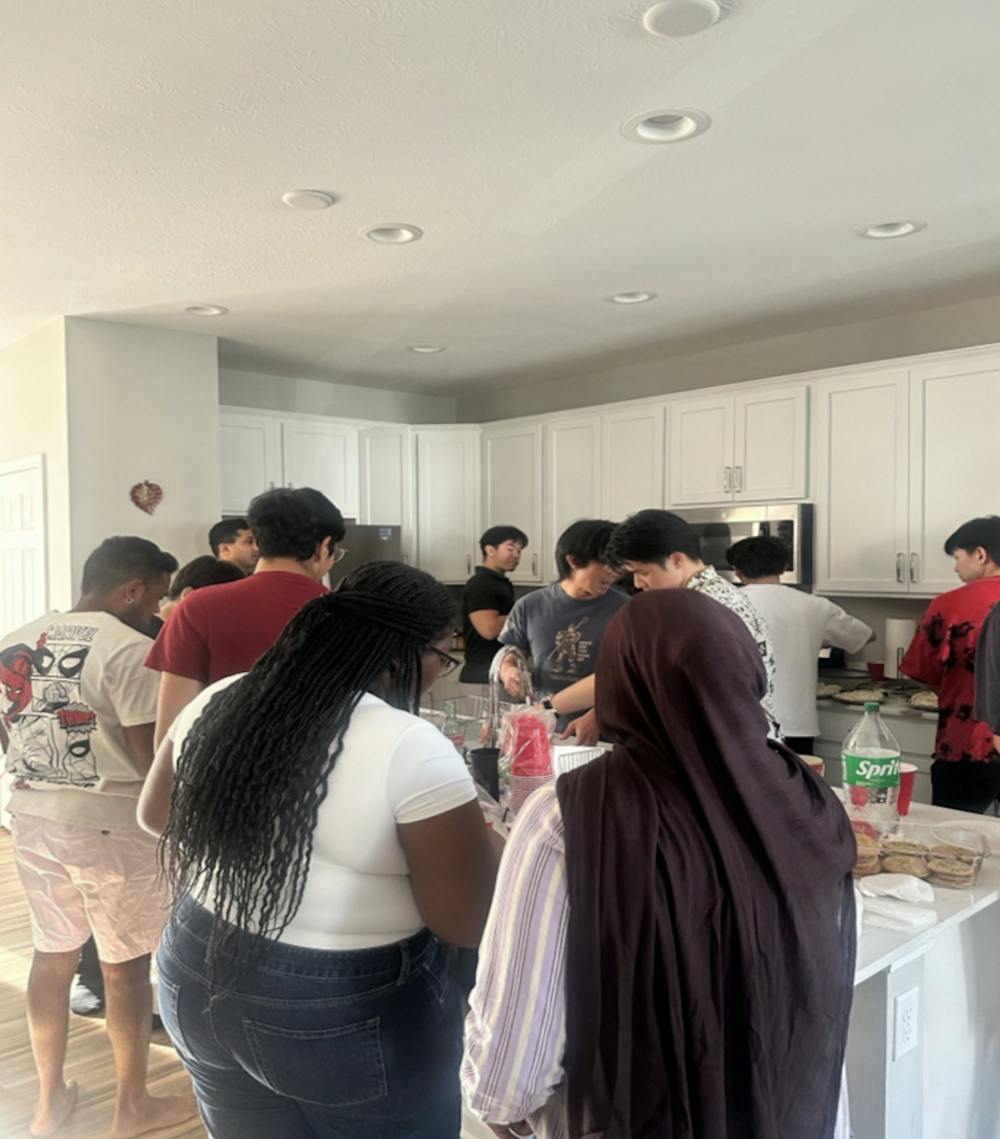
Who knew a small home tucked away in a quiet neighborhood could bring together so many future doctors?
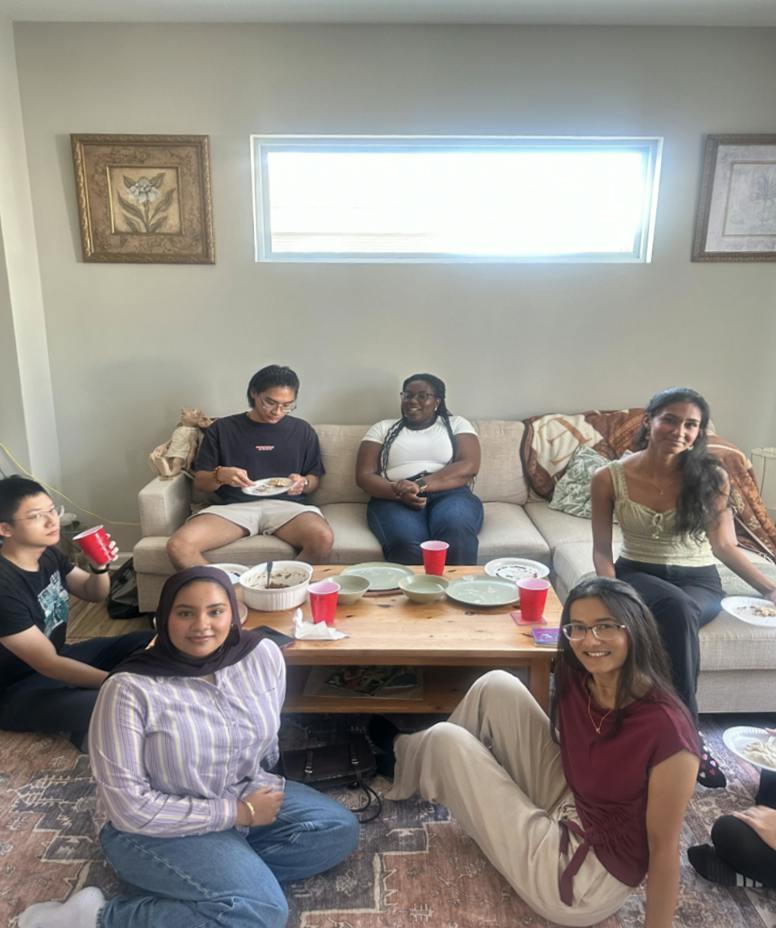
On Sept. 12, medical students from the Indiana University School of Medicine gathered at an off-campus home for an evening of dumplings, conversations and cultural exchanges. The annual event, organized by the Asian Pacific American Medical Student Association (APAMSA), brought students from different backgrounds together while giving them time to relax and decompress from the demands of medical school.
First- through fourth-year students attended the gathering, creating a space for classmates and students at different stages of medical school to connect outside of the classroom and hospital.
For many students, "finding time to socialize can be difficult," third-year medical student Adem Hamza said.
Medical school requires students to spend hours working through lectures, completing assignments and gaining hands-on experience in hospital settings, whether through clinicals or clerkships. This leaves little time for activities outside of class.
Sanjana Jain, a first-year medical student who attended the event, said medical school takes up most of her time, leaving little room for work or other commitments.
"I've been having a great time meeting the other students. I am a first year, so I haven't really met anyone being so busy, but this event allowed me to meet other students, especially upperclassmen that I can ask for advice," she said.
Students can spend so much of their time in a focused academic mindset that it becomes harder to maintain social connections. The annual APAMSA gathering gives students an opportunity to step away from that routine and spend time with one another.
Darren Lu, president of APAMSA, said bringing students from different backgrounds together was an important part of the organization's yearly dumpling event.
"APAMSA is a big advocate for being a very social hub for students," Lu said. "We do a lot of events that are advocacy-based, community-based, where we go out and do healthy community screening for different populations, let's say, the Burmese population, or we go and volunteer for the International Festival, for example."
During the event, Lu also spoke about the representation of people of color in medicine and some of the challenges students can face while pursuing and completing their education.
Lu, who started medical school at 24, said he found it striking that race-conscious admissions ended around the time he began medical school, given how many classes had come before his.
The change Lu was referring to came from the U.S. Supreme Court's 2023 decision in Students for Fair Admissions v. Harvard, which struck down race-conscious admissions programs at Harvard and the University of North Carolina and effectively ended the practice at colleges and universities nationwide.
Lu described how he saw the debate over the ruling, in which critics argued that applicants' backgrounds were being weighed against their scores.
"They would basically use your race, background or nationality to justify, this person had a higher score, this person has lower score, but because of their nationality they deserve or don't deserve to be in medical school," Lu said. "That was really jarring to see. For example, in my class of 2028 at Indiana University School of Medicine, we had one female Black student out of a student body of like 160 in Indianapolis."
The students represented different years of medical school, but they all shared a common goal of completing their education and working through its hardships. At the same time, many were still deciding what direction they wanted their medical careers to take.
Food provided another way for students to connect. Attendees prepared several types of dumplings, including pork, chicken and vegetarian options. Some incorporated fillings inspired by other cultural dishes, allowing students to share different flavors and traditions.
"The dumplings we made are Eastern Asian, but we have Diwali coming up in November, which is Hindu. So, we tried to represent and incorporate not just the organization's culture, but every student body and their cultural dishes or backgrounds," Lu said.
Held away from campus, the gathering gave students a place to eat, talk and meet others without the immediate pressures of lectures, assignments or hospital responsibilities.
For APAMSA, the annual gathering is about more than sharing and making a plate of dumplings. It is about creating a space for students from various backgrounds to come together, decompress and build relationships during a demanding period of their education.
Regina Graves is a senior majoring in journalism with a concentration in public relations and a minor in media arts studies. She is a writer for The Campus Citizen and an intern for Indianapolis Monthly. Beyond her internship, Regina enjoys reading and creating social media content.

Purdue Indianapolis hosts third Boiler Gold Rush since IUPUI split
By Abigail Jebaraj | Sept. 19Aug. 24 marked the start of the third academic year since IUPUI split into IU Indianapolis and Purdue University in Indianapolis. It also marked the end of Boiler Gold Rush 2026, Purdue University's one-week orientation program. This was the third year the program was held in Indianapolis.

Dorms or debt traps?
By Raegan Nelson | Sept. 19College is expensive, especially if students have to factor in the additional cost of living. But dorms offer more than just a place to sleep: students are close to campus, have a place to rest between classes and may find lifelong friends from their assigned roommates.

Making space to create: Why Herron’s National Portfolio Day belongs to the whole campus
By Sarah Pinckard | Sept. 10Herron School of Art and Design will host National Portfolio Day on Saturday, giving prospective students a chance to present their work to art and design schools from across the country accredited by the National Association of Schools of Art and Design. The event runs like a college fair, with students meeting representatives from the schools they choose and looking for the place they fit as an emerging artist.
