
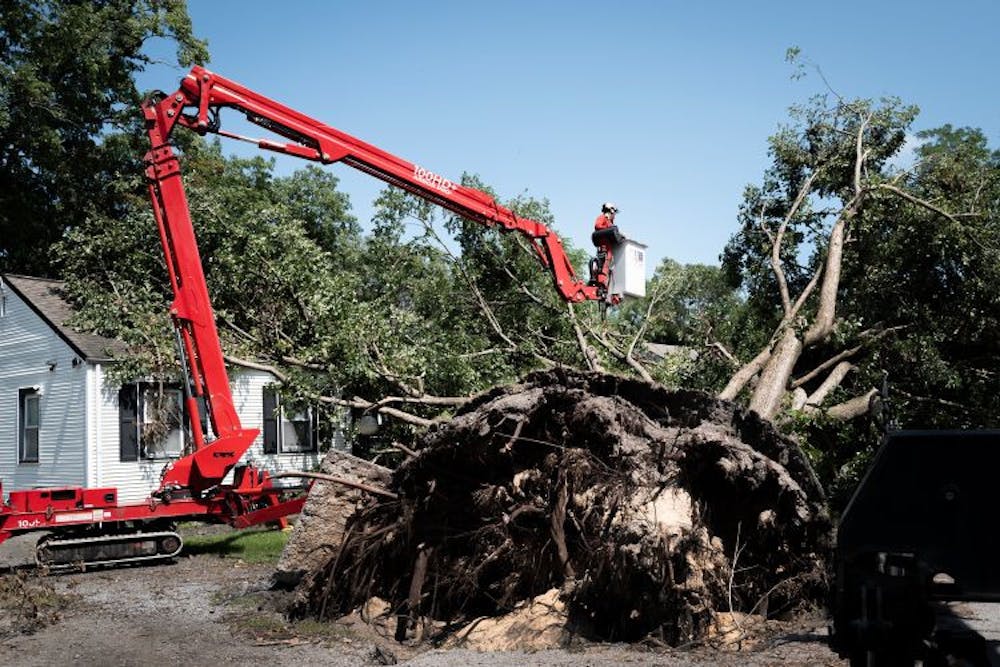
A derecho with winds near 100 mph, the force of a Category 2 hurricane, tore through Northwest Indiana on Aug. 11 and knocked out power to roughly 375,000 customers — about 80% of the Northern Indiana Public Service Company's electric customers and the largest outage in the utility's history. In Gary, more than 38,000 homes and businesses went dark, and some stayed that way for two weeks.
NIPSCO, which serves about 900,000 natural gas customers and 500,000 electric customers across northern Indiana, said restoration was substantially complete on Aug. 26. Just over 100 Gary customers were still without power that evening.
Atlas Chavez, an Indiana University senior majoring in forensic biology and anthropology, was among the residents affected. His household went 11 days without steady power — shorter than the citywide restoration timeline, but long enough to upend everything.
"We were without power for roughly 11 days. We received some partial power in intermittent bursts through the outage. Most of the homes still use gas lines, so there was some heat but there was no air conditioner. Most of the days were spent outside of the home and relying on businesses that did have power. A lot of businesses did not have power in the initial days," Chavez said. "We had recently been devastated by two tornadoes that hit our town, so there was a lot of flooding, a lot of fires. Our infrastructure had already been diminished and then the power grid went down."
The blackout also hit businesses, including Chavez's father's mechanical shop and his mother's grocery store job.
"My parents' jobs require power and the internet in order to function. Without power, you can't check people out, you can't take inventory, fridges don't work. They lose hours. If you can't open the store, you lose hours and there is no way to get that money back … and the clock is ticking. NIPSCO still wants you to pay. There is no exception. There is no delay. You still have to pay your fee," Chavez said.
For Chavez, food and crime were the main concerns. Most grocery stores and fast food restaurants stayed closed for the first few days of the outage, and families like his began saving for temporary generators.
"At night you open the windows and you hope everything is perfectly fine. In the surrounding municipalities, Gary doesn't necessarily have crime problems, but there is always a risk with opening up your home and its windows, and not being able to have those kinds of protections sealed doors and windows provide," Chavez said.
The storm also damaged much of Gary's infrastructure. Chavez said buildings across the city now need repairs to be up to code and livable.
"I drove around the city and took a look around. I went to my neighborhood and it was just debris. Our campus was shut down for four or five days to deal with the damage done from everything. There are still lights out in the streets. It's not completely destroyed, but you can see gaps. Things that used to be there aren't there anymore. You can see where places got blown over," Chavez said.
The response drew scrutiny from the governor's office. On Aug. 25, Gov. Mike Braun directed the Indiana Office of Utility Consumer Counselor to file a complaint and petition the Indiana Utility Regulatory Commission to open a review of NIPSCO's vegetation management and right-of-way maintenance, and of whether money state regulators approved for infrastructure and reliability improvements was actually spent as promised. Braun also sought an expedited federal major disaster declaration for 54 Indiana counties.
NIPSCO is also facing a proposed class-action lawsuit filed in Porter County Superior Court by attorney Kenneth J. Allen of the Allen Law Group. The complaint names Valparaiso resident Jack Tipold and 16 other Northwest Indiana residents as plaintiffs and alleges the utility failed to remove hazardous trees and vegetation near its power lines, skipped required pole and line inspections and ignored residents' requests for vegetation management — failures the plaintiffs say contributed to repeated outages dating back to August 2024. Allen filed a similar suit the week before on behalf of plaintiff Margaret Shragel. Neither case has been certified as a class action.
NIPSCO has denied the allegations. In a statement, the utility said it strongly disagrees with how Allen's firm has characterized its vegetation management practices and that it intends to defend itself through the legal process. The company has said its vegetation management spending has more than doubled since 2016.
"NIPSCO has not been making any sort of moves to swiftly reinstate power or to come up with solutions to help residents trying to get their power back on. It's not a matter of the citizens not being able to pay, it's a matter of NIPSCO not doing due diligence and not wanting to fix things. It seems they are not making any kind of rush to reinstate any power. They take and they take and it seems like the citizens are getting nothing back from what they invest," Chavez said.
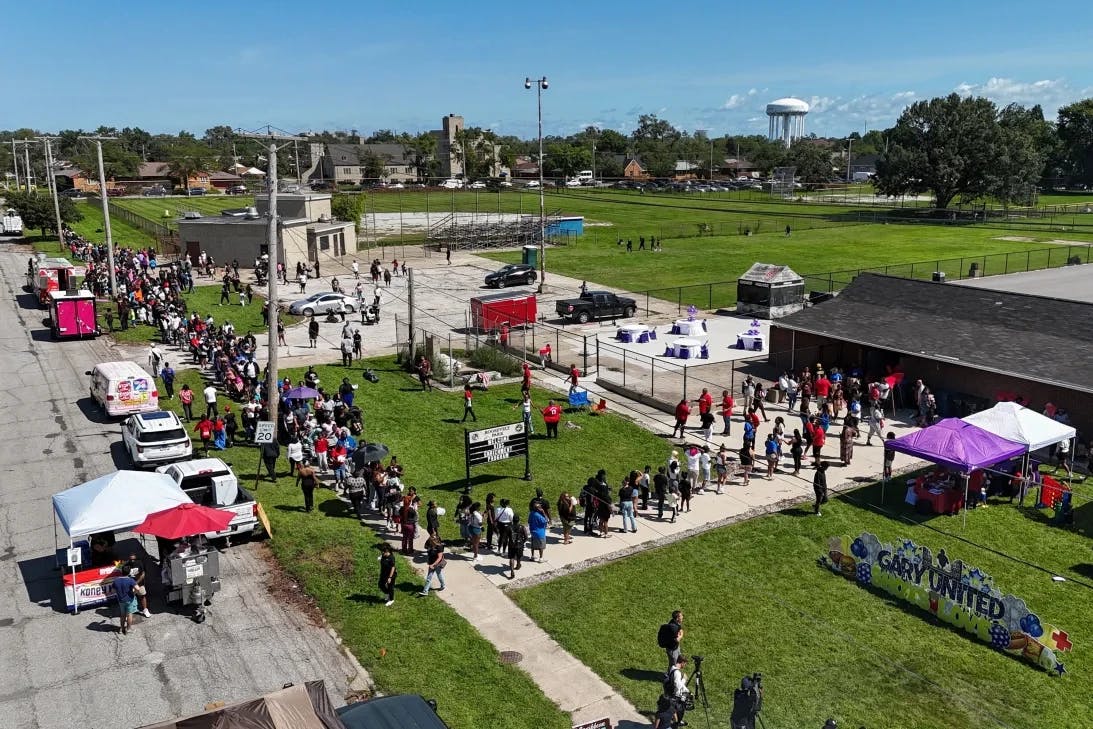
The blackout spread quickly on social media and sparked aid efforts across the region. Food critic and content creator Keith Lee worked with The Salvation Army to distribute flood recovery cleanup kits and food. World Central Kitchen and the Food Bank of Northwest Indiana also organized distributions.
Chavez said those efforts were not enough to carry all of Gary's residents through two weeks without power.
"Those aren't sustainable resources. They aren't able to last as long as the power has been out. It's kind of like a first come first served thing. There has not been resources to gain. There has not been something that you could go pick up every single day. Within the city, limited resources were distributed to the people that were able to access them first," Chavez said.
Gary was not the only city hit. Lake Station, Munster and Portage also went dark, and all are still recovering from infrastructure damage.
Heavy rain is becoming more common statewide. Indiana's annual rainfall is projected to increase by about 8% by the 2050s, with much wetter winters and springs, according to the Indiana Climate Change Impacts Assessment, a Purdue University-led project. Spring rainfall alone is projected to rise about 16%. More rain means more flooding and more of the severe weather Gary just lived through.
Cristina Bueno, an undergraduate double majoring in anthropology and journalism, is a writer for The Campus Citizen. In her free time, she likes to read, bake and hike.

The city told Rocky Ripple to leave. The town stayed and saved itself.
By Salsabil F. Qaddoura | Aug. 29The command post is a folding table, a pile of radios and a man who has not been to his job in nearly two weeks. William Whitmer, who is known by everyone on site as Whitty, stands in the middle of Ravenswood, the north-side Indianapolis neighborhood hit hardest by August's historic flooding along the White River, helping coordinate a recovery operation with no budget, no official authority and no one who assigned him the job.

AI in the classroom: Tool or temptation?
By Salsabil F. Qaddoura | Oct. 2Artificial intelligence is rapidly reshaping higher education, altering how students complete assignments and how professors safeguard academic integrity. At Indiana University Indianapolis, the debate reflects a broader national divide: Some see AI as an essential tool for the future workforce, while others warn it undermines the very foundation of a college degree.

Indiana Fever make playoffs for the first time since 2016
By Kenzie Pittenger | Sept. 22For the first time in eight years, the Indiana Fever have made the WNBA playoffs, snapping the longest playoff drought by any team in league history. Indiana’s starters, who include Caitlin Clark, Kelsey Mitchell, Lexie Hull, NaLyssa Smith and Aliyah Boston were all drafted by the Fever after their ...
