
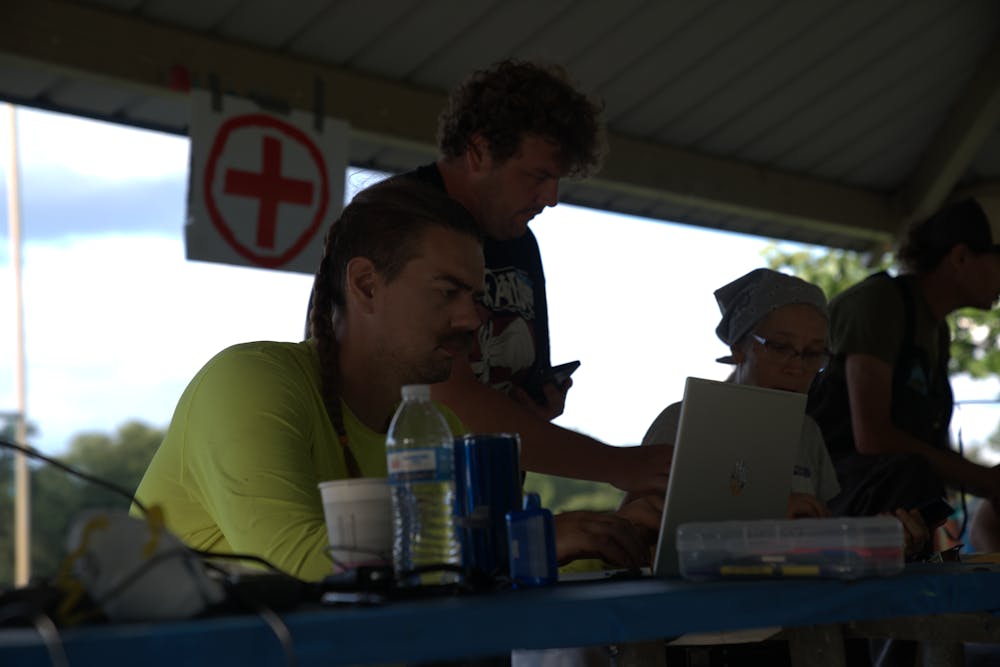
The command post is a folding table, a pile of radios and a man who has not been to his job in nearly two weeks.
William Whitmer, who is known by everyone on site as Whitty, stands in the middle of Ravenswood, the north-side Indianapolis neighborhood hit hardest by August's historic flooding along the White River, helping coordinate a recovery operation with no budget, no official authority and no one who assigned him the job.
Crews check in on the radio. Volunteers get sent house to house. Health officials coordinate testing. Relief organizations arrive with people and supplies.
None of it is Whitty's job. That is more or less his point.
"There was no one from the government saying, you're in charge," he said. "That's not how we do things."
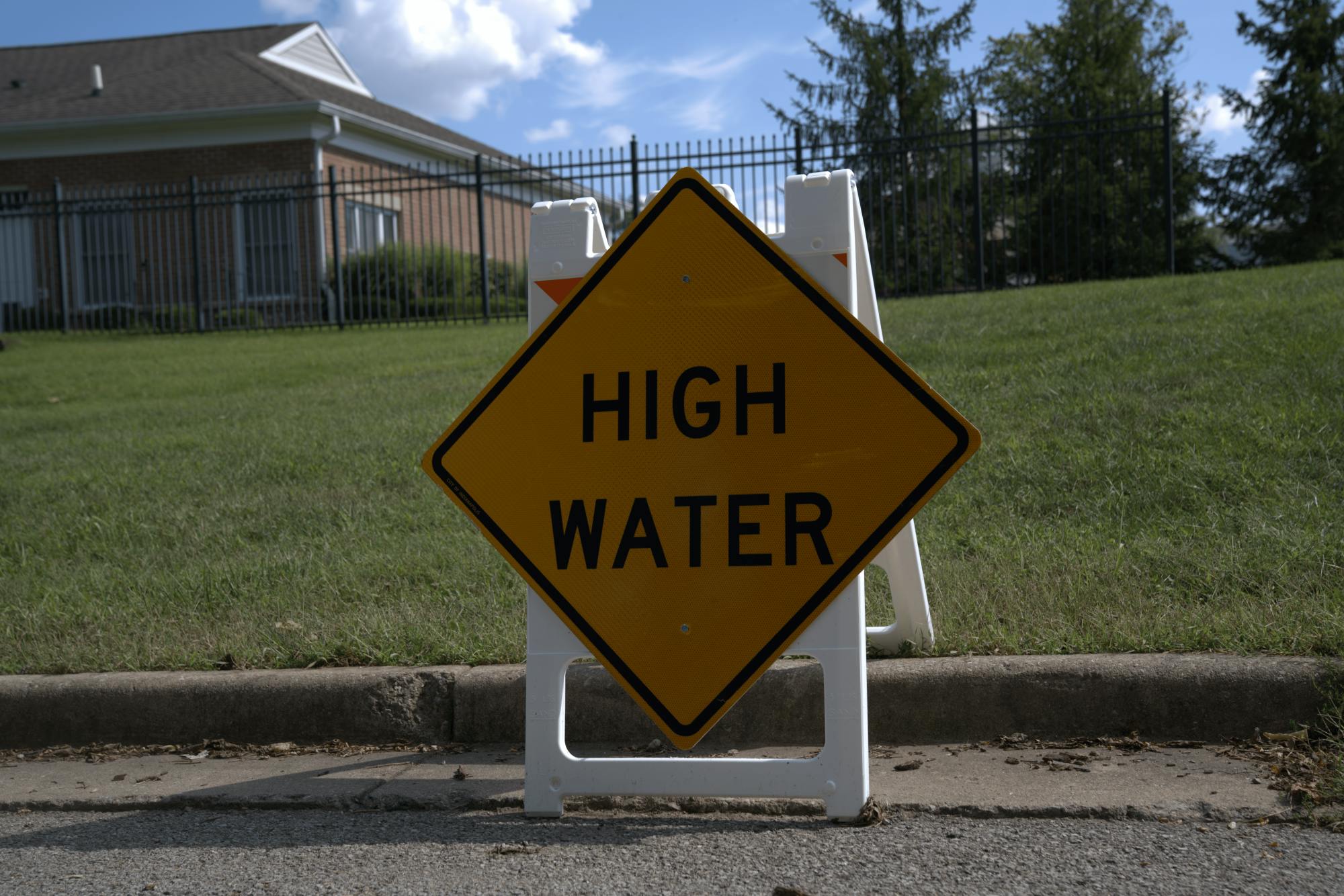
Historic rainfall sent the White River surging through central Indiana starting Aug. 14. In Ravenswood, which sits along the river with no levee at all, water rose into hundreds of homes. Over that weekend the Indianapolis Fire Department conducted 56 water rescues across the flooded neighborhoods, bringing roughly 100 people and 46 pets to safety.
Two miles downriver in Rocky Ripple, an incorporated town of a few hundred houses with its own government and a low earthen levee, something different happened. The city told residents to get out. Most of them didn't.
Nearly two weeks later, the water is gone. The work is not.
Friday: the sand stops
Joshua Taflinger has lived in Rocky Ripple for 20 years. He runs a handyman business there, mostly outdoor work like tree work and yards and refers the indoor jobs to other people who live in town. He also manages the town's four parks for the community association. Two decades of working on his neighbors' houses means he knows most of them.
"It's not just a neighborhood," he said. "We're an incorporated town. We have our own government board and the whole nine yards."
He was doing tree work Friday morning when people started talking about the river. By the time he finished around 2 p.m., a crowd had already gathered at town hall, where the town keeps its measuring stick.
The reference point is the gauge at Nora, the closest official measurement. Rocky Ripple reads about two and a half feet lower. Nora was forecast to hit 19 feet, which put Rocky Ripple somewhere near 16 feet which is extremely high, but under the levee, which tops out around 17.
"We can survive this," Taflinger remembered thinking. "We just gotta be aware."
The forecast kept climbing all afternoon. Sand was being delivered to town hall and volunteers had started filling bags. Then, around 7 or 8 p.m., DPW arrived, and the calculation changed.
"They were going to shut the whole place down, and they stopped bringing the sand," Taflinger said. "And that's when they started issuing the evacuation announcements, driving through the neighborhood, telling people to get out."
At 9 p.m., he said, a DPW official told residents a second floodgate would be closed. There was a standoff at town hall. Residents told him that if the gate went up, they would drive their equipment straight through it.
It got worse from there. Around 11:45 p.m., DPW notified the fire department it intended to close the gates, Town Councilor Megan Hulland told WFYI. An emergency alert went out around 12:30 a.m. telling Rocky Ripple residents to leave because DPW was closing the flood gates without specifying which one. Fire trucks came through with loudspeakers, then firefighters went door to door around one in the morning. By then roughly 60% of the town had evacuated.
A separate confrontation broke out at the 53rd Street gate which was the town's last way out. That is, until City-County Councilor John Barth, who represents the area, got town leaders and DPW on the phone and established that only the 52nd Street gate was closing.
DPW has since told WFYI that the 53rd Street gate never closed, that the river never reached the level requiring it, and that the department never ordered it. Daniel Stevenson, DPW's deputy director of policy and planning, said gate closures follow the Indianapolis Flood Response Plan, which sets specific water levels for more than 100 flood gates, and that the call is shared between the department's stormwater engineers, who watch the gauges, and operations staff, who verify conditions in the field. No single official decides.
Town Marshal Mike Kiefer told WFYI that DPW had said for years the gates would not close until floodwater reached four to five feet inside Rocky Ripple. That night, he said, the town's gauge read 13.5 feet: three feet below the threshold.
Saturday: the volleyball court
Serious sandbagging started around 2 p.m. Saturday. There were about 20 people.
"We were starting to take sandbags to where it looked like it was getting really high on the river, and we just kept doing that," Taflinger said.
The sand at town hall ran out as DPW had stopped bringing it the night before. So the operation moved to the sand volleyball court at Hohlt Park, and volunteers began digging it up.
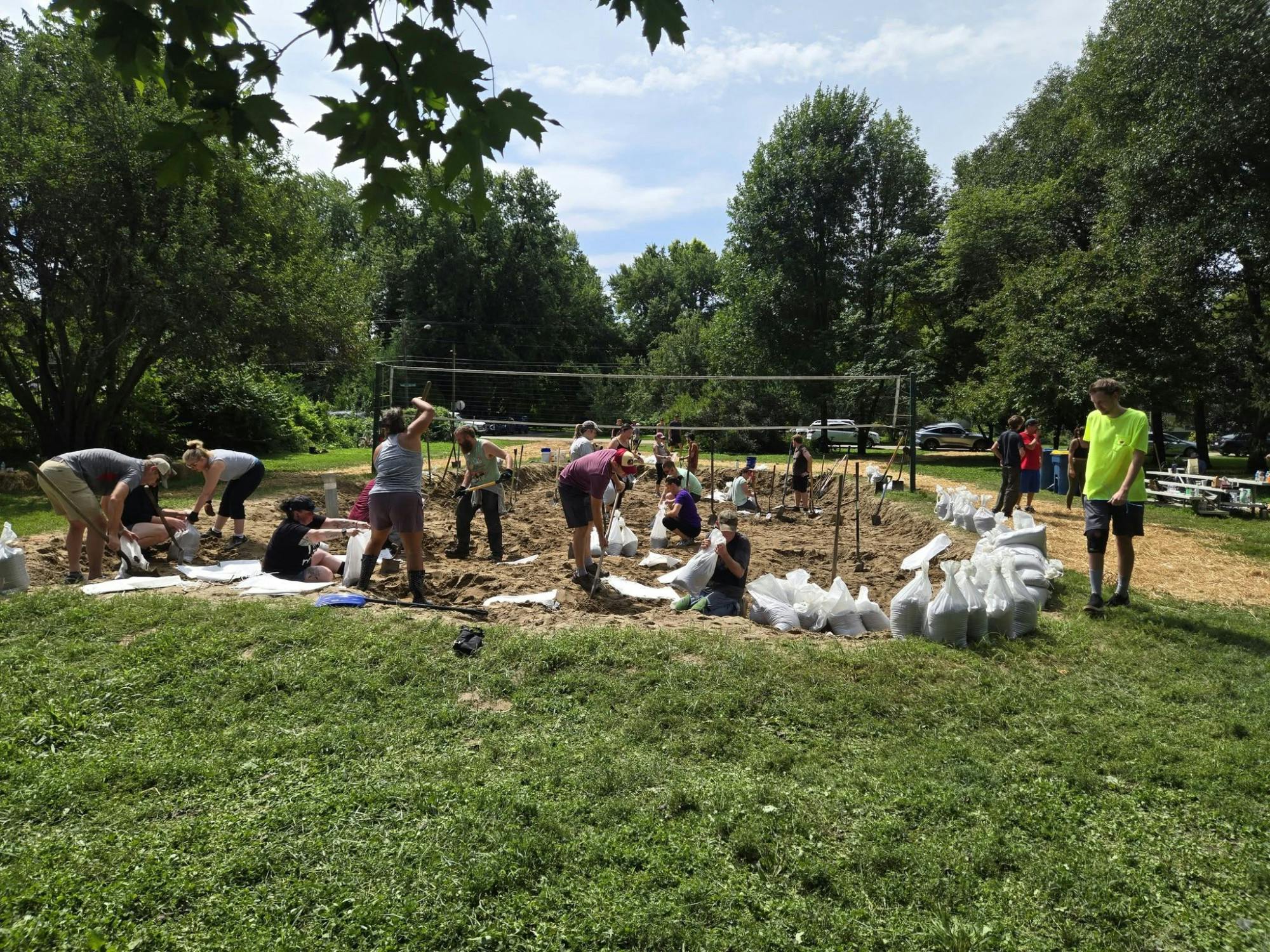
The court was there because of a decision made 25 years earlier. Daniel Orr had been in charge of building it and intentionally dug the pit about four and a half feet deep and filled it with sand.
"I think we only went down four feet," Taflinger said. "We never hit soil. We never got out of sand."
Trucks loaded up at the court and drove bags to the levee, then came back to reload. Each trip, Taflinger said, there were about 20 more people in the park than the last time.
Around 6 p.m., DPW changed course.
"They saw we weren't going anywhere, and then they started bringing in trucks of sand, and even some truckloads of pre-filled sandbags," Taflinger said. "From that point forward, they were awesome. They were allies. The guys driving the trucks got out of the trucks and helped sandbag, just like anybody else. And they kept coming."
Whitty, who is not a Rocky Ripple resident and not a Ravenswood one either, had come up that day after a call from a mutual aid network he belongs to, the kind of loosely organized group that normally moves food to people who need it. Miles Suarez-Davis, a University of Michigan business student who lives in Meridian-Kessler, had driven down Friday night out of curiosity and arrived while fire trucks were evacuating people.
By evening the volleyball court had become a command post, with a chalkboard map of the town. Whitty's background as a railroad dispatcher and union organizer turned out to be the useful skill.
"There was maybe 12, 15 pickup trucks around him throughout the night," Taflinger said. "We all had Whitty's number. If we saw a breach anywhere, we'd call Whitty, and he'd have the next round of trucks to that address."
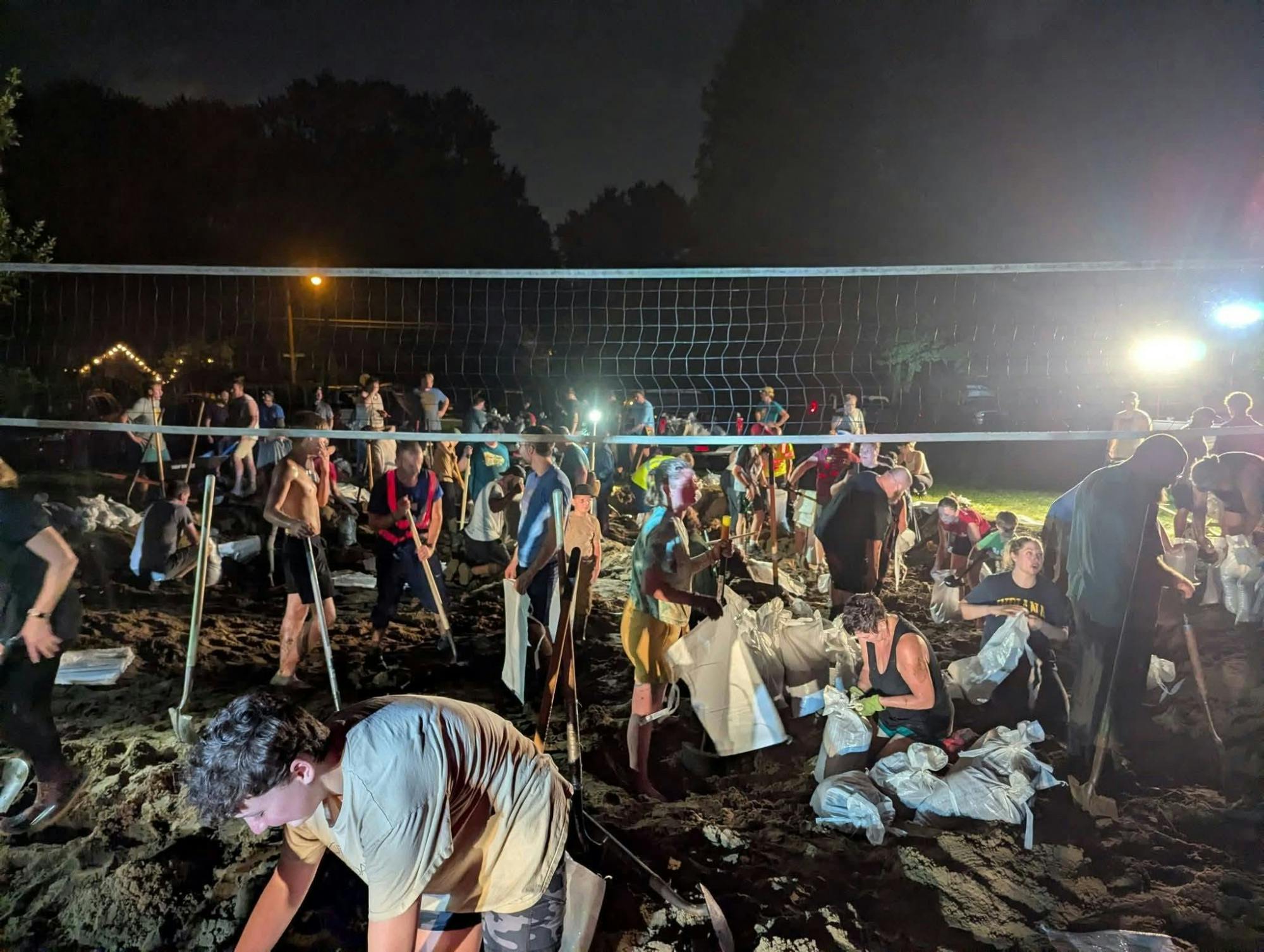
The threat was never simply water coming over the top. It was water moving through and beneath the earth, boils and seeps that weaken a levee until it fails from underneath. Around 12:30 a.m., Taflinger and Suarez-Davis walked the entire top of the levee, cutting through brush so they could see it, calling in leaks and overflows as they found them. Trucks arrived within minutes.
"None of us had done this before," Taflinger said. "But this system developed organically that was extremely efficient."
He had been awake roughly 36 hours. Suarez-Davis was up about 25, and crossed to Ravenswood at one point to help with boat rescues.
Some houses had been built into the levee itself, and volunteers had to partially demolish them to reach it. In one, they cut open the living room floor.
The river crested at 17.1 feet Saturday, according to federal data, just over the top of the levee. Volunteers placed more than 15,000 sandbags. Several breaches let water through. Houses along the river took water in their basements, and a handful without working sump pumps filled to the ceiling.
The town held.
Ravenswood
Ravenswood had no levee, and nothing to defend.
"With Ravenswood, the water slowly creeps up and there's nothing you can do," Suarez-Davis said. "With Rocky Ripple, there is something you can do, but if the levee breaks, it's a massive event."
When word came upriver that Ravenswood was worse, Whitty went north. What developed there was a volunteer field operation: the neighborhood divided into zones with designated captains, teams going door to door to ask residents what they needed, supplies collected and distributed, families connected with the agencies and nonprofits arriving. A door-to-door needs survey of the service area was completed.
Suarez-Davis helped organize crews in the days immediately after. His family is Argentine, and he spent part of that week translating for residents who did not speak English.
Some families stayed in flood-damaged houses because they had nowhere else to go, Whitty said.
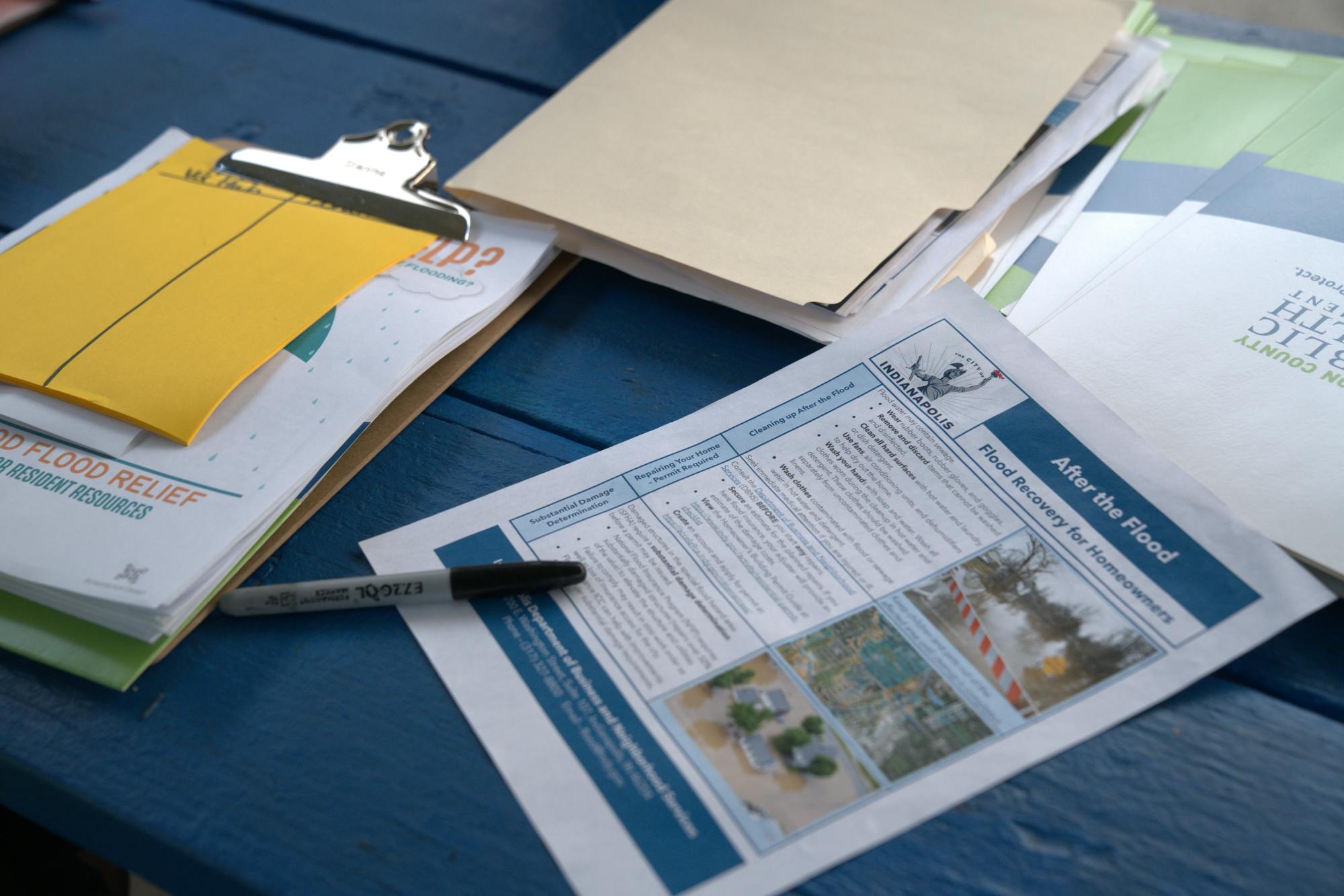
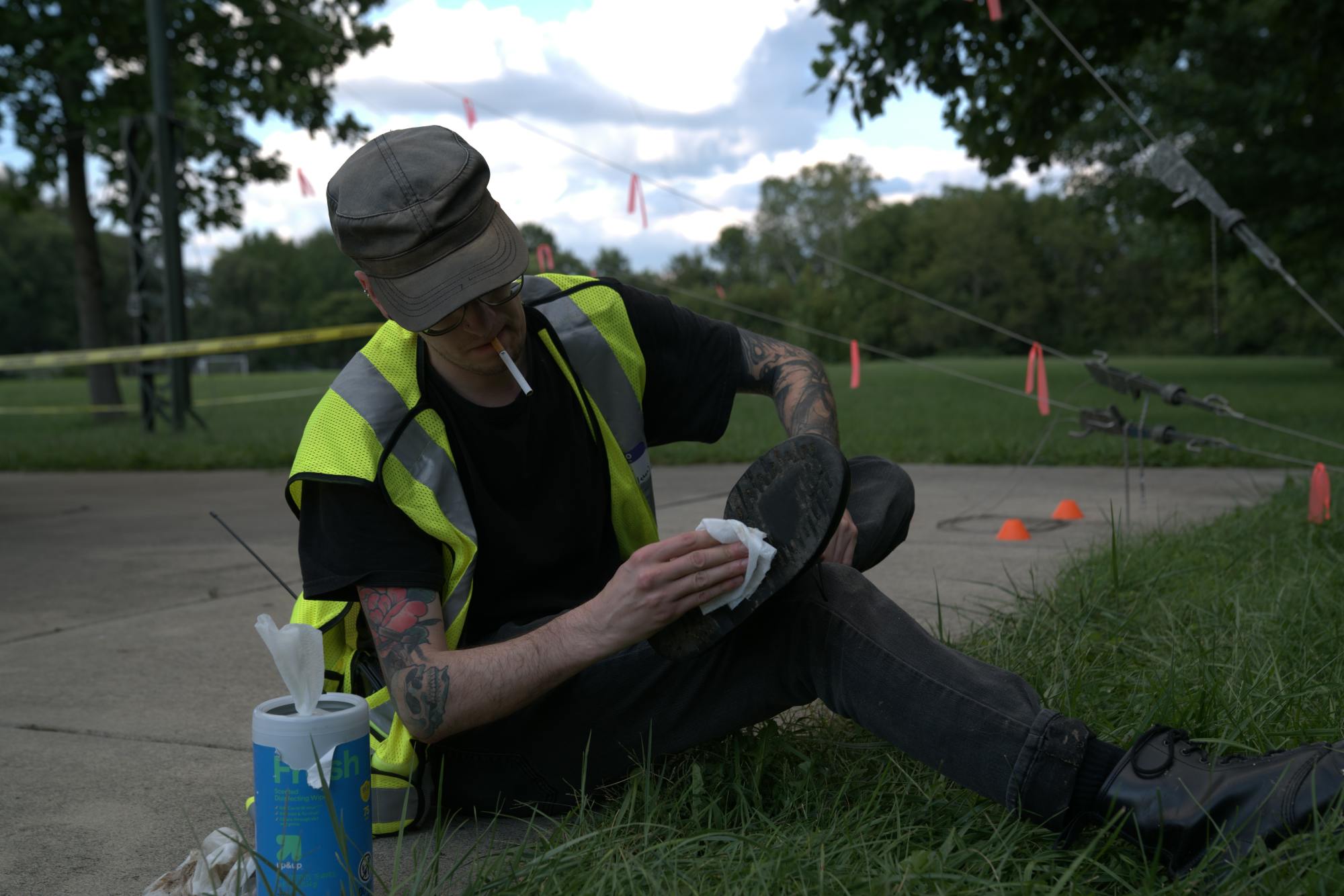
The danger did not leave with the river. Floodwater can carry sewage, fuel, chemicals, bacteria and mold, and the Marion County Public Health Department has warned residents and volunteers to avoid contact with it where possible. The department is offering free testing for private wells whose wellheads were submerged, at 317-221-2266. Whitty said he developed a skin reaction after days in the water.
Suarez-Davis pointed to something that shapes how long recovery takes. Floodplains, he said, tend to be where people of lesser means live, which makes rebuilding harder than the maps suggest.
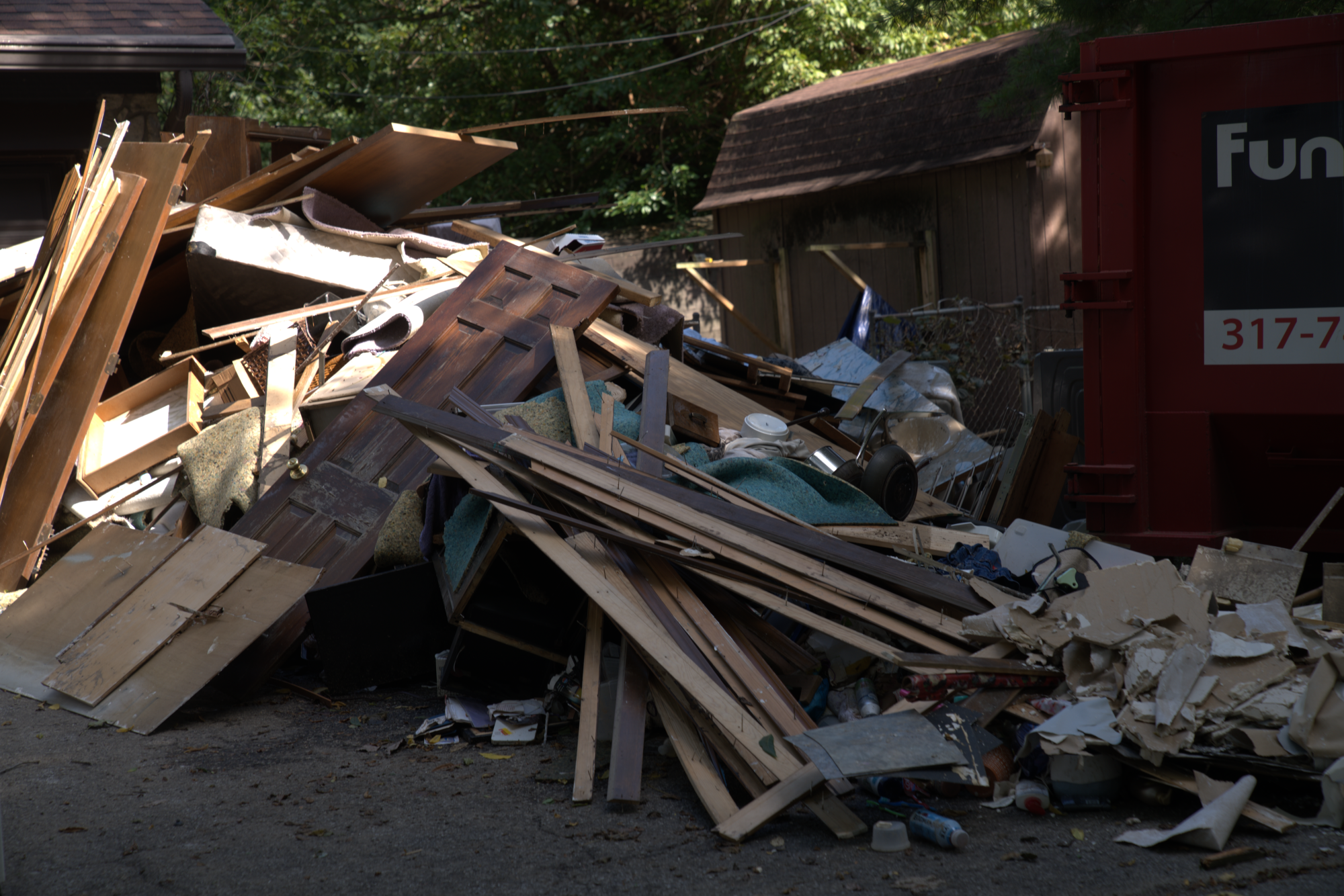
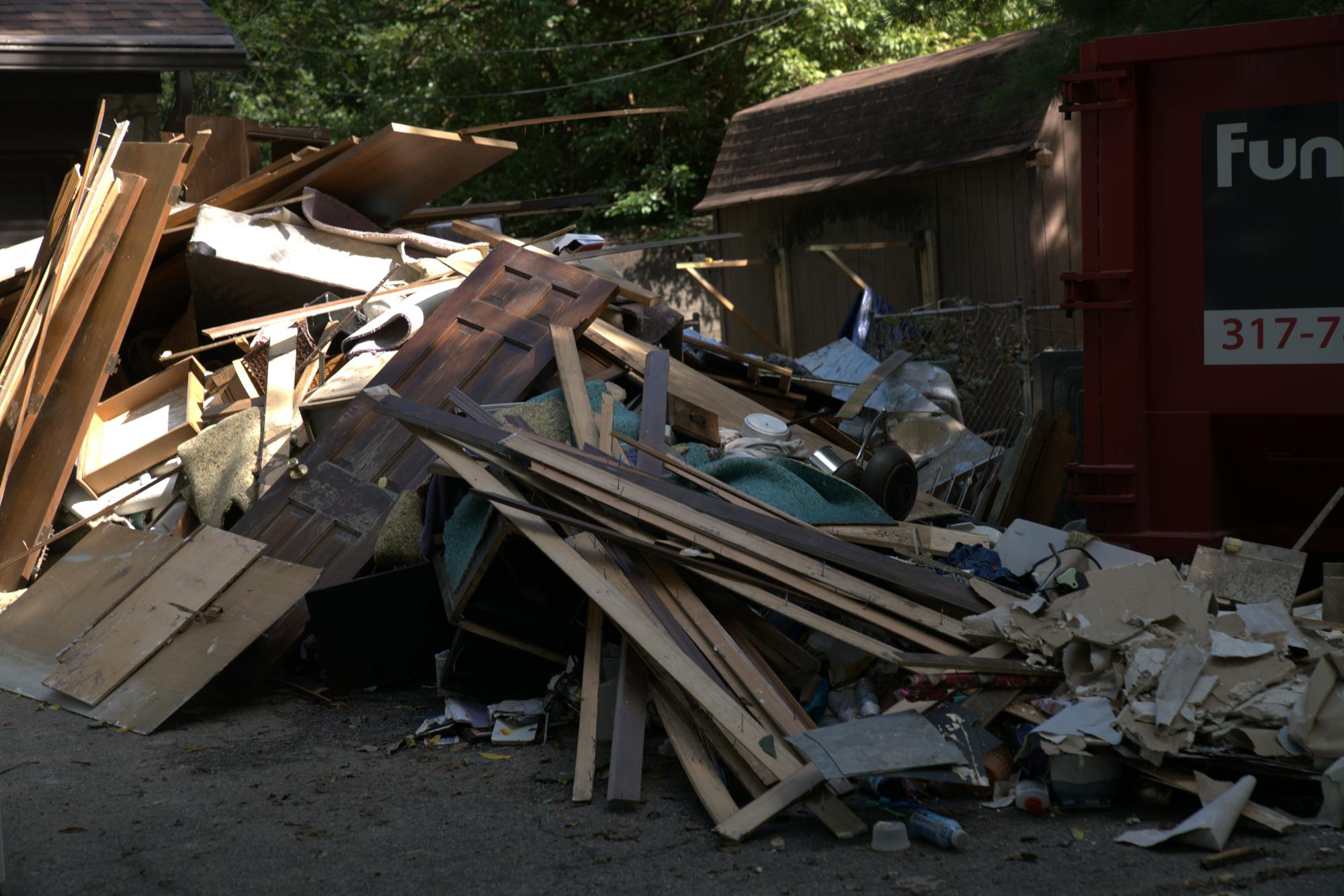
In Rocky Ripple, the cleanup started immediately and it was residents doing it. Crews pulled ruined belongings out of basements, cut out wet drywall, then a second crew followed behind bleaching and sanitizing.
"Any house in our neighborhood that asked for help got help pretty immediately," Taflinger said. By Tuesday, he estimated, at least 30 houses had been cleared out.
Eleven Days
President Donald Trump approved a major disaster declaration for Indiana on Aug. 25, making FEMA Individual Assistance available in Marion County and 20 other counties. The program can cover temporary housing, basic home repairs, personal property losses and other needs not covered by insurance. Residents with insurance must file a claim first, because federal assistance cannot duplicate insurance benefits. FEMA and the Indiana Department of Homeland Security have run a mobile intake center at the Broad Ripple Park Family Center, 1426 Broad Ripple Ave.
That was 11 days after the crest. Taflinger's objection is not political. It is about mold.
"That's the biggest concern after the flood experience, as far as recovery goes — getting all the wetness out," he said. Drywall, building materials, belongings: anything that absorbed water has to come out fast, because mold starts within a couple of days.
"Had people been waiting on FEMA, they'd already be in a crisis situation with mold overrunning," he said. "FEMA's timing was not very productive."
Whitty was blunter. "While I am relieved that there are additional resources arriving into the area, I believe that we are seeing the same pattern of delay in emergency efforts," he wrote in a statement. "Individual assistance could still be weeks away while hundreds are in damaged homes. Better late than never is true, but every day of delay by the government compounded incredible health risks to residents."
Neither man's criticism is indiscriminate. "Individual councilors such as Boots, Delaney, Barth have been incredible," Whitty wrote, referring to Dan Boots of District 3, Brienne Delaney of District 2 and Barth, the council vice president. "Their depth of compassion and dedication is on full display." Taflinger and Suarez-Davis both credited DPW crews once they were on the ground.
The levee
The thing that held is now the problem.
DPW has walked the levee since the flood, Taflinger said, along with what he described as countless other groups. Residents have done their own inspections and mapped the weak spots. The Army Corps of Engineers, as far as he knows, has not come out.
"It's in bad shape," he said. "That levee would not sustain that high water again. There's nothing that we physically could do as neighbors and sandbags to hold it back again. It got pushed to its limits."
The argument over how to protect Rocky Ripple is 30 years old. When floodwalls went up in Broad Ripple in the 1990s, the town was next in the sequence, and the phase never happened. Since 2010 the town has been in conversation with the Army Corps, which Taflinger said has spent millions on surveys and samples with nothing built.
The city's Metropolitan Emergency Services Agency has said it will conduct a public After Action Review of the entire flood response, covering all relevant agencies. Asked what he wants in it, Taflinger's answer was specific and cheap.
He wants the city to sit down with the people who have been working on that levee for 20 years. Clear the brush. Cut the trees off the levee. Strip the ivy. Add dirt, which he says can be had for nearly nothing, and replant with species chosen for deep, tight root systems. The heavy equipment already exists in the neighborhood, owned by residents.
"The city says, hey, Rocky Ripple, what do you guys need?" he said. "And we say, not much."
'Look in the mirror'
Whitty has done disaster work before in Texas after Hurricane Harvey in 2017, moving relief supplies. Asked how that compares to this, his answer was short: less damage, worse response.
He has spent nearly two weeks away from his job. Leaving before the work is done, he said, would mean breaking commitments volunteers made to residents.
"We have made promises to this community," he said, "and we're going to keep our promises to this community."
Suarez-Davis has gone back to Michigan for the semester and kept working from there, lining up volunteer crews from other schools and chasing drywall and labor donations. What he wants people to take from it is narrower than a story about volunteers: Rocky Ripple needs a real levee, Ravenswood needs some answer at all, and the city's emergency response needs to be faster and clearer.
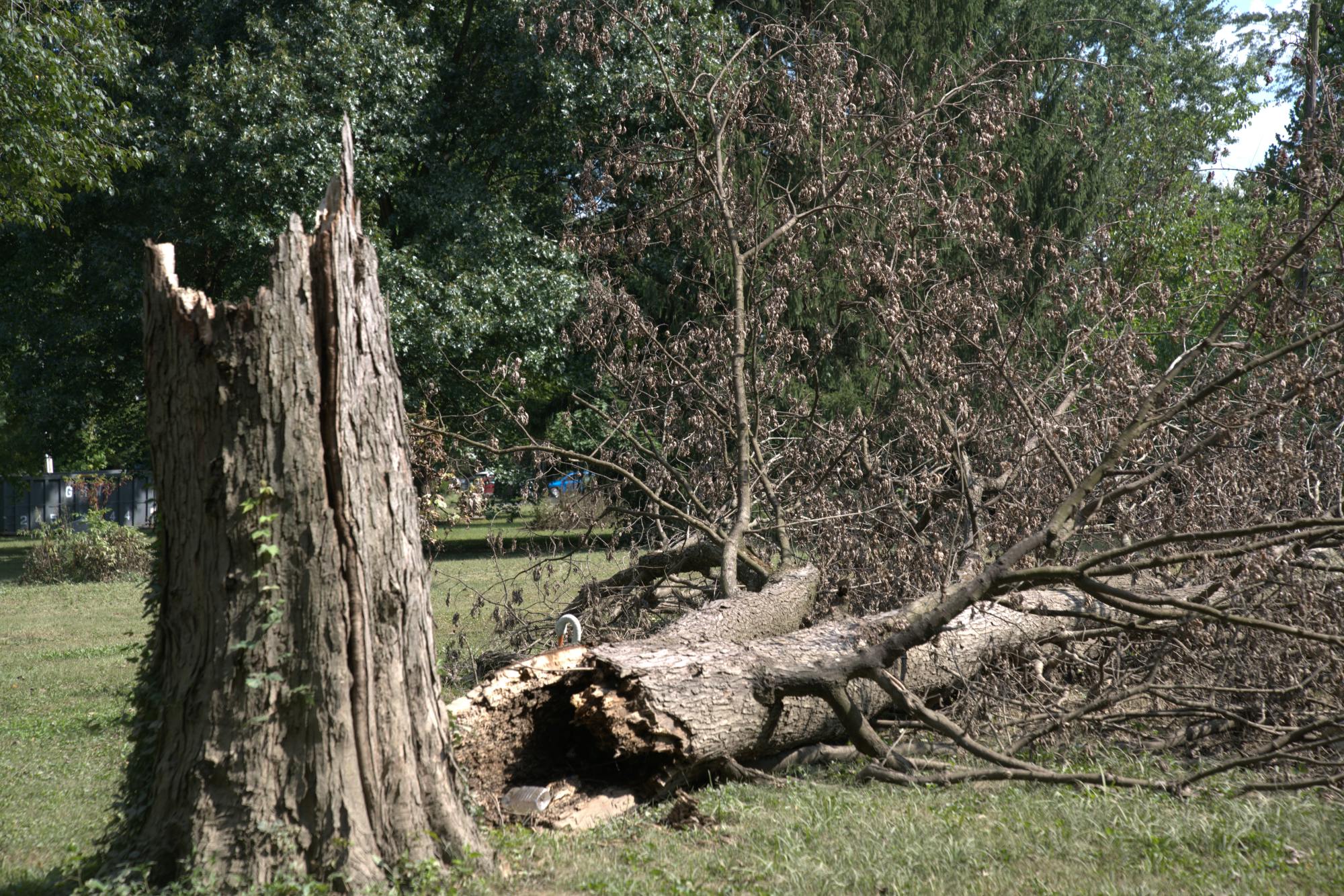
"Just because it hasn't happened before doesn't mean it can't happen this time," he said. In Ravenswood, it did.
Taflinger's 11-year-old daughter, Penelope, was in the neighborhood through it. She said she was nervous at points, but not about her father.
"I knew he had it," she said. "I'm glad that everyone came in to volunteer and help."
Asked what she'd want people to know, she thought about it.
"It was definitely a learning experience," she said. "What can actually happen if you come and actually help other people and work as a community. It can do a lot."
Around the command post in Ravenswood, the operation continues. Agencies are arriving. FEMA assistance is open. Health officials are testing. Eventually the folding tables will come down and the radios will go quiet, and the recovery will keep going without them.
"If you're looking for who is going to help this community," Whitty said, "you need to look in the mirror."
Salsabil F. Qaddoura is the Editor-in-Chief of The Campus Citizen. She is an undergraduate student on a pre-law track with a minor in business and is pursuing a nonprofit management certificate. She is passionate about public service and volunteerism to better our communities and the world.

AI in the classroom: Tool or temptation?
By Salsabil F. Qaddoura | Oct. 2Artificial intelligence is rapidly reshaping higher education, altering how students complete assignments and how professors safeguard academic integrity. At Indiana University Indianapolis, the debate reflects a broader national divide: Some see AI as an essential tool for the future workforce, while others warn it undermines the very foundation of a college degree.

Indiana Fever make playoffs for the first time since 2016
By Kenzie Pittenger | Sept. 22For the first time in eight years, the Indiana Fever have made the WNBA playoffs, snapping the longest playoff drought by any team in league history. Indiana’s starters, who include Caitlin Clark, Kelsey Mitchell, Lexie Hull, NaLyssa Smith and Aliyah Boston were all drafted by the Fever after their ...

Indianapolis Colts week 1 recap
By Kondwani Mzumara | Sept. 19Colts-Texans RecapThe Indianapolis Colts played the Houston Texans week one on Sunday, Sep. 8 at Lucas Oil Stadium in Indianapolis to begin their 2024-2025 NFL season. The streak is now 11-straight seasons that the Colts have failed to win their season-opening game. This year, their first loss was to ...
