
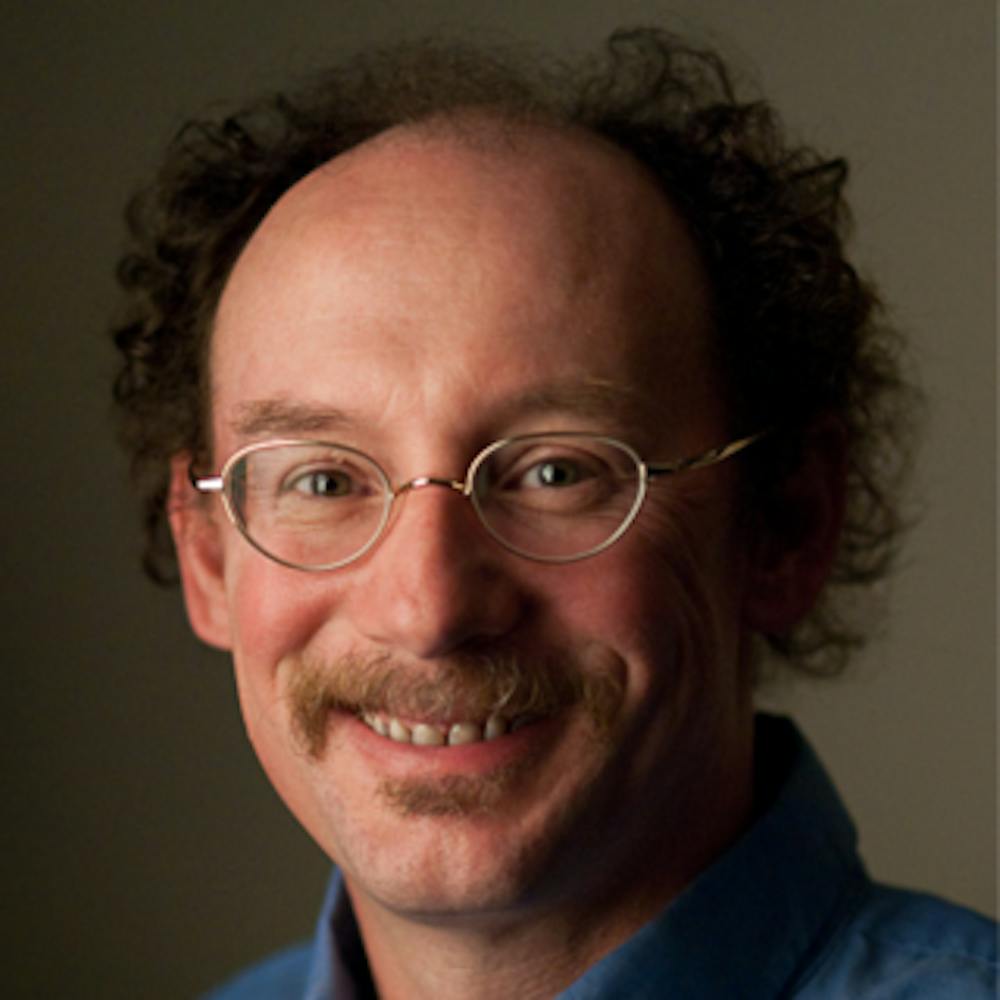
Albert William, a Media Arts (3D) faculty member at IU Indianapolis began working with IU in 1991 in the School of Medicine, later earning his New Media --- later called Media Arts --- degree in Dec. 2002, and joined then-IUPUI’s School of Informatics --- later called the Luddy School of Informatics, Computing, and Engineering, Indianapolis --- faculty shortly afterward in 2003. His long career spans 35 years with IU Indy, and specifically 23 years within Luddy; his beginnings with the school spanning even further back from his early involvement in the New Media program around its earliest days in 2000 – back when classes were first being offered at the school, as he was a Master’s student at the time. This makes him not only one of the longest-tenured Luddy faculty members, but also one of the last ones from the school’s earliest days as well, including his time as a student there. At the end of the 2025-26 academic year, William retired.
This interview --- conducted on April 22, 2026 --- coincidentally IU Day) --- has been lightly edited for clarity and concision.
Q: What was your childhood like, and did you always think you’d end up in academia?
A: Well, I grew up in Connersville, Indiana --- and growing up, I had a great interest in art and music, but I was encouraged not to pursue art at the time, because my parents didn’t think I’d be able to make a living doing it.
Because of that, I ended up studying Science instead. I earned a degree in Biology and worked as a Biologist for a number of years, including for about 10 or 12 years at the IU School of Medicine on campus at IUPUI – IU Indy now. During that time, I began working with 3D protein visualization using software, and that’s what eventually led me to discover what was then called the New Media department, which later became the School of Informatics.
Q: How did you begin your career at IU Indianapolis, particularly in the School of Medicine?
A: I started at the School of Medicine in 1991 after moving back to Indiana from the East Coast where I had been working as a Bacteriologist in a Department of Health research setting. Around that time, my mother had some health issues and she ended up being treated at the IU School of Medicine, which influenced my decision to return to Indianapolis.
While I was there with her, I started looking into job opportunities at IU and found several that interested me. In Nov. 1991, I started working in the Organ Transplant unit, where I was involved in research related to liver and kidney transplants. My work included studying transplant rejection, managing patient medication processes and testing donor compatibility.
After about five years, I moved into the Department of Pathology, specifically neuropathology. There, I worked on protein and genetic analysis of prion diseases, including Creutzfeldt-Jakob disease, often known as "mad cow" disease. I continued working in that area until around 2002. During that time, I pursued a Master’s degree through what was then the newly established School of Informatics, which had developed out of earlier programs like New Media around 2000-2001. Shortly after graduating, I was hired onto the faculty.
Q: How did you get hired into Luddy and transition into Media Arts and what things have changed over the years?
A: When I was working at the medical school, I was analyzing proteins using software that visualized data in three dimensions. I became interested in using that information to educate people, because the subject matter was complex and difficult to explain, even to other scientists.
To address that, I started creating short animations with narration to explain these concepts. A colleague connected me with someone in the New Media program, and I learned about tools like Autodesk Maya and various Adobe software, which were still relatively new around 1999-2000.
At the time, access to these tools was limited. We had a single lab with about 16 computers that could run the software; each one of those computers were about $1,500 at the time; and the technology wasn’t nearly as accessible as it is today. Many of the Media Arts and Science classes were being held in an older building called the Mary Cable building, which is no longer on campus and it was across the street from where our current building is now. It’s where the big parking garage is.
I was accepted into the Master’s program because I wanted to create educational content focused on health and science.
As a graduate student, I worked with the School of Medicine, School of Nursing, and Riley Hospital to create animations explaining various diseases. My Capstone project was an interactive CD-rom about cell structure and function, designed for middle to high school students, high-end animations for the time, narration and input from medical professionals.
When I graduated in Dec. 2002, the program was very small, with fewer than 20 people altogether, and only about seven students in my graduating class.
Shortly after, I was hired to develop educational media for organizations like the Ruth Lilly Health Education Center, creating content on topics such as the heart, lungs, and human body systems, such as the five senses of the body, the respiratory system and the nervous system.
I continued collaborating with the School of Medicine, School of Nursing, School of Dentistry, and external organizations like Eli Lilly, Roche, and BioMed. I initially taught one class per semester and then spent the rest of my time doing research work. Over time, I began teaching more classes as the program grew, eventually helping develop the full 3D track within Media Arts.
When I first started, the program was very small, and we all knew each other very well. Over time, it expanded significantly, with more students, faculty, and facilities. Now the program is much larger; and we had an end-of-year party recently, for both our school here in Indianapolis and also in Bloomington and there are many people I don’t even know anymore, because the school’s gotten so big.
Q: What was it like teaching during COVID, and did it change your approach afterward?
A: COVID was a major disruption for us. Before the pandemic, we had always been in-person, and I didn’t think something like 3D could be effectively taught online because it’s very hands-on.
When the pandemic happened --- it happened over Spring Break, and they very quickly told us that the university was gonna shut down, and that we had to quickly move everything online. We used Canvas and Zoom, and I spent a lot of time creating instructional videos, tutorials and written materials to support students.
That first semester was challenging for both faculty and students. It was difficult to adapt to a fully online environment, and many people struggled. However, we were still able to complete capstones and independent studies.
Over the summer, we received training on online training methods, which helped improve how we structured courses, which helped me put all of my content online, and understand how to teach online a bit more. By the fall, I had truly transitioned my classes online using more effective strategies.
Even after returning to in-person teaching, which I believe was around Spring 2021, I continued using some of the tools and methods developed during that time. Overall, it was a difficult experience, but it led to lasting improvements in how we teach.
Q: How has this long-term perspective changed how you’ve seen Luddy’s growth?
A: One of the biggest changes is that we are constantly adapting. In Media Arts and Science, we always have to learn new tools, technologies and teaching methods. A large part of the job is staying current.
Right now, AI is a major area of change. We’re trying to understand how to use it effectively while also addressing its limitations, especially in a creative field where generative AI can impact artistic quality.
The field is constantly evolving, and teaching is never the same from semester to semester. That continuous change has been one of the defining aspects of working in this area.
Q: What is something that you wish more students understood about working in 3D Animation or in this field in general?
A: Well, what I want students to know is that Media Arts and Science is an art form, not just a technical field. Students often focus on passing classes, but the most successful ones are those who are passionate about creating and learning.
Many students go on to work at major companies like Pixar, EA, Blizzard, Sony and DreamWorks, while others pursue freelance work or start their own studios. There are many different paths.
What’s most important is developing a consistent creative practice. I encourage students to create something every day, even if it’s small --- like playing the piano or a guitar for 5 to 10 mins. That habit helps build both skill and perspective.
Ultimately, I want students to see themselves as artists and understand how creativity can shape their lives and impact the world around them.
Q: What have been your favorite memories from all of your time at IUPUI?
A: I’ve had many great experiences, especially working with students and colleagues. One of the most meaningful parts of my career was directing seven study-abroad programs in Greece, where we created documentaries about life there.
Those experiences were impactful because students often said it changed their lives. Hearing that as a teacher is very rewarding.
I am getting ready to retire at the end of the semester, and I’ll miss working with the students, colleagues and the projects we’ve done together. It’s been a long and fulfilling career.
I’m looking forward to continuing to create, including writing music and spending more time with my family.
Zach Aigbe is a guest writer for The Campus Citizen. Zach graduated from IU Indianapolis in Dec. 2025 with a major in media arts and sciences, specializing in game design and development. In his spare time, he enjoys driving around the city, playing video games, watching TV and spending time with family.

Troi Wharton had to learn how to walk again. Ten years later, she walked the Kelley graduation stage.
By Salsabil F. Qaddoura | May 31Troi Wharton remembers the first time people noticed she could not walk straight. It was 2016, and Pokémon Go had taken over the summer. Wharton, then 20, was playing the game around Indianapolis with friends and family. At the canal. At the zoo. Anywhere her phone told her another Pokémon might appear. The game required players to physically move through the real world. For Wharton, that meant walking more than usual. For the people around her, it meant seeing what she had not yet accepted.

Collaborative mass casualty simulation takes learning beyond the classroom for IU medical students
April 25The dark night explodes with the cheers of thousands of fans as they flood the streets of downtown Bloomington to celebrate Indiana University’s College Football National Championship victory. Suddenly, this festive scene turns chaotic — someone has fallen from the upstairs balcony of the pub, another person is overcome by smoke inhalation from a burning vehicle, and a loud noise causes the crowd to stampede.
Salon art: Allen Whitehill Clowes exhibition at Herron
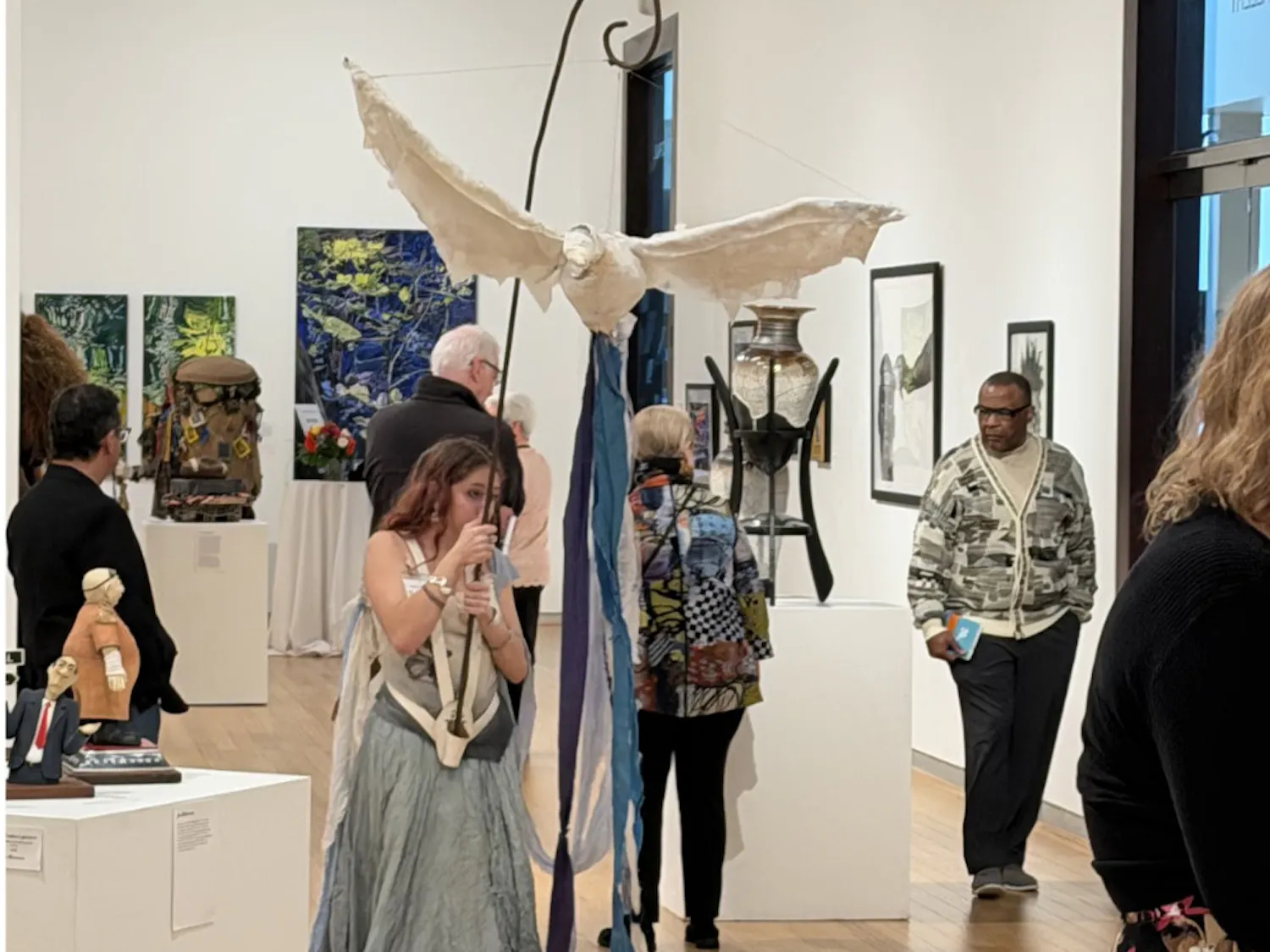
By Devin Bates | April 8The Herron School of Art and Design, Indiana University’s own art school, is hosting an annual exhibition, the Allen Whitehill Clowes Collaborative. The exhibition is put on alongside Clowes Charitable Foundation and Hoosier Art Salon. This year's show began on March 7 and continued until April 4, 2026. The exhibit shows Indiana’s top Hoosier Art Salon awardees of the year and others as a part of the competition.
