
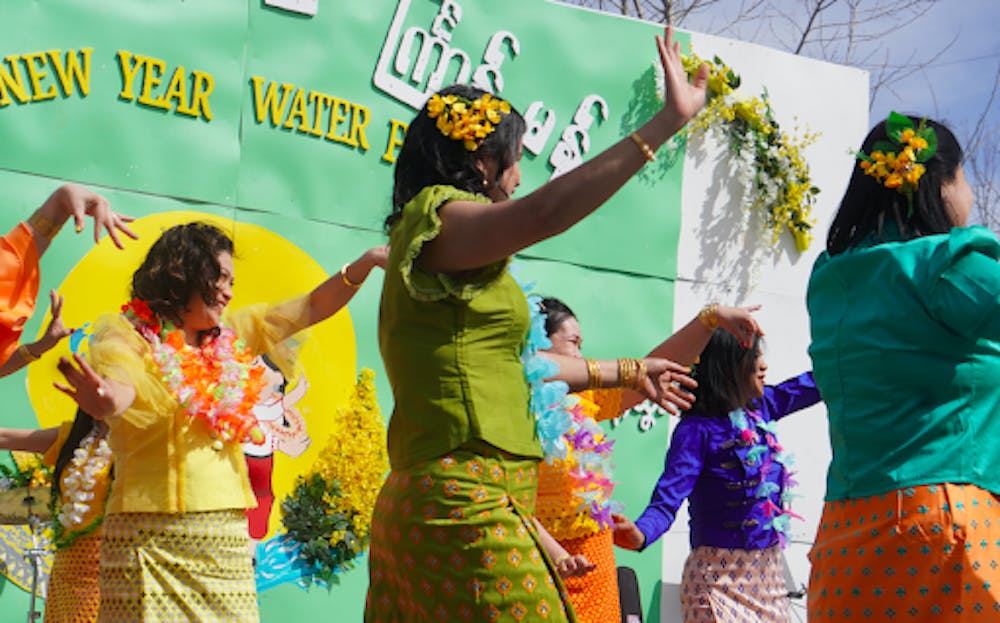
Editor's Note: Burma will be used in place of Myanmar for consistency with interviewee in an effort to accurately portray interviewees' statements, despite AP style's rule suggesting the use of Myanmar over Burma. A source has also been granted anonymity in the interest of student safety. Interviewees are anonymous unless they otherwise gave consent to be named in the article.
On Jan. 26, the Department of Homeland Security (DHS) terminated Temporary Protected Status (TPS) for Burma, also known as Myanmar. Indiana hosts nearly 43,000 Burmese people. The termination of TPS for Burma will hurt 34,575 individuals, of whom 4,000 are of Burmese descent.
Since the inauguration of President Donald Trump, there have been crackdowns on immigration, which include TPS.
TPS is a government protection by DHS for foreign-born individuals who cannot return to their home country due to safety concerns or their country cannot handle their return. The DHS designates a country with TPS if there is an ongoing conflict, an environmental disaster, an epidemic or any other temporary extreme conditions.
Burma has been in a continuous civil war since its independence in 1948, making it one of the world's longest ongoing armed conflicts.
Since its independence in 1948, Burma has struggled to govern its multiethnic state in an effective way. After a coup in 1962 Burma's military held control of the country, leading to conflicts with ethnic minority groups. These conflicts have led to divisions in the state and have led to widespread human rights abuses, displacements, and consistent political instability across the state. This conflict has continued, making it a long-lasting armed conflict in the world today.
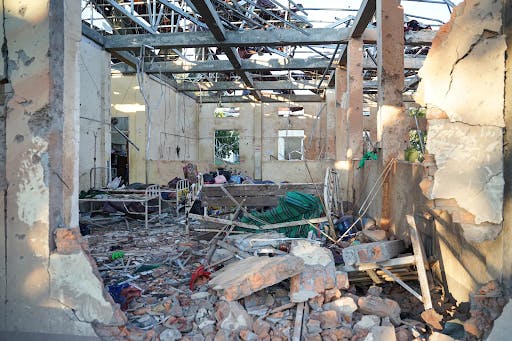
Burma has remained under a military siege since a coup in 2021, which designated it as a TPS country by DHS since March 2021. With the DHS’s termination, about 3,670 individuals will be left ineligible to work legally in the U.S. and will be susceptible to deportation.
Student X is a sophomore at IU Indianapolis who is of the Chin ethnic group from Burma. While Student X is not residing here from TPS, they received a visa that allowed them and their family to immigrate from Burma to the United States.
“I immigrated from Burma to Malaysia to Michigan to Indianapolis. It was a long process to get to where I am today. I've been thriving in America since I was little, and I know both aspects of my identity. I know more American values because I was raised in America. I’ve been here far longer than I have been in my home country [Burma],” said Student X.
Just like Student X, many immigrants have lived in the US for most of their lives. PBS reported that compared to the early 2000s, most immigrants have lived in the US for many years.
“Just under half of foreign-born individuals have lived in the country for two decades or more,” said PBS. “And more than two-thirds have lived in the country for at least 10 years.”
Student X who lived in the United States for years, discusses their feelings about TPS termination.
“[TPS] being taken away from us is really, really bad. I believe that no matter how much you believe a nation is safe enough to go back to, it's not. If you look at all the human rights reports, journalists, tabloids and documentaries and people telling you it's unsafe, why do you not consider that this is not a safe country?” said Student X.
Student X further discusses the dangers that come with TPS termination.
“TPS being taken away is dangerous for the Burmese community,” said Student X. “We [Burmese people] look the same and will be categorized the same. We all speak the same language and share a culture. The only difference is our papers. It's just not right. Taking away their papers could mean the start of taking away anyone. Just like what's going on with ICE right now.”
Student X’s fear about the safety of the Burmese community rises from the intense immigration crackdowns across the United States by the Immigration and Customs Enforcement agency (ICE).
In the past few weeks, 3000 ICE agents across Minneapolis have led immigration crackdowns. These crackdowns have led to the death of two U.S. citizens, Renee Nicole Good and Alex Pretti, which has sparked nationwide fear and anger.
Student X fears that ICE in Indianapolis could mean the targeting of Burmese people.
“It's dangerous because a lot of Burmese people have only thrived in America,” said Student X. “Most of us don’t have a recollection of our home country. No matter how many meals we eat, or how many conversations we have, or our cultural events, we are still Americans.”
Student X describes how their family and community have tried to stop TPS through legislative action.
“My family and community have written letters to our senators, representatives and everyone to protect TPS,” said Student X. “Indiana has lots of Chin people, Burmese-Americans, and the fact that they’ve let something dangerous like this happen is just unbelievable.”
Student X describes the reason why they immigrated to the United States was due to the conflict in Burma.
“Our country [Burma] has been militarized for so long. We’ve always had problems with Chin state and the military,” said Student X. “Under the rule, we are under Burma, but we consider ourselves our own nation. We don’t contribute to the Burmese society. However, ethnically, we are still Burmese. There is consistent bombing and harassment of our people, and thus, my family had to flee.
Student X compares the state of Burma as one similar to that of North Korea.
“Burma is kind of like North Korea; it's very heavily controlled,” said Student X. “There aren’t a lot of people talking about it except those who’ve experienced the conflict.”
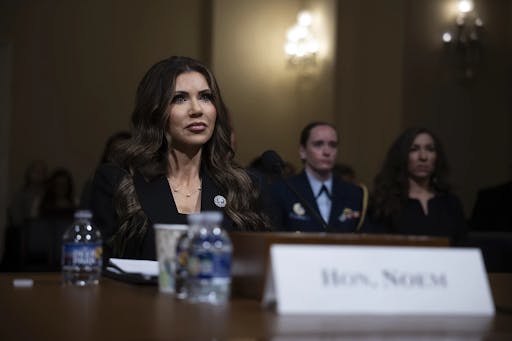
Kristi Noem, the Secretary of Homeland Security, announced that Burma no longer meets the conditions for TPS. Noem ruled that there have been improvements in Burma's governance and stability.
Noem reasoned that on July 21, 2025, Burma ended its state of emergency, transferred power to the National Defense and Security Council and announced that there would be free and fair elections from December 2025 to January 2026. Additionally, there are ceasefire agreements and an increased ability of local authorities to begin a process of political stability in Burma. Due to these conditions Noems ruled that Burmese citizens residing in the U.S. are safe to return to Burma.
However, Student X disagrees with Noem's decision about TPS for Burma.
“Kristi Noem is completely wrong,” said Student X. “I see her leading this in a way to deport Burmese people. Burma is not in the right position for the Burmese people to return. Unfortunately, not for a long time. TPS, visas and green cards protected us from deportation because they gave us legal status.”
Student X continues to discuss the emotional weight this will have on the Burmese American community.
“Our presence is being weaponized and we’re all going to be deported in a sense,” said Student X. “We are a very family-oriented community. If one goes, we all go.”
Noem added that Burmese individuals have increased their overstaying period from the fiscal year 2023 to 2024. She states this has become exploitative of the U.S.'s visa system and that further TPS for Burma would pose a national security and public safety risk.
However, Student X counters that thinking and describes the Burmese community's presence in Indiana is to thrive.
“In the Southport Greenwood area, there are lots of Burmese people. Our community is very tight; we all know each other. We host lots of cultural events through the Burmese American Community Institute (BACI),” said Student X.
BACI is a non-profit organization founded in 2011 that supports the Burmese and Immigrant community in Indianapolis through human services and educational and vocational support.
“There are so many events, tournaments, and church events that we host,” said Student X. “One thing that unites us is our religion, Christianity.”
Indianapolis also has many Burmese-owned restaurants.
Student X says their favorite restaurants are Sian restaurant, Kissaten and the Corner Store.
“I really love it because there are lots of Burmese workers and customers,” said Student X. “Everyone speaks Burmese, everyone speaks Chin and so many different dialects. We’re all from the same background and they come together to make good food.”
Student X says that stepping up for the Burmese community at this time is important.
“One way to help us is through prayer, since many of us are religious,” said Student X. “Many of the older people also cannot speak English. If you see someone struggling, try to help them.”
Another way is to recognize and educate yourself on what is happening in Burma.
Student X also adds another way to support the community, which is by discussing the conflict in Burma, as students in Indianapolis are surrounded by the Burmese community.
“It’s important to discuss, especially at IU Indianapolis, because of the large Burmese community,” said Student X. “More conversation about militarized countries is important. Try to educate yourself because it is a deep situation. We have to think about how the media plays into this, how the people have been silenced and what are some connections we can make from past experiences.”
Today, not only is Burma's Temporary Protective Status eliminated, but also individuals from countries such as Haiti, Somalia, Sudan, Ethiopia and more.
Oumou Sow is a second-year student at IU Indianapolis, majoring in political science with minors in international studies and legal studies. She loves to read fantasy books, binge-watch Marvel movies and listen to political and educational podcasts.
18 years in, Carson faces real challenge: What Wells and Hornedo would do for IU Indianapolis students
By Thomas Garvey | April 21On May 5, 2026, Indiana's 7th Congressional District will hold its most competitive Democratic primary in years. André Carson, an 18-year incumbent, is facing a real challenge for the first time since his 2008 victory. District 7 — which encompasses IU Indianapolis's campus — is a reliably safe Democratic house seat, meaning the primary winner will likely go on to represent the district in Washington. The Campus Citizen spoke with two of the leading Democratic challengers: Destiny Wells and George Hornedo. Wells comes in with a military background, having served in Afghanistan and now serving as a lieutenant colonel in military intelligence. Wells is an IU alumna and earned her law degree from the University of Texas in 2011.
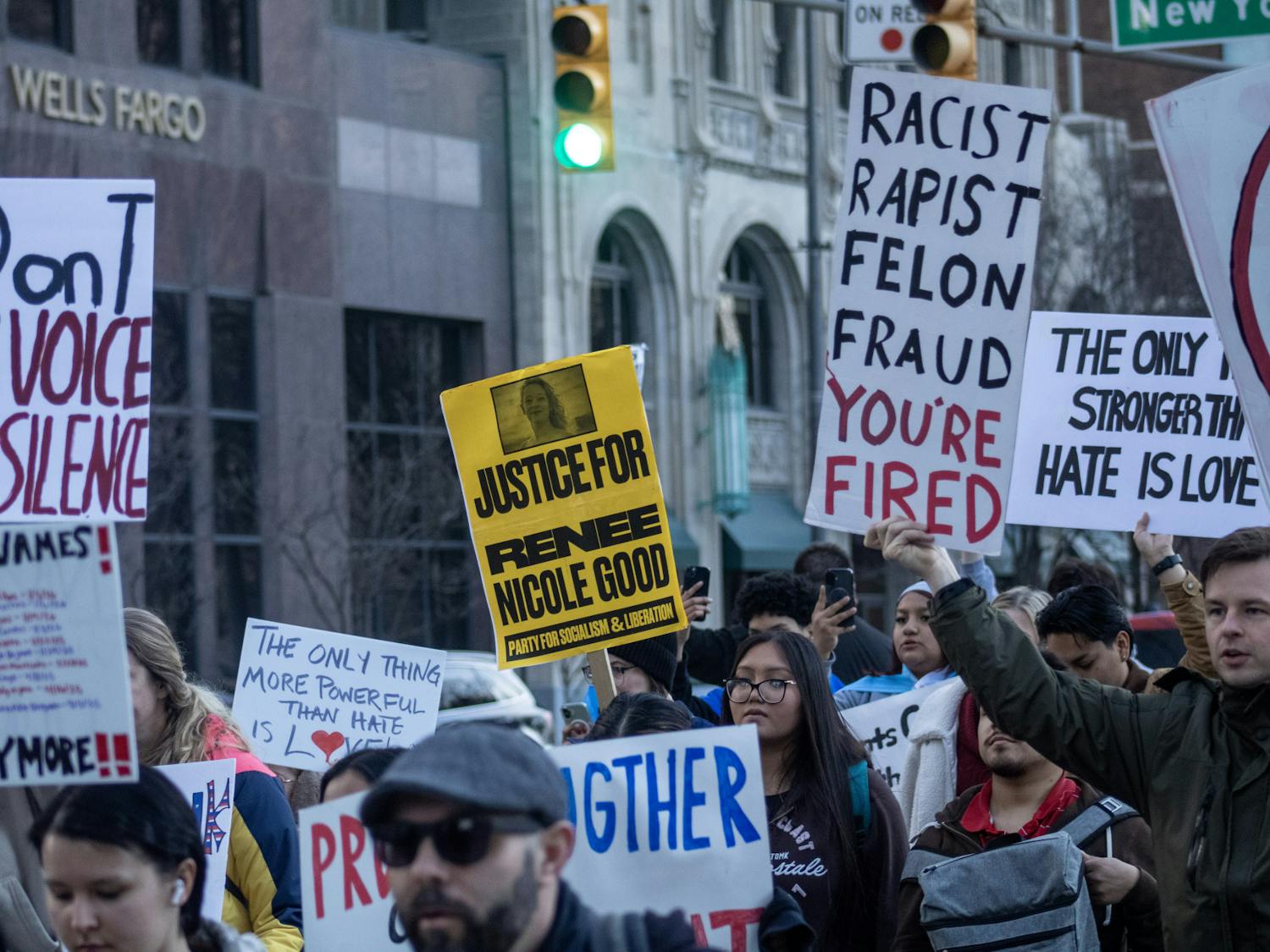
Dozens gather at Monument Circle to protest immigration enforcement, joining statewide student movement
By Salsabil F. Qaddoura | Feb. 14A crowd of protesters gathered Friday evening at Monument Circle to demonstrate against U.S. Immigration and Customs Enforcement and federal immigration enforcement policies, joining a wave of student-led protests taking place across Indiana and across the country.

Mid-session recap: Indiana legislature advances bills affecting IU Indianapolis students
By Salsabil F. Qaddoura | Feb. 13As the Indiana General Assembly moves past the midpoint of its 2026 legislative session, lawmakers are advancing several bills that could directly affect Indiana University Indianapolis students, including legislation impacting university governance, state funding, faculty oversight and academic programs.
