
Schools like Indiana University Indianapolis market artificial intelligence as a thought partner that helps students succeed in their studies and grasp core concepts. It's important, both as a student and a citizen, to pull back the curtain and better understand how these machines operate and what their implications are.
A growing concern about the rise of AI is what powers it.
The number of data center proposals around Indiana, especially near Indianapolis, has grown at an exponential rate, according to Cleanview, a market intelligence platform that tracks data center development in real time. Indiana has become a magnet for large corporations such as Meta and Google to build and operate these hubs. But what is the impact on Hoosiers and the environment?
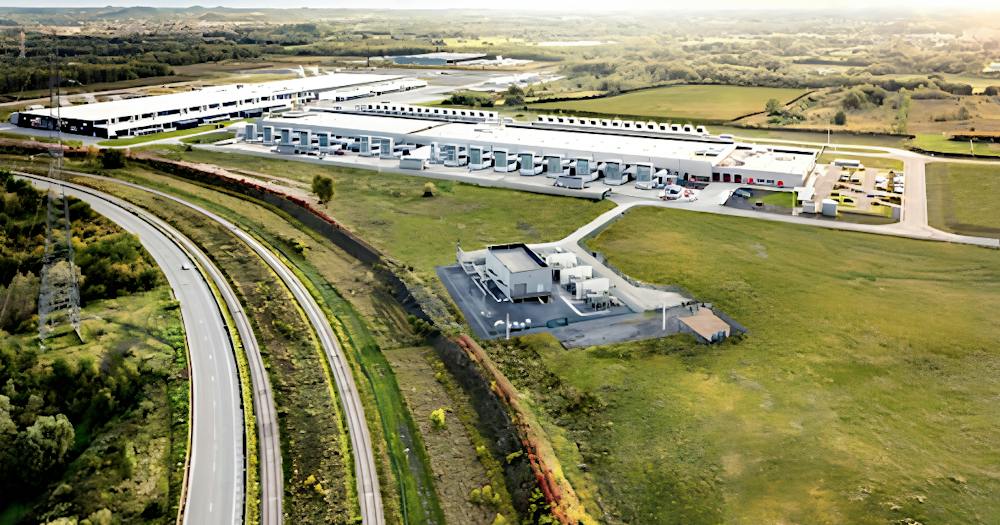
Cleanview reports also show that there are 159 data centers either planned or operating in Indiana. The largest now operating is the Meta Jeffersonville Data Center, with a capacity of 108 megawatts. The largest planned center would surpass that: The Takanock Goshen Data Center in Elkhart, Indiana, could have a capacity of up to 1,500 megawatts.
That would roughly match the Franklin Farms Power Station in Richland Parish, Louisiana, where Entergy Louisiana broke ground in late 2025 on two natural gas plants that will add about 1,500 megawatts to serve a Meta data center and other customers, according to Entergy Louisiana. The plants are scheduled to be running by late 2028. "Under contract with Meta, power company Entergy agreed to build three gas-powered plants that would produce 2,262 megawatts," The Associated Press reported.
"A hyperscale data center campus can occupy anywhere from 200 to more than 1,000 acres, with power needs that can surpass 1,000 megawatts, enough electricity to power hundreds of thousands of homes," according to Indiana University's Environmental Resilience Institute.
The institute also said that by 2030, some of the hyperscale data centers proposed in northern Indiana would need more electricity than all of the 6.8 million Indiana resident households today.
Residents and consumers have multiple concerns, including energy bills, noise pollution, land pollution and clean water scarcity, according to the Hoosier Environmental Council.
"A single data center can consume as much water as a town of 10,000-50,000 people," the Hoosier Environmental Council wrote in its "Policymaker's Guide."
Why is Indiana becoming a hub for data center development? The answer could lie in tax incentives. Indiana offers large companies a low corporate tax rate, with overall savings of 10% to 15% for companies that build in the Hoosier state, according to the GPU Lease Index.
Ohio has a Data Center Tax Exemption Program, but companies must invest $100 million and create at least 40 new jobs paying 150% of the county's average wage, double Indiana's job and investment regulations. Both states are in the top tier of the most aggressive incentive programs, according to Buildermuse. Illinois is in the third tier, with lower incentives, and data center proposals have decreased as a result.
Iowa, a Midwest state in the second tier with smaller incentives, relies less on water for cooling because its climate is colder than the lower Midwest states like Ohio and Indiana. Its wind power attracts large companies such as Meta and Microsoft.
Residents have pushed back. Community input at a special meeting with Hancock County commissioners in 2025 at the Hancock County Courthouse Annex led to plans to rezone and increased the opposition of projects, including the Buck Creek project in central Indiana.
In Buck Creek Township in Hancock County, a 775-acre property was planned to become a data center. After community backlash, the project was terminated in May 2025. What contributed to this, and why did the community fight against the proposal?
The property was next to Tuttle Orchards, a family-owned orchard with a restaurant that is open year-round. Tuttle Orchards called for the project to be reconsidered because of how it could impact its business.
Buck Creek Township and Hancock County are rich in agriculture, from farmers to the orchard. Hancock County has been self-dubbed Indiana's agricultural epicenter with 93% of its farms being family-run as of 2022. And 7% of those farms rely on crops rather than raising livestock.
Data centers require land as well as water. A small data center requires at least 40 acres, while a large one could require 1,000 acres. A rural data center, where wells are common, could recycle water for irrigation, but it is still unclear.
Centers like this one are proposed in rural areas that may not have city water. How do data centers affect those who rely on well water?
"It is also estimated that 80% to 90% of this water is consumed from watersheds — such as lakes, rivers, or aquifers — often the same sources providing drinking water through public water systems," the University of Georgia College of Agricultural and Environmental Sciences wrote, citing Novva Data Centers. Not all of that water returns to the local water cycle.
Water returned to the ground after passing through the facilities is heavily treated with chemicals, including corrosion inhibitors and refrigerants that are harmful to ingest. When that water reaches groundwater, it affects those who rely on it.
Because of two-step cooling, many centers use per- and polyfluoroalkyl substances, known as PFAS.
"PFAS are persistent environmental pollutants linked to cancer, immune dysfunction, reproductive harm, and other serious health effects," according to Environmental Health Services.
In states where data center growth continues, environmental factors, economic strain on consumers and overall health of residents are becoming causes for concern. Rural areas that rely on groundwater may have less access to clean water. Corporate projects affect the family-run, generational work many rural areas still rely on.
Data center regulation is not just a way of keeping technology corporations in check, but an investment in the future of important communities. Every American relies on clean drinking water. Every American relies on agriculture and livestock farming far more than a thought partner.
Devin Bates (they/he) is a journalism major at IU Indianapolis and an editor and writer for The Campus Citizen, with an interest in writing and the arts. In their free time they can be found working on their project cars or writing, and they also enjoy crafts like cosplay, music and gaming.

Dorms or debt traps?
By Raegan Nelson | Sept. 19College is expensive, especially if students have to factor in the additional cost of living. But dorms offer more than just a place to sleep: students are close to campus, have a place to rest between classes and may find lifelong friends from their assigned roommates.

IU Indianapolis needs an AI-to-apprenticeship bridge
Aug. 27IU Indianapolis is making artificial intelligence part of career preparation. The Luddy School of Informatics, Computing, and Engineering offers a 16-credit certificate in AI that students can finish in three semesters, and it is open to students in non-computing majors without additional prerequisites. Luddy offers two related credentials as well, in AI engineering and in AI for organizations.

Part two: The 98th Academy Awards predictions – The dark horses, the snubbed nominees and the winners
By Emiliano Magana | March 14The Academy Awards will take place on March 15, 2026. With the list of nominees being released and Oscar voting being finished, it has left cinephiles with the doubt of who will be the winners in certain categories. Besides the doubt, questions have been raised about the categories, such as: will Paul Thomas Anderson finally get his long-awaited Oscar? Could “Sinners” break another record after beating “All About Eve” (1950), “Titanic” (1997) and “La La Land” (2016) in the most nominations received by a film in an edition of the Academy Awards? Who will win the newly introduced category of “Casting” in this Oscar’s Edition? With that being said, I have decided to share who I think are the dark horses, who got snubbed of nominations and who will be the winners of some of the major production categories in this Oscars edition.
